

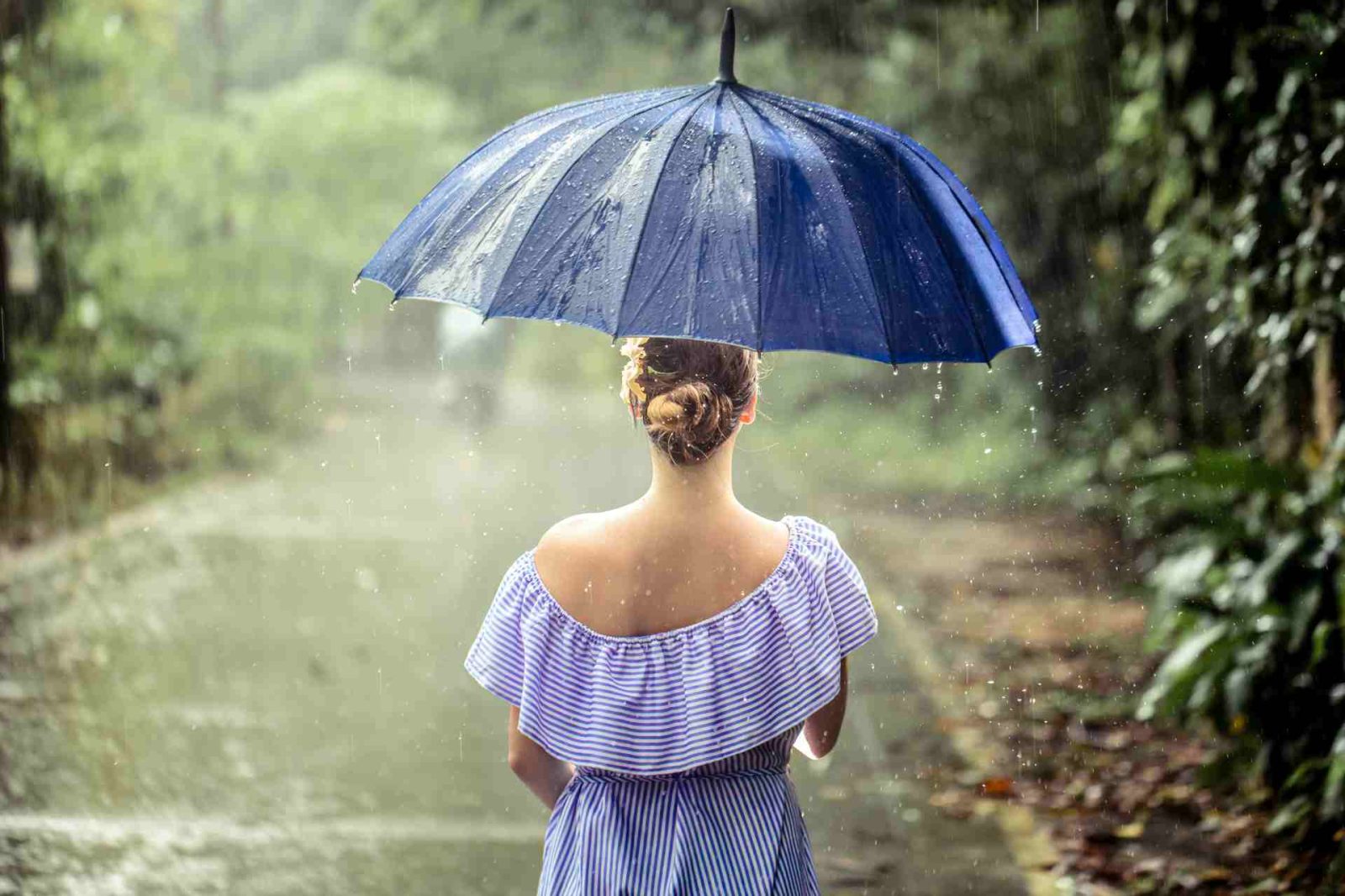
Dressing well in India during the monsoon season is about being prepared for the unexpected. You have to deal with rain showers, humid weather, muddy streets and damp environments that can make many regular outfits impractical. In 2026 monsoon fashion for women is becoming more practical and stylish. The idea is to choose outfits that’re suitable for the weather but still look clean and put together.
It’s not about fighting the rain. About dressing in a way that makes your life easier. The important thing to consider when dressing for the monsoon is the fabric of your clothes. You want clothes that won’t absorb much water or take a long time to dry as they can become uncomfortable quickly. Heavy cotton, denim and thick materials can feel fine at first. They can be difficult to manage when wet.
/stressed-woman-covering-head-with-clothes-without-2026-03-19-07-45-23-utc.jpg)
Best Fabrics for Monsoon Dressing
That’s why lighter fabrics and drying materials are preferred.
* Blended fabrics
* Lightweight cotton
* Certain synthetics that do not retain water are more practical during this season.
Outfit Ideas That Work in the Rain
The goal is to ensure that even if you get slightly wet your clothes do not stay damp for hours. When it comes to outfits trousers paired with simple tops work well. Lightweight trousers dry faster. Feel less restrictive when exposed to moisture. Slightly tapered fits are more practical than very loose or flared styles. Cropped lengths or ankle-length pants are especially useful as they reduce contact with surfaces.
/two-indian-girls-playfully-enjoy-monsoon-rain-unde-2026-01-09-00-01-32-utc.jpg)
Dresses and Kurtis for Monsoon Season
Dresses are an option during the monsoon but you need to choose them carefully. Knee-length or slightly above-ankle dresses work best because they avoid dragging on roads. Fabrics that do not cling much when wet are important here. A simple dress can be worn throughout the day without requiring adjustment. For women who prefer wear kurtis are a practical choice.
/happy-portrait-and-woman-with-an-umbrella-in-a-st-2026-01-09-11-09-34-utc.jpg)
Monsoon Footwear and Layering Tips
Short or mid-length kurtis paired with ankle-length pants or leggings work better than long flowing styles. Avoiding fabrics and elaborate designs helps in maintaining comfort. Simpler kurtis in fabrics can be worn repeatedly and are easier to manage if they get damp. Footwear is a decision during the monsoon. Shoes that absorb water or take time to dry can quickly become uncomfortable.
Open footwear, waterproof sandals and slip-resistant options tend to work The focus should be on ease of movement and safety on slippery surfaces. Another important consideration is layering. Unlike winter layering in monsoon should be minimal. Adding many layers can make the outfit heavier and harder to manage if it gets wet.
However carrying an outer layer like a thin jacket or shrug can be useful in light rain or cooler conditions. Color selection during monsoon often creates confusion. Mid-tone shades such as olive, navy muted prints or textured fabrics tend to work. They hide stains better while still looking clean. Prints can also help in reducing the visibility of splashes and marks compared to light colors.
/woman-holding-umbrella-2026-01-09-01-20-40-utc.jpg)
Common Monsoon Fashion Mistakes
One of the common mistakes in monsoon fashion is wearing clothes that are too long or too loose. Wide hems, flared bottoms and long silhouettes often end up collecting water and dirt. Similarly wearing tight clothes can also be problematic as they tend to cling to the body when wet. A balanced fit—neither tight nor too loose—works best. Another mistake is relying on outfits that require handling.
Clothes that need adjustment, delicate fabrics or complicated styling tend to become inconvenient in rainy conditions.Monsoon dressing should focus on ease. Outfits that you can wear without worrying about splashes or unexpected rain are always more practical. A sensible monsoon wardrobe does not need to be large. A few reliable pieces can cover situations.
The emphasis should be on how these clothes dry how comfortable they feel and how easily they can be cleaned. Accessories should also be kept minimal. Carrying many items or delicate pieces can become inconvenient during rain. A simple functional approach works better. Bags that are easy to carry and not affected by moisture are more useful than high-maintenance options.
/woman-holding-yellow-umbrella-walking-in-the-park-2026-03-09-02-58-53-utc.jpg)
Building a Smart Monsoon Wardrobe
Ultimately monsoon fashion in India is about reducing friction in life. The best outfits are the ones that allow you to move freely adapt to weather changes and still look reasonably put together. Of trying to maintain perfect styling the focus should be on practicality and comfort. When clothes are chosen with the season in mind dressing becomes easier than stressful. That is what defines good monsoon fashion—not just how it looks when you step out but how well it holds up through the rain.
Monsoon fashion is about being practical and comfortable while still looking good. You want to enjoy the season without worrying about your clothes. That’s the key, to monsoon fashion. Monsoon fashion should make your life easier not harder.
/young-girl-trying-to-stop-a-cab-woman-calling-a-t-2026-03-10-22-40-58-utc.jpg)
| Aspect | Do | Don’t |
| Fabric choice | Choose lightweight, quick-drying fabrics and blends that do not retain water | Wear heavy cotton, denim, or thick materials that stay wet for long |
| Bottom wear | Opt for ankle-length or cropped trousers that avoid contact with wet surfaces | Wear flared or full-length bottoms that drag in water and mud |
| Dresses | Select knee-length or manageable dresses that stay comfortable in rain | Choose very long dresses that absorb water and become heavy |
| Kurtis / ethnic wear | Prefer short or mid-length kurtis with simple designs and light fabrics | Wear long, heavy, or heavily embroidered kurtis during monsoon |
| Fit | Maintain a balanced fit that does not cling or drag when wet | Wear overly tight clothes that stick to the body or very loose ones that collect water |
| Footwear | Use waterproof, open, or easy-to-clean footwear with good grip | Wear shoes that absorb water or become slippery and uncomfortable |
| Layering | Keep layering minimal and use only lightweight outer layers if needed | Add heavy or multiple layers that become difficult to manage in rain |
| Colors & prints | Choose mid-tone colors or prints that hide stains and splashes better | Wear very light colors that get dirty easily or very dark ones that show marks |
| Practicality | Select outfits that can handle sudden rain and require minimal adjustment | Wear delicate or high-maintenance clothes that are hard to manage outdoors |
| Wardrobe planning | Build a small set of reliable, repeatable outfits suited for rainy conditions | Rely on regular wardrobe pieces without considering weather impact |
/girl-with-umbrella-under-the-rain-2026-03-18-04-21-39-utc.jpg)
FAQs
- What are the best clothes to wear during monsoon in India?
Lightweight drying clothes are perfect for monsoon.
- Can I wear jeans in the rainy season?
I like wearing outfits like trousers with tops.
- What type of footwear is best for monsoon?
Dresses and short kurtis also work well during monsoon.
- Are dresses suitable for monsoon?
Heavy denim is not a choice.
- What colors should I wear during monsoon?
It takes a time to dry and feels uncomfortable when wet.