

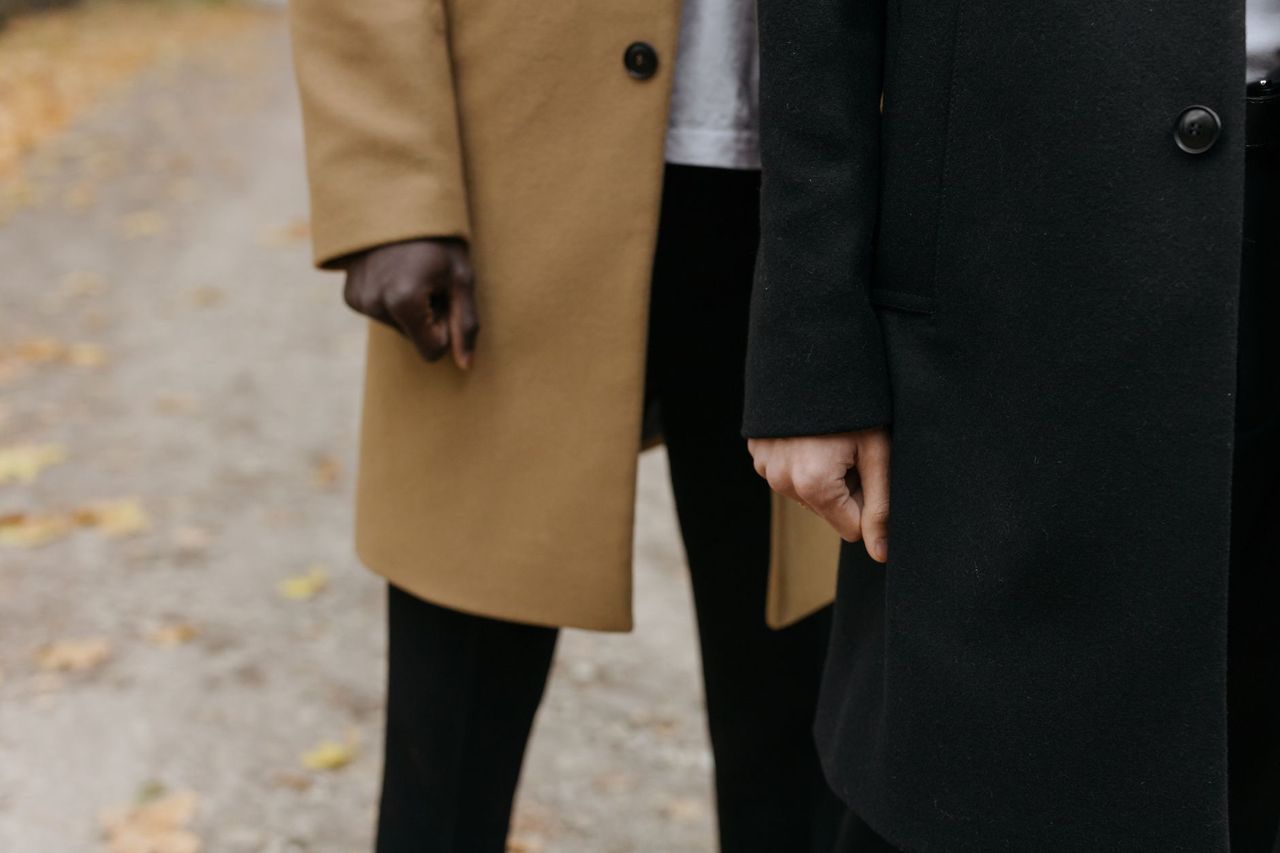
There is a specific kind of recognition that has replaced the logo. It happens when someone looks at your coat, cannot name the brand, and assumes it cost a great deal of money. Three labels have built entire businesses on that reaction, and none of them has ever needed a monogram to do it.
The Row, Toteme and Khaite are frequently grouped together and frequently confused with each other. They share a palette, a silhouette vocabulary and a customer. They are not, however, doing the same thing, and the differences matter enormously if you are about to spend money.
What they actually are
The Row
The Row was founded in 2006 by Mary Kate and Ashley Olsen, initially around the idea of a perfect white T shirt. It is the oldest of the three and the most extreme in its positioning. The label operates with almost no advertising, minimal social presence, and a famous prohibition on phones at its shows. Prices sit at the top of the ready to wear market, frequently above what several European heritage houses charge.
Toteme
Toteme was founded in 2014 in Stockholm by Elin Kling, a fashion writer and one of the earliest genuinely influential style bloggers, and her partner Karl Lindman, a creative director. It is the most accessible of the three and the most systematic, built around a repeating set of shapes rather than seasonal reinvention. The scarf coat and the monogram rope motif are as close as the label gets to a signature.
Khaite
Khaite was founded in 2016 in New York by Catherine Holstein. It is the most sensual of the three and the least minimal. Where The Row removes and Toteme repeats, Khaite adds tension, meaning a hard shoulder, a slightly aggressive boot, leather where the others would use wool.
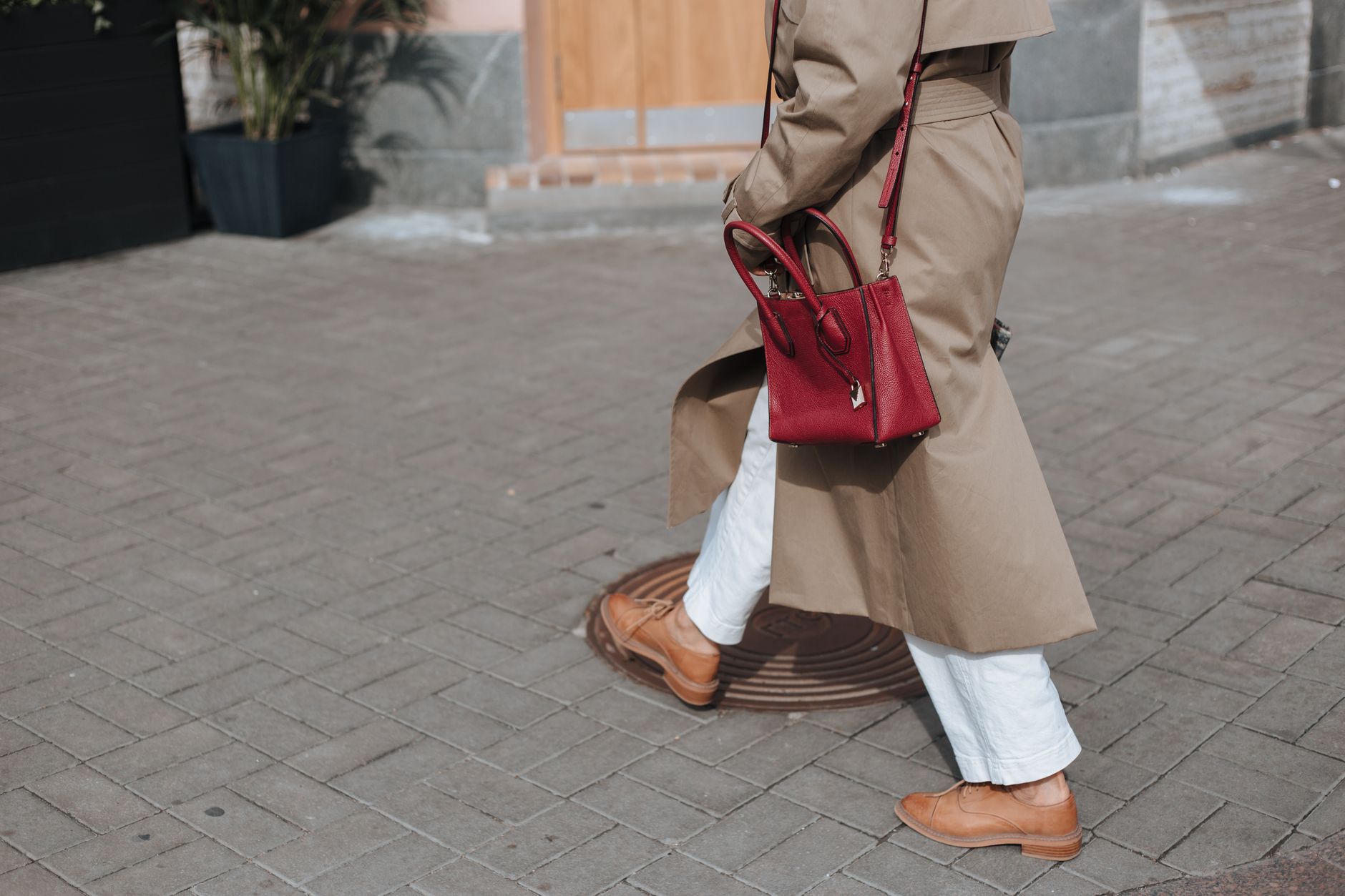
Why the absence of a logo became the point
The logo mattered when the audience for your clothes was strangers on a street. It stops mattering when the audience is a much smaller group of people who already know what things cost.
That shift happened for economic reasons rather than aesthetic ones. As luxury pricing rose sharply through the 2020s, the customers who could still buy at the top of the market became a smaller and more informed group. Within that group, a visible logo signals that you want to be seen spending, which is precisely the thing that a shrinking luxury audience has decided it does not want to signal.
The result is a set of recognition codes that are legible only to people who already own the clothes. A particular shoulder line. A specific coat length. A leather that behaves in a way cheaper leather cannot. It is a quieter and considerably more effective form of status.
How to tell them apart when shopping
| The Row | Toteme | Khaite | |
|---|---|---|---|
| Founded | 2006, New York | 2014, Stockholm | 2016, New York |
| Founders | Mary Kate and Ashley Olsen | Elin Kling and Karl Lindman | Catherine Holstein |
| Core proposition | Perfection of the basic, extreme fabric quality | Repeatable system of shapes, Scandinavian restraint | Tension between softness and hardness, sensual minimalism |
| Signature pieces | Cocoon coat, cashmere knitwear, Margaux bag | Scarf coat, clean tailored trouser, T Lock bag | Leather outerwear, knitwear with attitude, Danielle boot |
| Typical coat price | 4,000 USD and up | 900 to 1,500 USD | 2,000 to 4,000 USD |
| Typical knit price | 1,000 USD and up | 300 to 600 USD | 700 to 1,200 USD |
| Bag price | 1,500 to 5,000 USD | 700 to 1,200 USD | 1,200 to 3,000 USD |
| Buy it if | You want the best version of a plain thing and never want to think about it again | You want a working wardrobe that coordinates automatically | You want minimalism with an edge and better evening options |
Prices vary by season and market, so treat these as ranges rather than quotes.
What you are actually paying for
With The Row, you are paying for fabric and for cut, in that order. The cashmere ply, the wool weight, the way a seam is finished on the inside. The complaint most often levelled at the label is that a plain coat cannot be worth four thousand dollars. The counterargument, which the resale market broadly supports, is that the coat still looks correct in eight years.
With Toteme, you are paying for a system. Almost everything the label makes coordinates with everything else it makes, which is a genuine practical advantage and the reason the brand converts customers into repeat buyers so efficiently. The fabric quality is good rather than exceptional, and the pricing reflects that honestly.
With Khaite, you are paying for design. The shapes are more specific, the leather is excellent, and the pieces carry more personality, which means they date faster than the other two but photograph considerably better.
The honest criticisms
Each of these labels has a real weakness worth knowing before you buy.
The Row's pricing has moved beyond what fabric quality alone can justify, and some of the appeal is now the price itself functioning as a barrier. The label also produces very little that works for anything other than a specific, understated life.
Toteme has become recognisable enough that it has begun to lose the anonymity that was its original appeal. In certain cities the scarf coat now functions almost exactly as a logo would.
Khaite's pieces are the most trend exposed of the three. A Khaite boot from 2021 reads as 2021. That is not a flaw if you buy accordingly, but it is not the same proposition as a coat that disappears into a wardrobe for a decade.
Where the high street gets close, and where it does not
The silhouettes are copied within weeks. COS, Arket, Massimo Dutti and Mango all produce credible versions of these shapes each season, and for trousers, shirts and simple knits the gap is genuinely narrow.
The gap is not narrow in outerwear or leather. A coat's quality lives in the interlining, the shoulder construction and the fabric weight, none of which can be replicated at high street margins. If you are choosing where to spend inside this aesthetic, spend on the coat and the boots and buy the rest anywhere.
Frequently asked questions
Is The Row worth the money?
It depends entirely on how long you keep clothes. If you replace your wardrobe every two years, no. If you wear a coat two hundred times over a decade, the cost per wear works out lower than several mid market alternatives, and the resale value is among the strongest in contemporary ready to wear.
Which of the three holds value best on resale?
The Row, consistently, particularly outerwear and bags. Khaite performs well on its signature boots and leather. Toteme resells reliably but at a lower percentage of retail, largely because the brand produces in higher volume.
Is Toteme a luxury brand or a contemporary one?
Commercially it sits between the two, which is precisely why it works. Pricing is contemporary, positioning is luxury adjacent, and the fabric quality is generally a step above the contemporary market without reaching the level of the heritage houses.
Which one should I start with?
Toteme, in most cases. The entry price is the lowest, the pieces coordinate with what you already own, and it is the least risky way to test whether this aesthetic actually suits your life before committing to a four thousand dollar coat.
Do these brands ever go on sale?
Toteme and Khaite participate in seasonal sales through department stores and their own channels. The Row discounts far less and far more quietly, which is part of the positioning.
The Velvet verdict
These three labels are usually described as the same thing, and treating them that way is how people end up disappointed. Buy The Row when you want to stop thinking about a category permanently. Buy Toteme when you want a wardrobe that works together without effort. Buy Khaite when you want to be looked at slightly longer.