

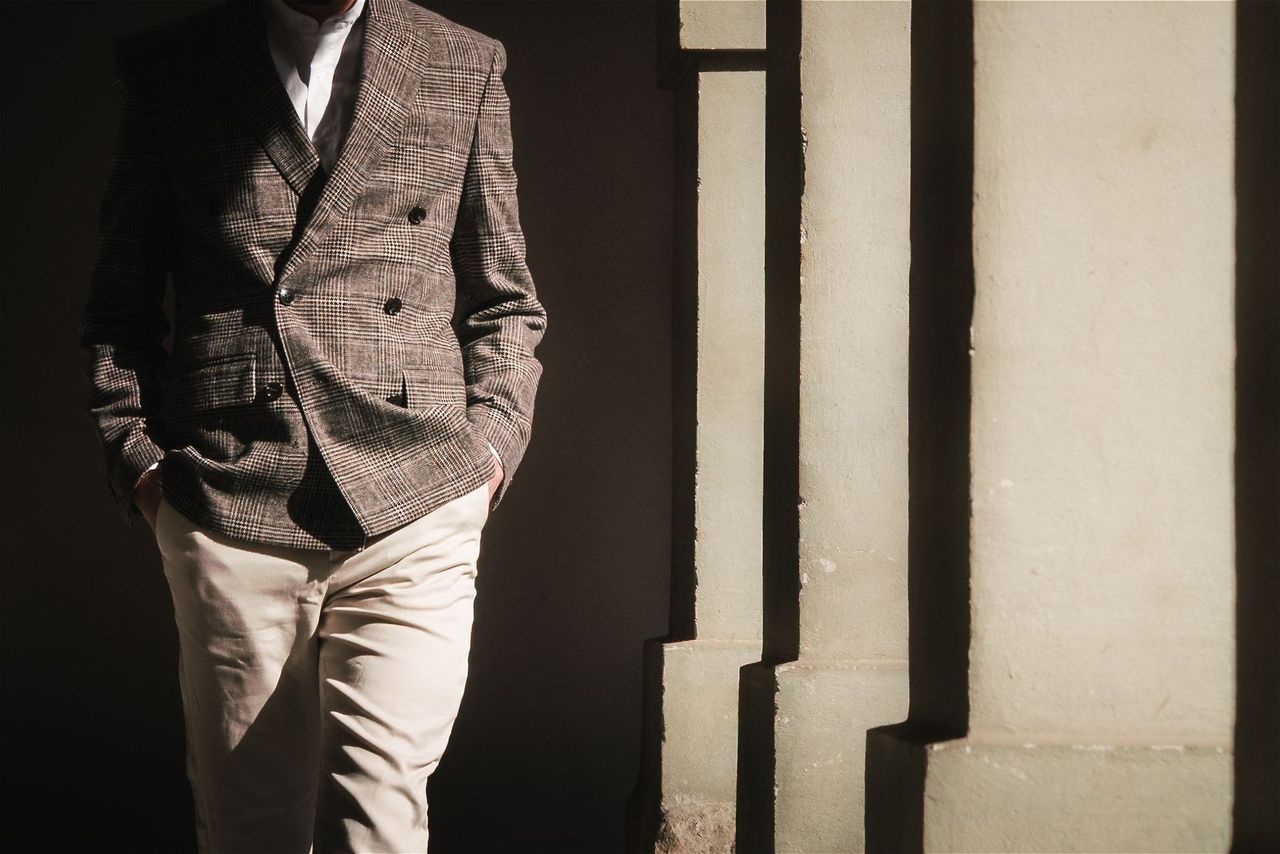
Two blazers, one costing ninety dollars and one costing nine hundred, can look almost identical on a hanger. On a body they rarely do, and the reason is not fabric. It is three measurements, only one of which most people check before buying.
Get these right and an inexpensive jacket will read as expensive. Get them wrong and no amount of money spent fixes it.
Measurement one: the shoulder
What to check
The shoulder seam should sit at the outer edge of your shoulder bone, or deliberately and obviously beyond it for an oversized cut. What fails is the middle ground, meaning a seam sitting one or two centimetres off the shoulder by accident.
Why it decides everything
The shoulder is the only part of a jacket that cannot be altered affordably. Reworking a shoulder means dismantling and rebuilding the top of the garment, which on a tailored jacket frequently costs more than a new one. Every other fit problem has a solution. This one does not.
The test
Stand side on to a mirror. Look for a divot or a ripple just below the seam, which means the shoulder is too wide. Look for the seam pulling up onto the shoulder muscle, which means it is too narrow. Then raise your arms slightly. A correctly fitted shoulder allows movement without the whole jacket lifting.
Measurement two: the sleeve length
What to check
The sleeve should end at the wrist bone, or a centimetre above it if you intend to show a shirt cuff.
Why it matters so much
Sleeve length is the detail the eye reads as fit even when it cannot identify why. A sleeve covering half the hand makes any jacket look borrowed, and it is the single most common fault on high street tailoring, because manufacturers cut long to accommodate the widest possible range of arms.
The good news
This is a cheap alteration, typically twenty to forty dollars, and more on a jacket with functioning buttonholes. It is the highest return per dollar spent in the entire wardrobe.
The test
Stand with arms relaxed at your sides. If you cannot see your wrist bone, it is too long.
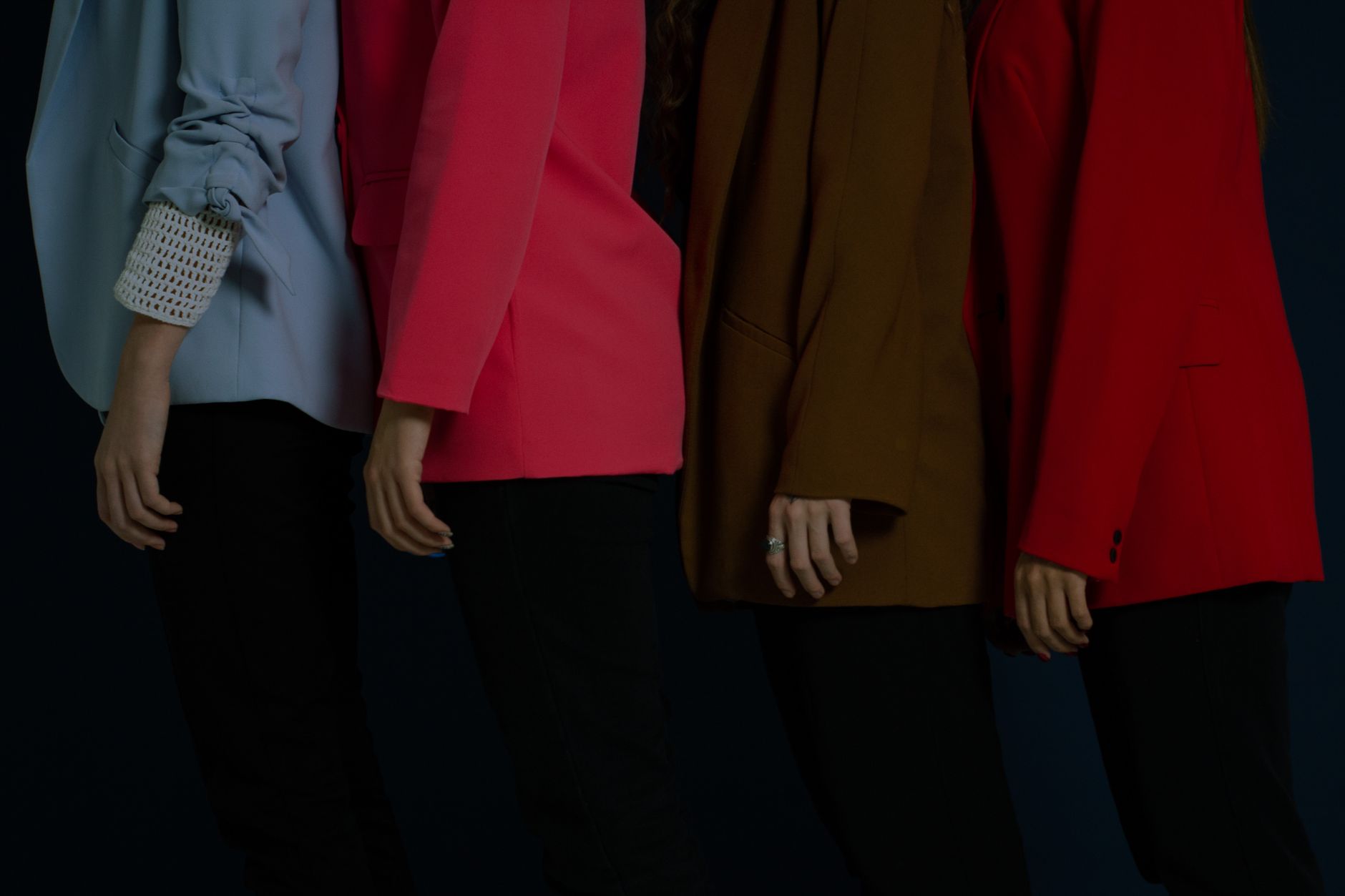
Measurement three: the button point and the chest
What to check
With the jacket buttoned, the front should close without pulling. The fabric at the button should lie flat, and there should be no X shaped stress lines radiating outward from it.
Why it decides the silhouette
The button position determines where the eye reads your waist, and the chest determines whether the jacket sits against the body or stands away from it. An X shaped pull is the clearest possible signal that a jacket does not fit, visible from across a room and impossible to ignore in a photograph.
The test
Button it, stand normally, breathe out. Then sit down. A jacket that only works standing is a jacket you will stop wearing.
The full checklist, in order
| Check | What correct looks like | Fixable | Approximate cost to fix |
|---|---|---|---|
| Shoulder seam | Sits at the shoulder edge, no divot | No, in practice | 100 USD and up, rarely worth it |
| Sleeve length | Ends at the wrist bone | Yes, easily | 20 to 40 USD |
| Button and chest | Closes flat, no X pull | Only slightly | 25 to 45 USD if there is seam allowance |
| Collar | Lies flat against the back of the neck | Sometimes | 40 USD and up |
| Body length | Covers the seat, or deliberately cropped | Yes | 40 to 60 USD |
| Waist suppression | Follows the body without gripping | Yes | 25 to 45 USD |
| Sleeve width | Slim without restricting | Yes | 25 to 40 USD |
The order matters. Check the shoulder first, and if it fails, put the jacket back regardless of how good everything else is.
Buying strategy that follows from this
Because the shoulder is unfixable and everything else is not, the correct approach is to buy for the shoulder and the chest, then alter down.
In practice this means trying the size that fits your shoulders even if it is loose everywhere else, then having the waist, sleeves and body adjusted. A hundred dollar blazer with a correct shoulder and sixty dollars of alterations will comfortably outperform a two hundred and fifty dollar blazer that fits nowhere properly.
The exception is an oversized cut, where the shoulder is intentionally dropped. Even here the drop should look deliberate, meaning a clear and consistent extension beyond the shoulder rather than an ambiguous one.
The details that separate expensive from cheap beyond fit
Once fit is handled, four things carry the rest.
Buttons
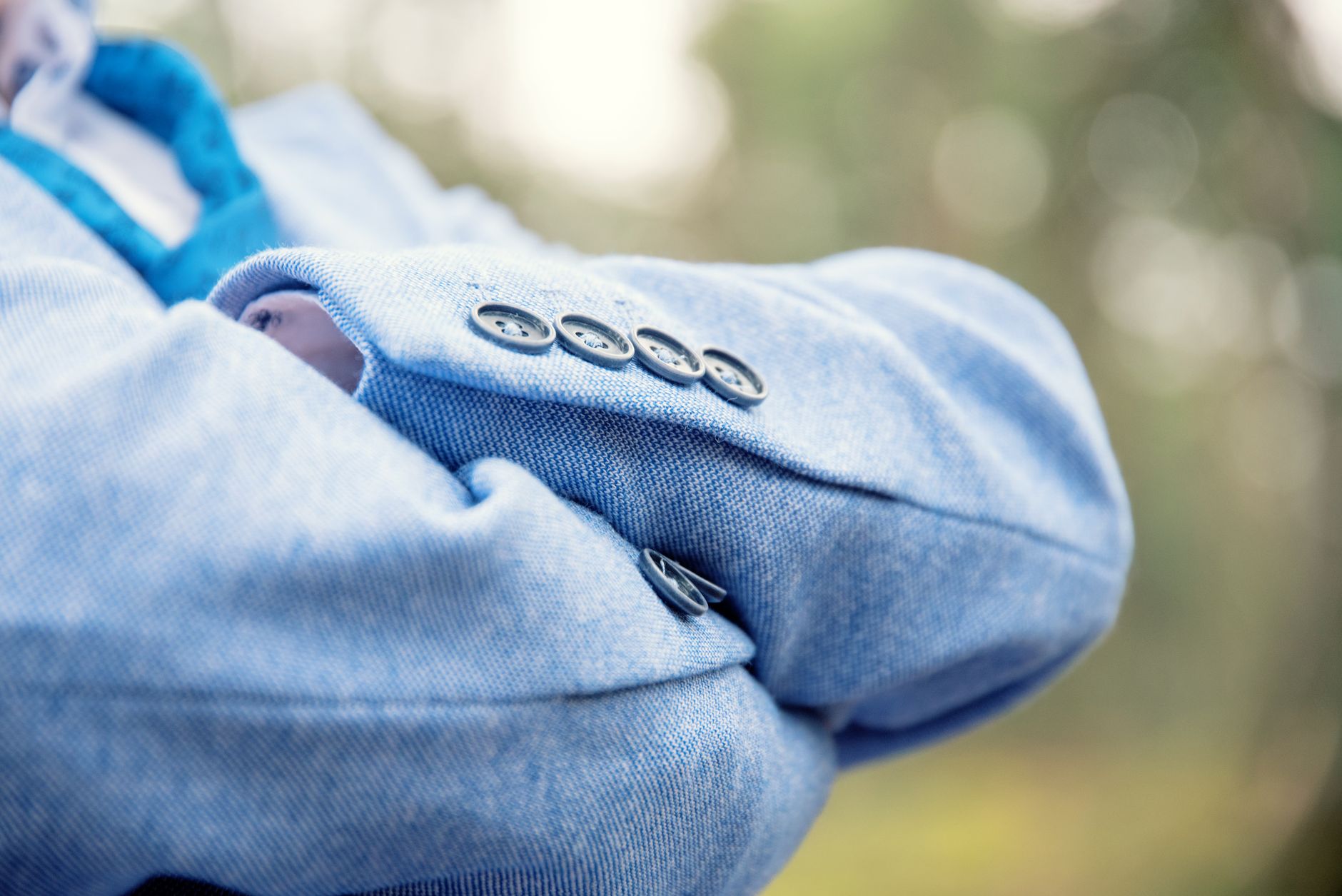
Lightweight plastic reads as cheap under any light. Horn, corozo or heavy resin costs very little to swap and changes the garment immediately.
Lining
A full lining that is not thinner than the outer fabric. A half lined jacket is fine in summer weights and looks unfinished in winter ones.
The vent
Check that the basting stitches holding the back vent closed have been removed. A surprising number of jackets are worn for years with the X stitch still in place, which prevents the vent from hanging correctly.
Fabric weight
A heavier cloth holds structure. Lightweight blends collapse at the elbow and the front edge within a season.

Frequently asked questions
How should a blazer fit at the shoulder?
The seam should sit at the outer edge of the shoulder bone for a fitted cut. For an oversized cut it should extend clearly and consistently beyond it. Anything in between reads as a fitting error.
Can a blazer's shoulders be taken in?
Technically yes, practically rarely. It requires rebuilding the top of the jacket and typically costs more than a hundred dollars, often exceeding the value of a high street garment.
What sleeve length is correct?
Ending at the wrist bone, or roughly a centimetre above it if a shirt cuff is intended to show. If the sleeve covers part of your hand, shorten it.
Should a blazer be worn buttoned or unbuttoned?
Either, but it must fit buttoned. On a two button jacket, fasten only the top button. On a one button, fasten it when standing and open it when seated.
What size should I buy if I am between sizes?
Buy for the shoulders and chest, take everything else in. This is the single most useful rule in buying tailoring and the one that produces the biggest improvement in how a jacket reads.
The Velvet verdict
Three measurements, checked in about forty seconds in a fitting room, determine most of what people perceive as the price of a jacket. Shoulder first, sleeve second, button third. If the shoulder is wrong, walk away, because that is the only one you cannot buy your way out of afterwards.