

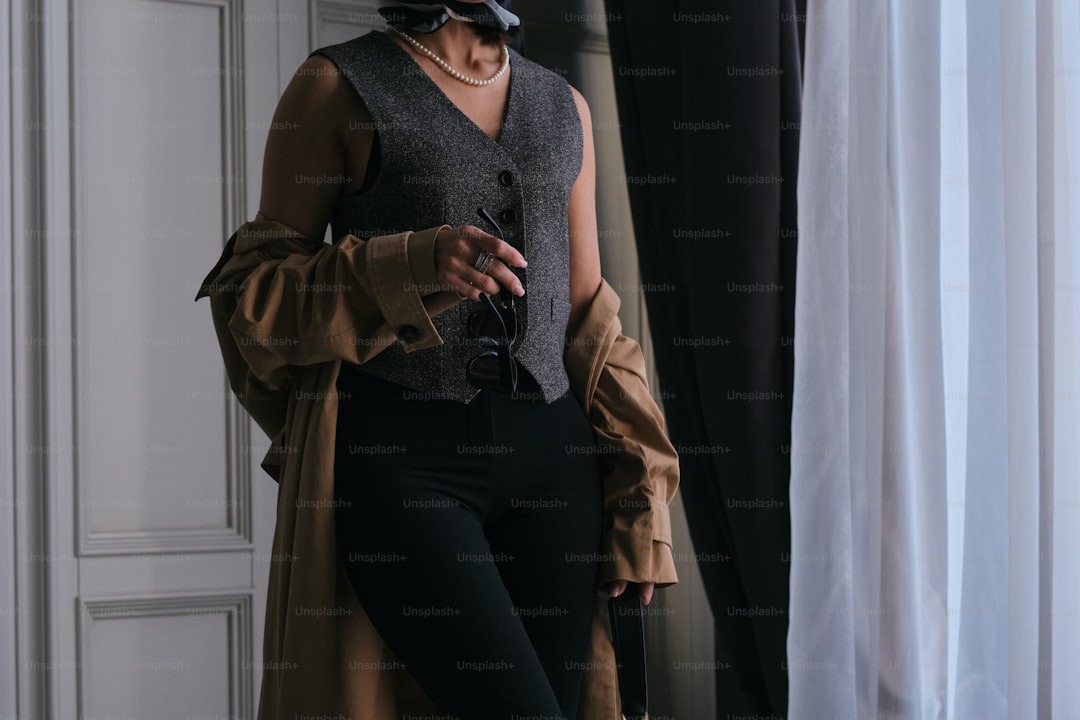
Somewhere between a Loro Piana cashmere coat and a leopard-print faux fur, an entire generation is trying to figure out who they want to be when they get dressed in the morning. The old money vs mob wife aesthetic debate has consumed TikTok, Instagram, and fashion forums for two solid years now — and in 2026, the conversation has gotten more interesting, not less. What started as a clean binary between “quiet luxury” minimalism and mob wife maximalism has splintered into a full three-way style identity crisis that says far more about Gen Z’s relationship with class, confidence, and cultural belonging than any runway show ever could. These aren’t just outfit formulas. They’re lifestyle fantasies, each one selling a different version of what power looks like when you put it on your body.
And the thing is, most women under thirty aren’t picking just one. According to Marie Claire’s 2026 trend report, younger consumers are experiencing genuine “aesthetic fatigue” after years of micro-trend whiplash — cycling from clean girl to coastal grandmother to mob wife to coquette in what felt like fifteen minutes. The backlash has pushed many toward what Source Fashion calls “fluid identity dressing,” where you pull from old money on Monday, channel full mob wife energy on Friday night, and wear head-to-toe logo Versace to brunch on Sunday because you feel like it. The three aesthetics aren’t competing anymore so much as coexisting in the same closet, and understanding what each one actually signals — beyond the TikTok surface — is the real style move right now.
What Old Money Style Actually Looks Like in 2026
Old money dressing in 2026 has matured past its initial TikTok phase into something fashion insiders are calling Quiet Luxury 2.0. The core principles haven’t changed — no visible logos, impeccable fabric, pieces that could have been worn in 1994 or 2034 without looking dated — but the brand landscape has shifted. Loro Piana remains the gold standard, and their 2026 “Mastery of Colors” collection leans into natural dyes that produce rich, grounded tones in cashmere and wool. The Row continues its dominance with oversized white shirting and floor-sweeping coats that practically whisper generational wealth. Hermès, as always, resists the hype cycle entirely, keeping its equestrian-rooted functionalism front and center.
What’s changed is the attitude. Early old money content on TikTok had an aspirational, slightly desperate quality — “how to look rich” tutorials filmed in rented Airbnbs. The 2026 version is more self-aware. Brands like Khaite, Brunello Cucinelli, and Ralph Lauren’s Purple Label are leaning into the emotional utility angle: these clothes aren’t about impressing anyone, they’re about feeling grounded. A $3,200 Loro Piana half-zip isn’t a flex. It’s supposed to feel like armour against chaos. Whether that framing is genuine or just better marketing is a separate conversation, but the shift from “look wealthy” to “feel stable” tracks perfectly with Gen Z’s documented decision fatigue and craving for consistency over novelty.

The New Money Aesthetic: Logos, Dopamine, and Zero Apologies
New money style occupies the opposite end of the spectrum, and in 2026, it’s staging a quiet comeback after being briefly eclipsed by the mob wife wave. This is the aesthetic of first-generation wealth — crypto winners, viral creators, young founders — who see fashion as celebration, not camouflage. Visible logos from Gucci, Fendi, Balenciaga, and Louis Vuitton are the point, not the accident. Bold colour blocking, statement sneakers, and accessories that announce themselves from across the room define the wardrobe. Where old money hides the price tag, new money wears it as a badge of honour.
Istituto Marangoni’s 2026 fashion report notes that Gen Z “doesn’t dress to look rich — they dress to look more,” and new money style delivers exactly that dopamine hit. The difference between new money and mob wife is intention: new money is optimistic and forward-facing, rooted in entrepreneurial energy and digital culture. Think Jacquemus runway pieces worn with Off-White sneakers and a Goyard tote. It’s not subtle, but it’s not trying to be. The cultural criticism — that visible logos signal insecurity rather than success — misses the point for this crowd. They know the old money club isn’t extending invitations, so they built their own, and the dress code is whatever gets the most engagement.

Mob Wife Energy: Why Bold Glamour Refuses to Die
Creator Kayla Trivieri’s viral declaration — “Clean girl is out, mob wife era is in” — landed in early 2024 and triggered a full aesthetic revolution that’s still generating content two years later. The mob wife look draws from fictional mafia matriarchs: leopard print everything, faux fur coats, oversized gold hoops, chunky chain necklaces, red nails, smoky eyes, dark lip liner, and hair that has never once been described as “effortless.” It is extremely effortful, and that’s the entire point. Where quiet luxury says “I woke up like this,” mob wife says “I spent two hours getting ready and I dare you to say something about it.”
The brands fuelling the mob wife pipeline span every price tier, which is part of its staying power. At the top, you’ve got Dolce & Gabbana (basically the patron house of the aesthetic), Versace’s Medusa-heavy gold pieces, and Saint Laurent’s leather-forward collections. At the accessible end, Zara TRF and Mango have run multiple leopard-print and faux-fur capsules through 2025 and into 2026, while H&M Studio delivered a surprisingly strong animal-print range for FW25. CNBC reported the trend is actually easier on the wallet than quiet luxury — a vintage-looking faux fur from & Other Stories costs a fraction of a Loro Piana cashmere, and the visual impact is arguably louder.

The Cultural Divide Underneath the Clothes
What makes the old money vs mob wife aesthetic conversation genuinely fascinating — and not just another style quiz — is what each aesthetic communicates about class, identity, and belonging. Stanford’s analysis of the old money trend pointed out that Gen Z’s obsession with inherited-wealth aesthetics reflects a deeper anxiety about economic mobility. When homeownership feels impossible and student debt is a given, dressing like old money becomes a form of escapism — cosplaying stability in a world that offers very little of it. The Berkeley High Jacket went further, calling the trend “ignorant and troubling” for romanticizing dynasties built on exploitation.
Mob wife aesthetic carries its own cultural baggage. Critics have flagged the glamorisation of organised crime and the reduction of Italian-American identity to a costume. But defenders argue it’s less about the Mafia and more about reclaiming a kind of feminine power that quiet luxury actively suppresses — the power of being loud, visible, and unapologetically decorative. New money, meanwhile, gets coded as “tacky” by old money devotees, which says more about inherited class bias than it does about anyone’s actual taste. The truth is that all three aesthetics are performances, and the Gen Z women cycling between them understand that better than anyone.

How the Three Aesthetics Show Up in Beauty
The divide extends well beyond the closet. Old money beauty is skincare-first: Augustinus Bader, La Mer, maybe a NARS Sheer Glow and a single coat of mascara. The goal is “your skin but better” — dewy, minimal, bordering on no-makeup makeup. Charlotte Tilbury’s Pillow Talk line basically owns this lane. New money beauty leans into editorial glam: full-coverage foundation, sharp contour, statement lip, perfectly microbladed brows. It’s polished to the point of precision — think Fenty Beauty’s Pro Filt’r and Pat McGrath’s bold lip colours. Mob wife beauty is the most theatrical of the three: siren eyes with heavy black liner, dark smoky shadow, overlined lips in burgundy or mahogany, voluminous lashes, and brows that are filled but deliberately bold rather than feathered. Rare Beauty’s soft pinch blush applied heavily across the cheeks has become a mob wife staple, blending that “just came in from the cold” flush with full drama everywhere else.

Building a Closet That Speaks All Three Languages
The smartest approach in 2026 isn’t loyalty to one aesthetic — it’s fluency across all three. Start with an old money foundation: well-cut trousers from Aritzia Babaton or COS, a quality cashmere knit, neutral leather accessories. Layer in mob wife statement pieces: a leopard-print coat from Mango or a faux-fur jacket from & Other Stories, chunky gold earrings, a bold red lip for nights out. Add new money energy through a logo-forward bag — Coach Tabby, Fendi Baguette, or a vintage Dior saddle — and designer sneakers that signal you’re plugged into the culture. The mixing is the message. Rigidly committing to one lane reads as cosplay; moving between them reads as someone who actually understands fashion as self-expression rather than self-branding.

Do’s and Don’ts
| Do | Don’t |
|---|---|
| Invest in one genuine old money staple — a Loro Piana knit, a Khaite blazer, a quality camel coat | Don’t buy an entire “old money starter pack” from Amazon and expect it to read as authentic |
| Wear mob wife leopard print with confidence and strong accessories | Don’t pair every animal print with more animal print — one statement piece per outfit |
| Mix aesthetics within a single outfit for a personal, modern look | Don’t rigidly stick to one TikTok aesthetic like it’s a uniform |
| Choose faux fur that looks luxe — & Other Stories, Stand Studio, Jakke | Don’t buy cheap costume-quality faux fur that pills after one wear |
| Let your beauty choices match your outfit’s energy for the day | Don’t wear full mob wife smoky eye with head-to-toe quiet luxury — it reads confused |
| Research actual brand heritage before name-dropping houses | Don’t wear Brunello Cucinelli because TikTok told you to without knowing what makes it special |
| Thrift and vintage shop for authentic gold jewellery and leather pieces | Don’t assume more expensive always means more stylish — mob wife thrives at every price point |
| Use new money logo pieces as intentional accents, not head-to-toe branding | Don’t cover yourself in logos from five different houses simultaneously |
| Understand that all three aesthetics are performances, and own that | Don’t gatekeep aesthetics or mock women who dress differently from you |
| Follow the trend cycle loosely but build around pieces you genuinely love | Don’t chase every micro-trend pivot — aesthetic fatigue is real and expensive |

FAQs
What is the main difference between old money and mob wife aesthetic? Old money aesthetic centres on discretion, understatement, and the appearance of inherited wealth — think neutral palettes, zero visible branding, and fabrics so good they don’t need a label. Mob wife aesthetic is the deliberate opposite: bold animal prints, statement fur, heavy gold jewellery, and dramatic makeup that demands attention. Old money whispers; mob wife announces. The cultural roots differ too — old money references WASP and European aristocratic traditions, while mob wife draws from Italian-American glamour as depicted in films like Goodfellas and The Sopranos. Both are equally valid as style choices, but they communicate fundamentally different relationships with visibility and power.
Is the mob wife trend still relevant in 2026? Absolutely. While the initial viral spike happened in early 2024 when creator Kayla Trivieri coined the term, the aesthetic has proven far more durable than most TikTok micro-trends. Sumissura’s 2026 trend analysis still lists it as a dominant aesthetic, and brands like Dolce & Gabbana, Versace, and even high-street labels like Zara continue to produce mob wife-adjacent pieces. The trend has evolved from a novelty into a genuine style lane, particularly for women who find quiet luxury too restrictive and want their wardrobe to reflect personality rather than restraint.
Where does new money style fit between old money and mob wife? New money occupies a distinct middle lane. It shares mob wife’s love of visibility and boldness but swaps the vintage-glamour references for contemporary, logo-forward designer pieces. New money style is rooted in entrepreneurial culture — think tech founders, influencers, and first-generation wealth — and prioritises newness, hype, and cultural currency over either old money’s timelessness or mob wife’s theatrical drama. Brands like Balenciaga, Off-White, and Jacquemus are new money staples. The key difference is aspiration direction: old money looks backward, mob wife looks sideways at pop culture, and new money looks forward.
Can you mix old money and mob wife in one outfit? You can, and many stylists argue you should. A camel cashmere coat (old money) worn over a leopard-print slip dress (mob wife) with minimal gold jewellery creates a tension that reads as genuinely personal rather than algorithmically curated. The trick is letting one aesthetic lead and the other accent — going fifty-fifty tends to feel indecisive. Miu Miu’s recent collections have actually played in this exact space, combining preppy old money silhouettes with unexpectedly bold textures and prints.
Why is Gen Z so drawn to these aesthetic categories? Stanford researchers have linked it to economic anxiety and identity formation in a hyper-digital age. When real class mobility feels increasingly out of reach, aesthetic categories offer a way to perform and explore different class identities through clothing. TikTok’s format — short, visual, and algorithm-driven — accelerates this by making aesthetics instantly recognisable and shareable. The deeper pull is about belonging: each aesthetic comes with a community, a set of values, and a built-in identity that’s easier to adopt than building a personal style from scratch in an overwhelming fashion landscape.
What are the best affordable brands for each aesthetic? For old money on a budget, Uniqlo C, COS, Arket, and Aritzia Babaton deliver clean lines and quality fabrics without luxury pricing. For mob wife, Zara TRF, Mango, H&M Studio, and & Other Stories regularly stock leopard print, faux fur, and bold gold accessories. For new money style, Coach (especially the Tabby line), vintage designer from platforms like Vestiaire Collective, and contemporary brands like Ganni or Staud offer logo-forward or statement pieces at more accessible price points. Thrifting is genuinely underrated across all three — vintage gold jewellery and leather goods can serve any aesthetic convincingly.
Conclusion
The old money vs mob wife aesthetic debate isn’t really about choosing a side — it’s about understanding what each style communicates and deciding what you want to say on any given day. In 2026, the most interesting dressers are the ones treating these categories as a vocabulary rather than a religion, mixing quiet cashmere with bold leopard and the occasional logo flex without apology. If you’re still figuring out where you land, start experimenting — your closet doesn’t need a single aesthetic identity any more than you do.