

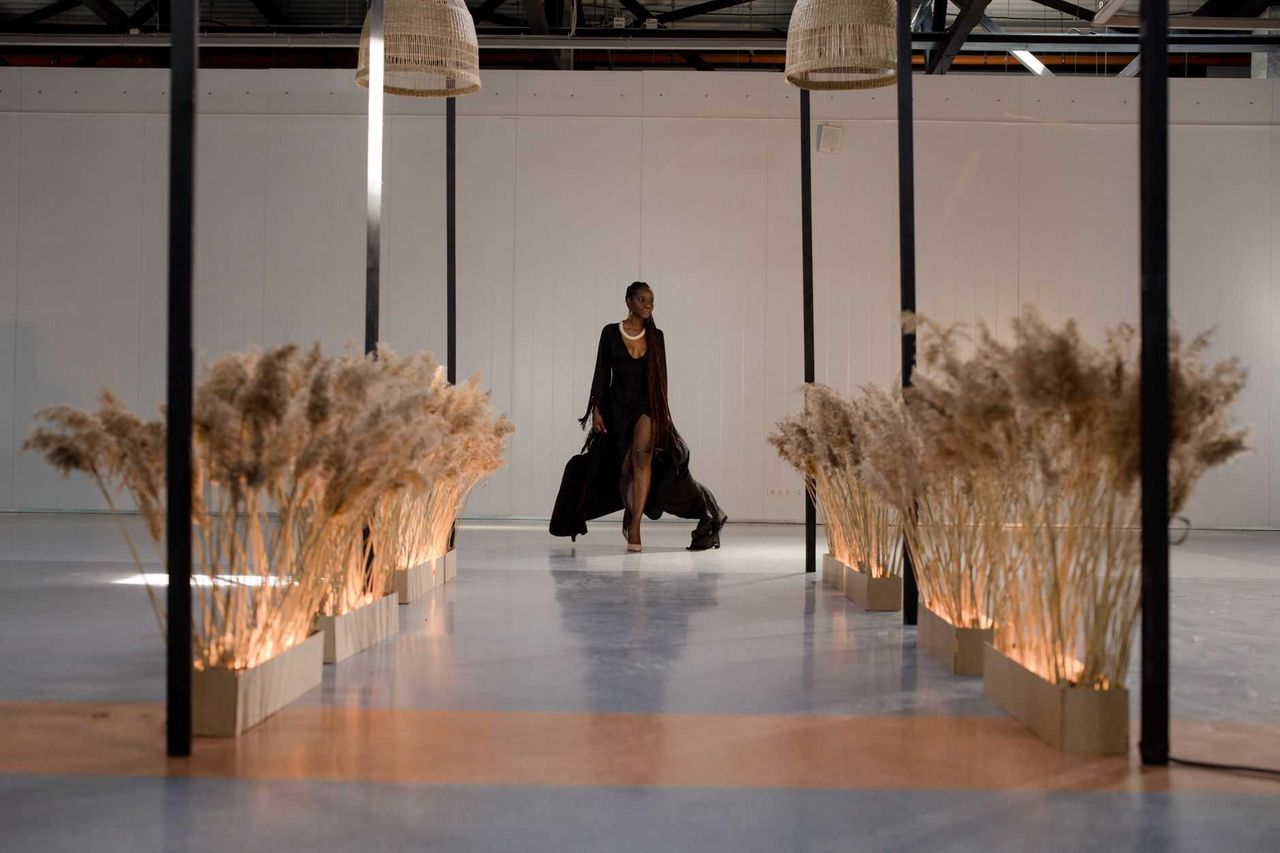
London Fashion Week closed on 23 September with a clearer thesis than most AW26-27 seasons have offered. Four silhouettes recurred across the shows that matter for party-season dressing: the bias-cut column, the structured corseted bodice, the sheer floral maximalist and the architectural shoulder. The editors sat through fifteen presentations and three days of back-to-back shows, and these four shapes repeated across Burberry, Erdem, Victoria Beckham, Simone Rocha and 16Arlington with enough consistency to call it a direction rather than a trend. By November, the high-street translations will land at Reiss, Whistles, Reformation and ASOS Edition, which is where this recap stops being academic and starts being useful.
This is a working guide to what will actually sell for the December party calendar: the four silhouettes, the designer references for each, what to wear them with, and the construction details that separate a successful translation from a failed one. The focus is party-season dressing specifically, from office drinks on the eighth of December through to NYE.
The bias-cut column
Burberry's AW26-27 show opened with four consecutive bias-cut columns in muted jewel tones. Daniel Lee's silhouette ran narrow through the hip, flaring from mid-thigh to a hem that broke on the shoe. The specific references were a deep aubergine silk crepe (look 2), a bronze silk charmeuse with a cowl neckline (look 7) and a midnight navy duchesse satin cut on the bias through the full torso (look 12). The construction detail that mattered: the shoulder straps were cut 1.5cm wide, which is narrower than the standard 2-2.5cm, and the back dipped to roughly the fifth lumbar vertebra. This is not a silhouette for structured bras; the bias cut requires no visible underwear line and often a nipple cover rather than a bra.
High-street translation
Reformation already runs a bias-cut archive that will cover this almost directly. The Juliette (£248) in silk charmeuse is the closest translation, with the Prentis (£278) running a cowl-back variant that reads very close to Burberry look 7. Whistles will carry a bias-cut silk slip for AW26 at around £229, and Rixo's Prue (£285) is the maximalist-print alternative for anyone who finds solid colours uncomfortable.
The structured corseted bodice
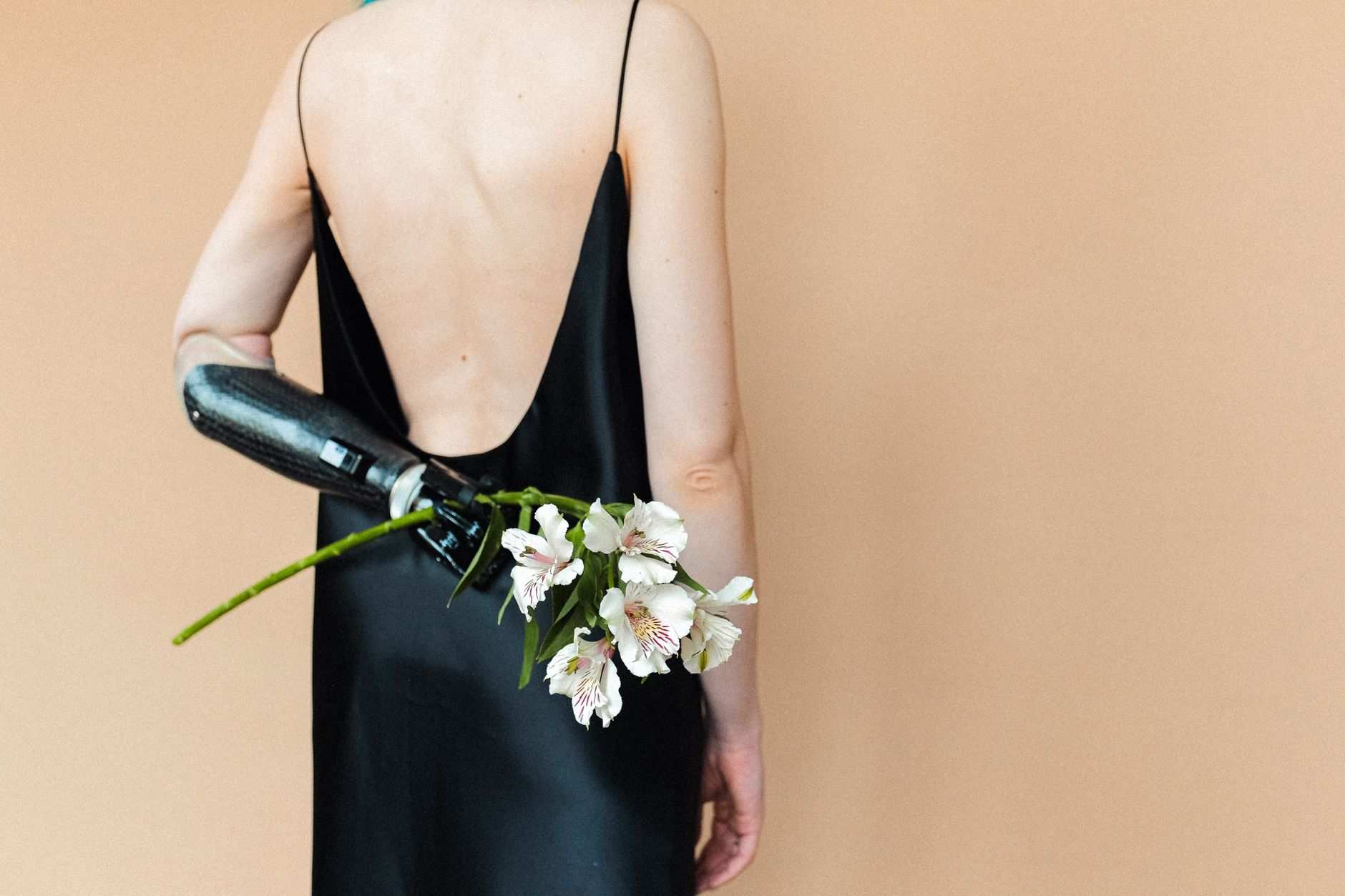
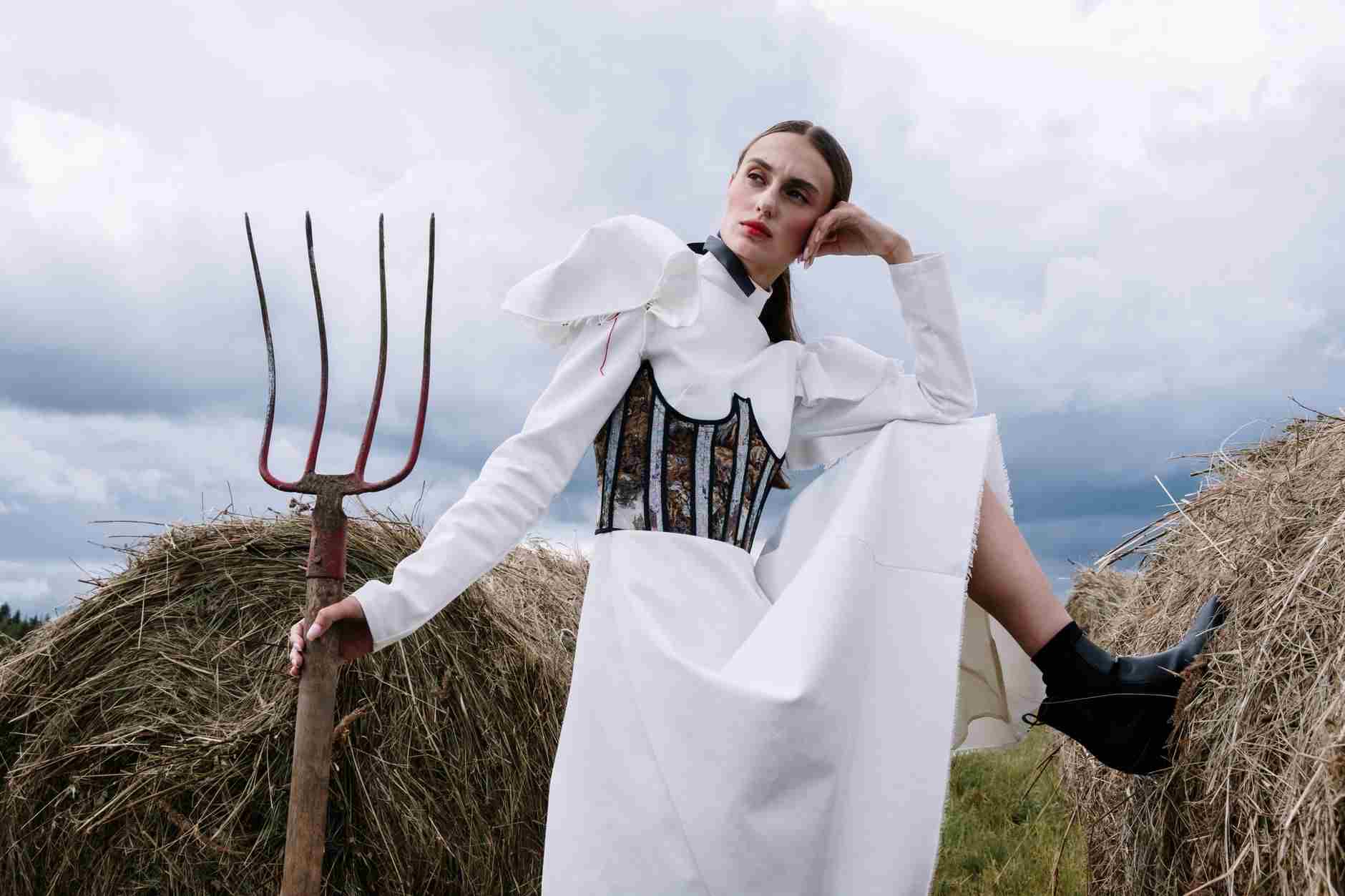
Simone Rocha and 16Arlington both leaned heavily into corseted bodices, though with different intentions. Rocha's version (look 18) used external boning through a nude mesh overlay, with a dropped waist and a bias-cut tulle skirt in black. The bodice ran six boning channels on the front and four on the back, with the lacing concealed inside a lined panel. 16Arlington's Marco Capaldo offered a cleaner version (look 9) in black duchesse satin, with internal boning only and a sweetheart neckline cut 4cm below the collarbone. Both silhouettes assumed a specific posture: shoulders back, ribcage lifted, no slouching.
What this means practically
A corseted bodice reads as party-dressing immediately, which is the appeal, but it also assumes the wearer will not sit through a four-course dinner comfortably. The honest brief is that corseted bodices work for standing receptions and short-seated drinks of two hours or less. For a long seated event, choose a modified version with internal boning only and a stretch panel at the side seam. Reiss will likely translate the 16Arlington cleaner version into a Reiss Daisy update for AW26, running at £249-279.
The sheer floral maximalist
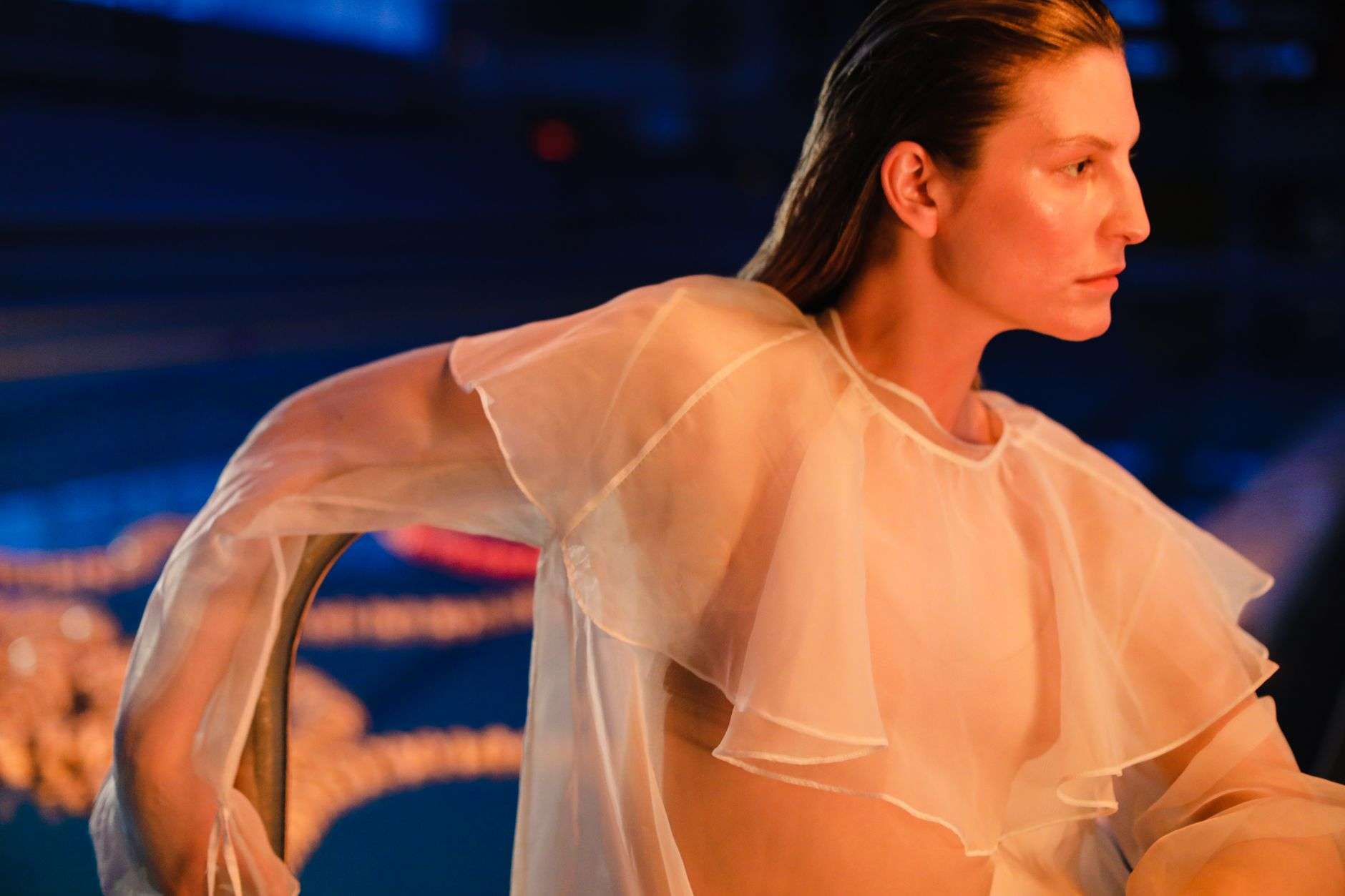
Erdem's AW26-27 show was the quietest of the four referenced here, but the one that will have the longest tail into Christmas dressing. Erdem Moralioglu showed sheer floral embroidery on nude silk organza across six consecutive looks (14 through 19), with floor-length hems, long sleeves and high necklines that read as Victorian without crossing into costume. The embroidery density ran roughly 60 percent coverage on look 14 (the heaviest) down to 30 percent on look 19 (the lightest). The nude silk base underneath meant the dresses read as embroidery suspended in air rather than as sheer-on-sheer, which is the distinction that separates Erdem from the maximalist high-street translations that will inevitably follow.
The honest limitation
Sheer floral maximalist is a difficult silhouette outside of specific party contexts. The Erdem originals run £2, 400 to £4, 800, and the high-street translations at ASOS Edition and Nobody's Child drop below £200 but read noticeably thinner. For an editor spending in the £150-250 range, the better move is a dense-embroidery dress on a solid base rather than a sheer-on-sheer attempt. Rixo's AW26 embroidered Clarissa (£295) in oxblood velvet with jet beading at the neckline is the strongest translation.
The architectural shoulder
Victoria Beckham's show closed with four consecutive looks in strong-shouldered tailoring. The specific detail was a sleeve head set 1.5cm above the natural shoulder line, built on a sculpted shoulder pad rather than a padded cap. The effect was a shoulder that squared off visually without reading as 1980s power-dressing. Beckham ran this across a cream wool double-breasted blazer (look 22), an oxblood silk tuxedo (look 24) and a black double-face wool coat (look 26). The construction detail: a Milanese canvas shoulder pad set 2cm thick at the apex, hand-stitched into the shoulder seam rather than fused, which gives the shoulder its specific angular quality.
Where to find the translation
For the under-£350 range, Reiss and Jigsaw will carry versions of the sharp-shouldered blazer in AW26. Reiss's Olivia Rose double-breasted blazer (£298) runs closest to the Beckham silhouette, though with a lighter shoulder construction. For the £500-900 range, Me+Em's Perfect Tux (£595) and Joseph's wool crepe double-breasted (£895) deliver fused-canvas versions that hold the Beckham line better. The oxblood silk tuxedo at Beckham was look 24 and will likely translate directly at Reiss as the Hollie suiting range by November.
The one silhouette that did not make the cut
Mini dresses were conspicuously absent across the four shows that matter. 16Arlington showed one (look 2), Victoria Beckham showed none, Burberry showed one as a styling note on top of trousers, and Erdem showed none. The mini is not dead for party-season, but it is clearly moving from front-of-mind to peripheral. The editors expect to see mini dresses from Reformation and Rixo for AW26, but they will not define the December party calendar in the way the four silhouettes above will.
Quick comparison
| Silhouette | Designer reference | High-street translation | Price range | Best for |
|---|---|---|---|---|
| Bias-cut column | Burberry look 2 | Reformation Juliette | £229-285 | Dinner parties |
| Corseted bodice | 16Arlington look 9 | Reiss Daisy update | £248-298 | Standing receptions |
| Sheer floral maximalist | Erdem look 14 | Rixo Clarissa | £295-325 | Warehouse drinks |
| Architectural shoulder | Victoria Beckham look 22 | Me+Em Perfect Tux | £298-595 | Office party and NYE |
| The absent mini | 16Arlington look 2 | Reformation Lenore | £198-248 | Younger party contexts |
Do's and Don'ts
| Do's | Don'ts |
|---|---|
| Match the bias-cut column with narrow 1.5cm straps and a nipple cover. | Don't wear a visible bra with a bias-cut column dress. |
| Choose a corseted bodice with internal boning for seated dinners. | Don't wear external-boning corsetry for events over two hours seated. |
| Pair the architectural shoulder with narrow-leg trousers to balance volume. | Don't layer a wide-leg trouser under a strong-shouldered blazer. |
| Specify a Milanese canvas or fused-canvas shoulder for sharp tailoring. | Don't buy a padded blazer with a soft dropped shoulder expecting a sharp line. |
| Choose a dense embroidery on a solid base for maximalist dressing. | Don't attempt sheer-on-sheer floral at the high-street price point. |
| Choose silk charmeuse at 19 momme or heavier for bias cuts to hold shape. | Don't buy sub-16 momme silk charmeuse; it will read thin and cling badly. |
| Rotate one silhouette through two party contexts to justify the spend. | Don't buy a single-wear-only runway translation under £400. |
| Specify oxblood, aubergine or midnight navy for AW26 party dressing. | Don't lean on true black alone; the colour story has moved on. |
| Match a strong-shouldered blazer with a pointed-toe pump at 75-85mm heel. | Don't pair the architectural shoulder with a round-toe or kitten-heel shoe. |
| Keep hair and makeup minimal when the silhouette is doing the work. | Don't over-style hair and face when the dress has architectural weight. |
FAQ
Which of the four silhouettes photographs best for Instagram
The bias-cut column and the corseted bodice both photograph strongly, but for different reasons. The bias cut reads as elongated and sculptural in frame, which is why it dominates evening-wear editorial photography. The corseted bodice reads as structured and defined, which works well in flash photography but can look stiff in natural light. The architectural shoulder photographs best from a three-quarter angle rather than straight-on. The sheer floral maximalist is the hardest to photograph well on a phone camera because the embroidery density gets lost in the pixel density.
How quickly will the high-street translations arrive
Reiss, Whistles and Reformation typically land their AW translations four to six weeks after London Fashion Week closes, which puts the first dresses in-store from late October. The bulk of the party-dressing drops land in the first two weeks of November, and the specific-event dressing (NYE, Christmas Eve) tends to drop around the 15th of November. ASOS Edition runs faster, often three to four weeks post-LFW. Nobody's Child and Rixo run on their own calendars but have both been releasing against the LFW shows in the past two seasons.
Is the architectural shoulder the right investment piece
For an editor with a professional context that includes client dinners, the strong-shouldered blazer in Milanese canvas is the single best AW26 investment at the £500-900 range. It reads as evening when worn over a silk camisole and dress trousers, as business when worn over a shirt, and as party-dressing when worn with the oxblood silk Beckham-style trousers. The Reiss translation at £298 is honest value but will not hold the shoulder line through more than two seasons of wear. The Me+Em at £595 holds for four to six seasons.
Does the bias-cut column work for petite framing
Yes, provided the hem is tailored rather than left at the standard 160cm bias drop. For a petite frame(under 165cm), the full-length bias column reads elongating only when the hem breaks correctly on the shoe. Reformation offers free tailoring on bias-cut dresses in-store, which is the detail most buyers miss. For a mid-calf or ankle-length bias, no tailoring is needed. The Prentis bias cowl at £278 runs shorter in a size regular than the Juliette, which may suit a petite frame better off-the-rack.
What's the honest difference between high-street corsetry and designer corsetry
Boning material, lining weight, and finished seam allowance. Designer corsetry (Simone Rocha, Vivienne Westwood, 16Arlington) uses steel-spring boning in six to ten channels, with grosgrain-ribbon seam-tape finishing and a lined bodice through to the natural waist. High-street corsetry (ASOS Edition, Nobody's Child, Reiss) uses plastic or synthetic-whalebone boning in four to six channels, with overlocked seam finishes and lining to mid-torso. The high-street version will cycle through faster and will not hold its shape through more than ten wears.
How do you combine two silhouettes for one outfit
Avoid it. The four silhouettes above each carry enough visual weight that combining them produces an overloaded outfit. The exception is pairing the architectural shoulder with the bias-cut column via a sharp blazer over a silk slip dress, which is the Victoria Beckham-into-Reformation combination that has been working across the editor's event calendar for two seasons. Beyond that single pairing, combining silhouettes dilutes the effect of each one.
Should party dressing in 2026 reference 1990s minimalism or 1890s maximalism
The AW26 shows read as both, which is the specific contradiction of the season. Burberry and Victoria Beckham pulled 1990s minimalism forward through bias cuts and sharp shoulders. Erdem and Simone Rocha pulled 1890s maximalism forward through corsetry and sheer floral embroidery. The editors expect this contradiction to persist through 2027, with the quiet-luxury end of the market leaning 1990s and the maximalist end leaning 1890s. For a single investment, the 1990s reference ages better.