


The office party is the hardest December dressing brief because the dress code sits in a specific professional context that permits "festive" without permitting "party." The outcome of getting the brief wrong goes two directions: dressing too casually reads as "did not take this seriously, " and dressing too much like a Saturday night read as "did not understand the context." The honest conversation about office party dressing is that the dress code depends almost entirely on the company culture rather than on the explicit invitation wording. A "cocktail attire" invitation at a magic-circle law firm means something different from the same phrase at a creative-industry media company.
This edit maps five London-centric company cultures (traditional professional services, creative-industry agency, tech or startup, financial services, and public sector or academia) against five houses (Reiss, Me+Em, Sezane, Jigsaw and Hobbs). The focus is specific outfit recommendations with construction notes, honest observations about what passes the "hallway test" the Monday after, and the specific risks that lead to the "wrong read" outcome.
Look 1: traditional professional services (law, consulting, accounting)
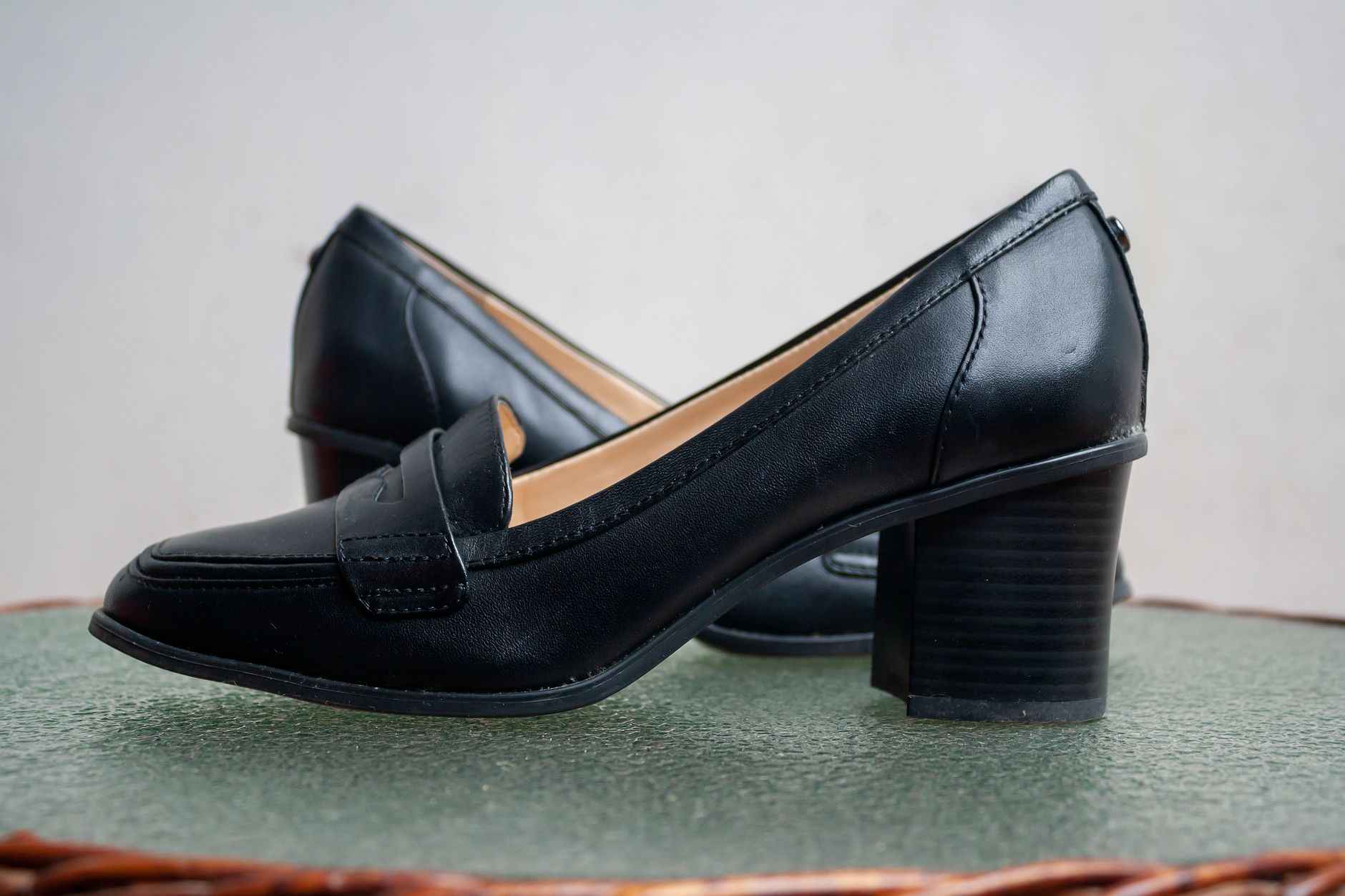
The traditional professional services office party at a magic-circle law firm, a Big Four consultancy or a Tier One accountancy practices a dress code the invitation calls "cocktail" and the senior partners read as "slightly sharper weekday." The honest brief is a midi dress with sleeves, a modest neckline, matte fabric and a muted colour. Reiss's Daisy black lace midi (£248) with a silk camisole underneath to raise the neckline is the editorial anchor. Pair with a 55mm block-heel pump from Russell & Bromley (£225, the Odyssey) and pearl studs. The outfit reads correctly in the elevator, in the firm's lobby and in the formal dining room where the party is likely to be held.
The specific risks
Avoid sequins, slits above the knee, strapless necklines and any colour brighter than deep red or forest green. The traditional professional services context punishes the "too party" read more severely than any other sector, with partner-track implications for women that the men attending the same event do not face at the same level. The lace in the Reiss Daisy walks the line correctly; a sequined alternative would cross it clearly.

Look 2: creative-industry agency (advertising, media, PR)
The creative-industry agency office party operates at the opposite end of the dress code spectrum. The invitation often reads "dress to impress" or references a specific aesthetic (speakeasy, cocktail, sparkle), and the senior leadership specifically expects the dressing to signal creative confidence. Sezane's AW26 velvet midi in oxblood (£195) with a 85mm block-heel pump and a Mejuri bold gold hoop (£75) hits the register exactly. Alternatively, a Rixo printed midi (£295) in a maximalist floral reads as "I know what I'm doing" without crossing into inappropriate territory for a shared workplace.
The specific risks
Avoid under-dressing. The creative-industry context punishes the "too corporate" read with a mild social cost: the woman who shows up in a plain black midi dress reads as "not quite one of us." The honest advice is to lean 20 percent higher on the register than a traditional-professional-services event, which means specifying velvet, bold prints, metallic accents or sheer sleeves within the midi-with-sleeves framework.
Look 3: tech or startup (software, fintech, scale-up)
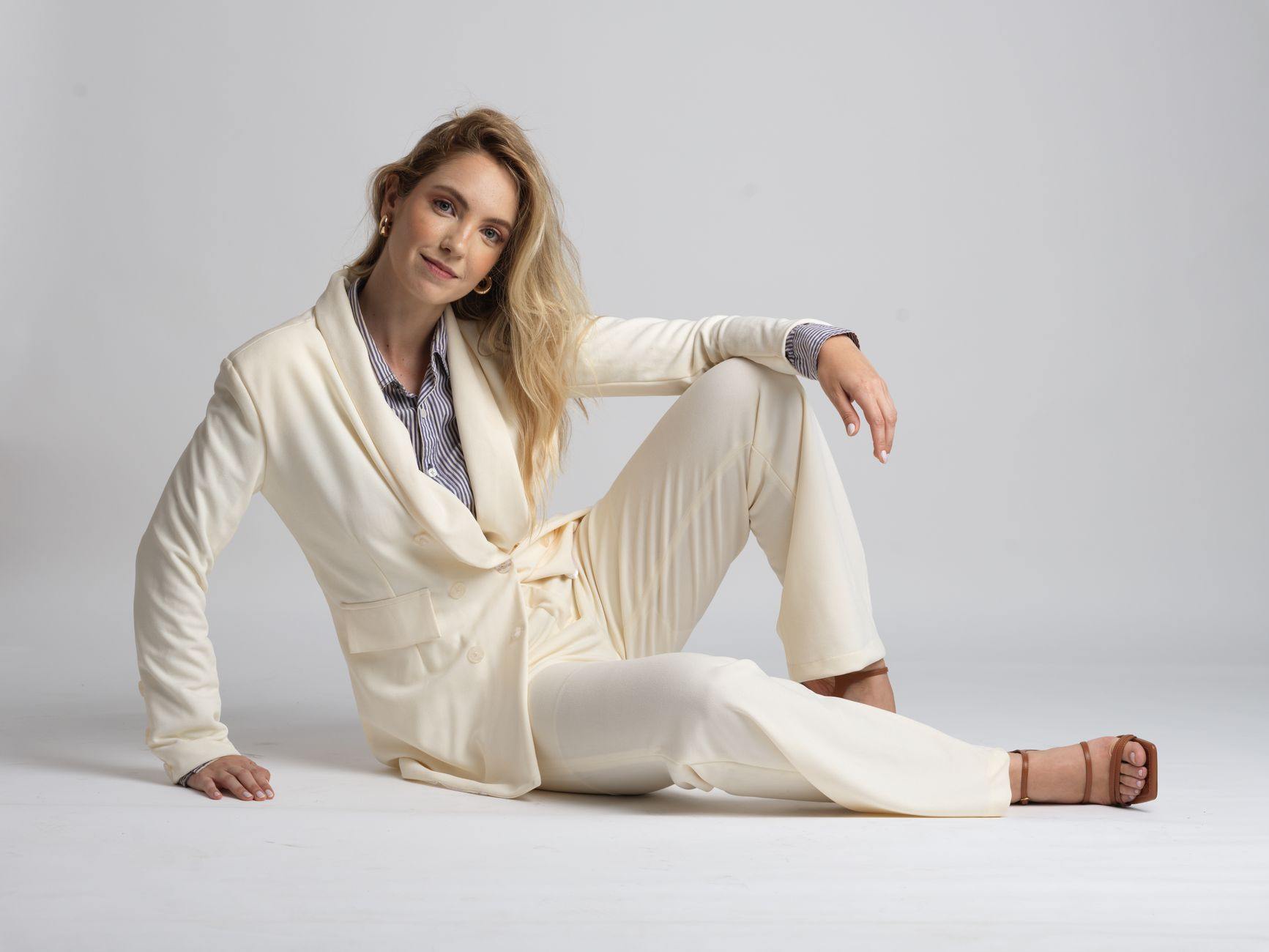
The tech or startup office party sits in a specific contextual grey area where the dress code depends on the specific company's leadership style. A founder-led series B startup with a 32-year-old CEO practices a different office party dressing from a FAANG London office with a 50-year-old leadership team. The common thread across tech contexts is that both ends tolerate "polished casual" better than the professional services sector, but neither explicitly asks for "cocktail attire" in the way a corporate law firm would. Me+Em's Perfect Tux (£595) in black wool, worn with a black silk camisole and a 85mm block heel, is the honest anchor. The suit reads as considered and professional without over-committing to any specific sub-sector dress code.
The specific risks
The specific risk in tech is the "trying too hard" read, which happens when a woman wears a sequin dress to a context where the men are in button-downs and jeans. The suit avoids this by reading as professional-dressing in a way that no one can call out as inappropriate. Avoid cocktail dresses, floor-length options and any outfit that reads as "evening event" rather than "work event."
Look 4: financial services (investment banking, asset management, hedge funds)
Financial services office parties operate at a specific register that reads conservative on the surface and allows pockets of maximalism within the conservative framework. The explicit dress code is almost always "black tie" or "cocktail attire" at the senior-leadership end, with the specific understanding that women dress sharper than the daily wardrobe suggests. Jigsaw's Lydia tuxedo-trouser (£250) with a silk camisole (Equipment, £195) and a 85mm block heel reads correctly for the junior-to-mid level. For the senior-leadership level, Hobbs's Mariella wool suit (£350) in navy with the matching Mariella trouser (£150) is the honest anchor.
The specific risks
Financial services contexts tolerate conservative dressing but punish casual dressing severely. The specific risk is the "weekend outfit" read, which happens when a woman wears a knit midi or a casual silhouette to a context where the men are in dinner jackets. Specify tailored silhouettes, matte fabrics and well-polished shoes. The oxblood velvet Sezane dress that works for creative-industry agency reads out of place at a hedge-fund office party.
Look 5: public sector or academia
The public sector or academic office party operates at a quieter register across every category. The dress code is almost always "smart" or "festive" with the explicit expectation that nothing crosses into "party" territory. Hobbs's Mariella wool shift (£250) in forest green with a 55mm pump reads correctly, as does a Jigsaw knit midi (£175) in oatmeal with a matching cashmere wrap. The specific anchor is a midi dress with sleeves in a muted colour, with matte fabric and minimal jewellery.
The specific risks
The specific risk in public sector or academic contexts is the "showing off" read, which happens when a woman wears visible designer labels, loud colours or evening-specific silhouettes. The register is deliberately understated, and dressing above the register reads as socially tone-deaf. The outfit should blend into the room, not stand out from it; this is the honest cultural note that distinguishes public sector dressing from every other sector in this edit.
The specific cross-sector moves that work
Three moves work across every sector. The first is a knee-length midi dress with sleeves in a muted colour (deep red, forest green, navy, black), which reads as "appropriate" in every context. The second is a 55mm to 75mm block heel in black patent, which reads as "considered without being too party" universally. The third is a single piece of fine jewellery (pearl studs, a Mejuri gold hoop, a Monica Vinader cuff), which signals professionalism without crossing into decorative territory.
Quick comparison
| Sector | Dress code reading | Anchor outfit | Price | Shoe |
|---|---|---|---|---|
| Professional services | Sharper weekday | Reiss Daisy with camisole | £248 | 55mm |
| Creative agency | Dress to impress | Sezane oxblood velvet | £195 | 85mm |
| Tech startup | Polished casual | Me+Em Perfect Tux | £595 | 85mm |
| Financial services | Sharp conservative | Hobbs Mariella wool suit | £500 | 85mm |
| Public sector | Smart quiet | Hobbs Mariella shift | £250 | 55mm |

Do's and Don'ts
| Do's | Don'ts |
|---|---|
| Match the dress register to the specific company culture, not the invitation wording. | Don't take "cocktail attire" at face value across sectors. |
| Specify a midi length with sleeves for all professional contexts. | Don't wear a mini or strapless dress to any office party. |
| Choose matte fabrics (crepe, wool, lace) over shiny ones (satin, sequin). | Don't wear satin or sequin to a traditional professional services event. |
| Keep jewellery to a maximum of two items (earrings and one bracelet or ring). | Don't layer multiple bold accessories at an office event. |
| Choose a 55mm or 75mm block heel over a 100mm stiletto. | Don't wear a 100mm stiletto to any office party context. |
| Carry a small structured bag in black leather or satin. | Don't carry a shopping bag, oversized tote or novelty bag. |
| Set hair in a smooth low ponytail or sharp bob rather than party waves. | Don't curl or texture hair heavily for an office context. |
| Keep makeup to one feature (either eye or lip, not both). | Don't apply a full-glamour makeup for an office party. |
| Specify a muted colour (deep red, forest green, navy, black) across sectors. | Don't wear bright red, royal blue or metallic to a professional services event. |
| Leave the office at the standard time and change in a nearby hotel room if needed. | Don't change at the office or wear the outfit through a full workday. |
FAQ
How do you tell if the "cocktail attire" invitation means party or professional
Three signals. The first is who signs the invitation: HR or operations teams tend to use "cocktail attire" to mean "slightly sharper daywear" while senior leadership tends to use it to mean "actual party dressing." The second is the venue: a corporate dining room or hotel ballroom reads professional, while a restaurant with a bar or a members' club venue reads more party. The third is the timing: a 6pm start reads more professional (sliding straight from work), while an 8pm start reads more party (allowing time to change). Match the dress register to allthree signals, not just the invitation wording.
Is a trouser suit appropriate for an office party in 2026
Yes, and increasingly it is the correct answer for several sector contexts. The Me+Em Perfect Tux at £595, the Jigsaw Lydia tuxedo-trouser at £250 and the Hobbs Mariella suit at £500 all read as considered professional-party dressing. The specific advantage is that the suit crosses from the office context (worn through the workday if needed) into the party context (with a silk camisole and lipstick change) without a full outfit swap. The honest limitation: the suit reads less overtly "festive" than a dress, which may be a disadvantage at a creative-industry agency party where "did you dress up?" is the social question.
Should you drink at the office party
A separate question from dressing, but one that affects the dressing decision. If the plan is three or more drinks, specify a dress that moves comfortably with reduced coordination (bias cut over corseted) and shoes that remain comfortable through standing time (block heel over stiletto). The Reiss Daisy with a 55mm block heel is more drink-forgiving than the Sezane velvet with an 85mm pump. The honest advice is to limit drinking at traditional professional services events (where the social cost is high) and to pace drinking at creative-industry events (where the social cost is lower but the next-day visibility is still real).
What do you wear if you have to walk from the office to the party venue
The outer-layer decision defines the walk-over context. A wool overcoat (Toteme, Hobbs or COS) at calf-length reads as professional and covers the dress fully. Avoid shearling, puffer coats or statement outerwear for walk-over scenarios; the office-to-venue walk is a visible transition and the outer layer should read as "going from work" not "going to party." Keep the shoes in a tote bag and change into them at the venue; wear flat loafers for the walk, which protects both the shoes and the feet. The specific tote bag recommendation is a black leather tote (COS at £150) which reads as professional and holds the walk-shoes without visible compromise.
How do you handle the "did you get my promotion" conversation at the office party?
A dressing question that affects the dress decision. If a career-forward conversation is likely at the party, specify a sharper outfit (the suit over the dress, the professional services anchor over the creative agency anchor). The suit reads as "I am taking this seriously" in a way a cocktail dress does not. The specific move is to dress 10 percent sharper than the context would normally require, which signals readiness for professional conversation without overdressing. Pair with a Russell & Bromley block heel at 55mm rather than 85mm; the lower heel reads as professional-forward rather than party-forward.
What's the right makeup for an office party across sectors
Keep the makeup within the professional register across all sectors. The Charlotte Tilbury Pillow Talk lipstick (£29), a single wash of champagne eyeshadow and a soft blush is the universal professional-party makeup. Avoid smoky eye, dark lip, visible contouring or glitter across all sector contexts. The MAC Face and Body foundation with Hourglass Ambient Lighting powder (both covered in the festive makeup edit) delivers the "my skin but polished" register that reads correctly at office events. Save the Pat McGrath Mothership smoky-eye for the private NYE event; the office party is not the context for it.
Can you wear the same office-party outfit to multiple events in the same month
Yes, with specific adjustments. The Reiss Daisy with a camisole, pearl studs and the 55mm pump reads differently from the Reiss Daisy without a camisole, with a Mejuri hoop and the 85mm pump. The dress is identical; the styling moves make it read as two outfits. Across three to four December events, one well-chosen dress with three styling variations is the honest wardrobe approach. The failure mode is wearing the identical outfit (same accessories, same shoes, same hair) across two events with overlapping attendees, which reads as "did not plan ahead" rather than "chose a signature look."