

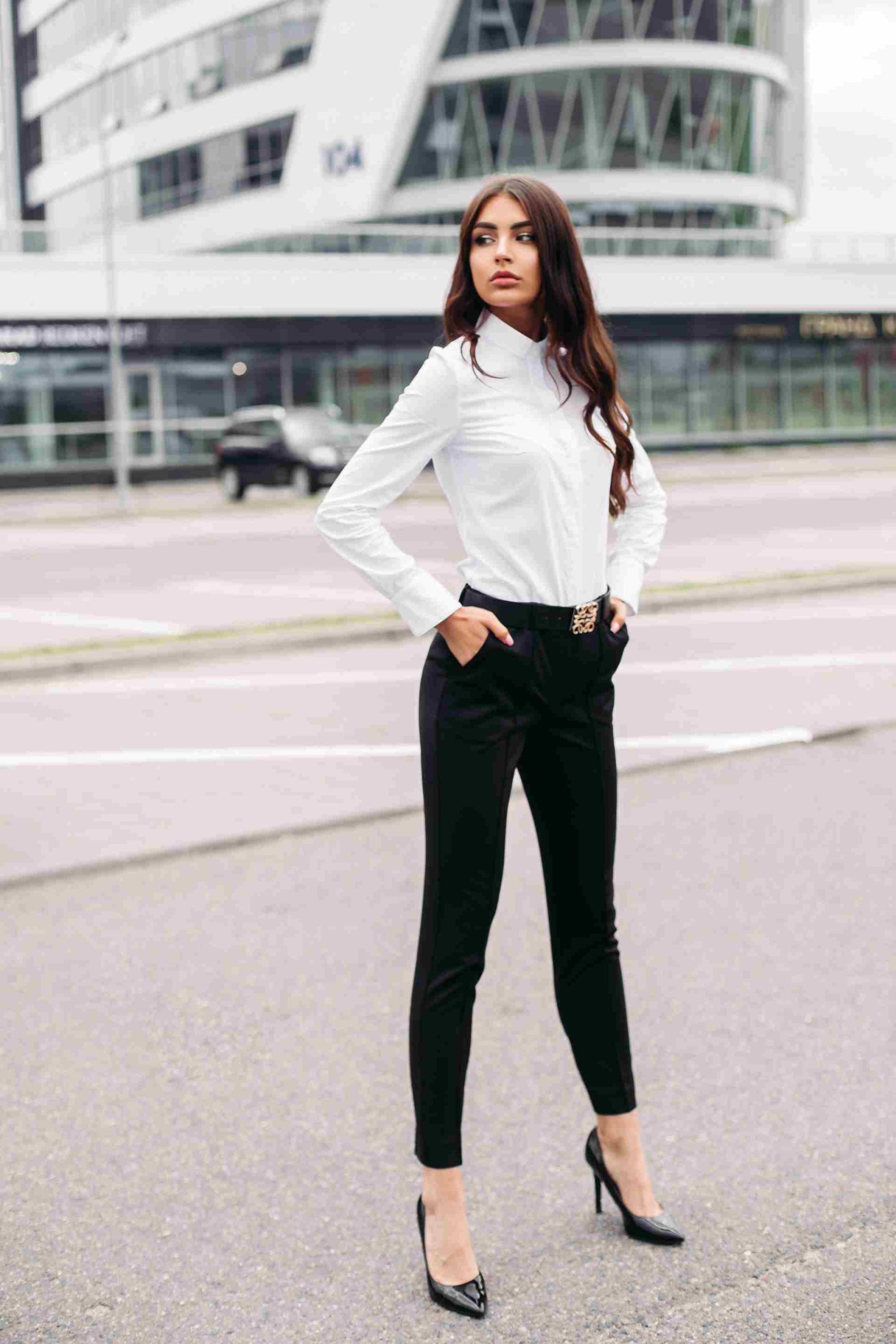
Business casual is one of the commonly misunderstood dress codes. It sits between office wear and everyday casual clothing but the boundaries are often unclear. In 2026 business casual has become more practical and flexible. The focus is no longer on rules but on looking polished, comfortable and appropriate for a professional environment.
The Core Principle of Business Casual Dressing
The key to business dressing is balance. Business casual outfits should feel relaxed compared to wear but still structured enough to reflect professionalism. This means avoiding extremes. Neither formal nor too casual. Business casual is about finding this balance.

Bottom Wear for Business Casual Outfits
A good starting point for business outfits is the bottom wear. Trousers remain one of the reliable choices because they provide structure while allowing flexibility in styling. Neutral colors such as black, navy, beige and grey are especially useful because they can be paired with tops. The fit should be comfortable enough for hours but clean enough to maintain a professional appearance. Business casual trousers are a choice.

When Jeans Work in Business Casual Settings
Jeans are often acceptable in business settings but only when chosen carefully. Dark or medium-wash jeans with an slightly tapered fit work best. They should not be distressed, overly tight or excessively loose. Pairing jeans with a top or a blazer helps maintain the right balance. Business casual jeans can be an option.

Tops and Shirts for Business Casual
Tops play a role in defining a business casual look. Simple shirts, blouses and fitted tops are ideal. Fabrics that hold their shape and look clean throughout the day are more effective than soft or overly casual materials. Subtle colors and minimal patterns tend to work in professional settings as they create a more composed appearance. Business casual tops are easy to find.

Blazers That Elevate Business Casual Outfits
Blazers are one of the ways to elevate a business casual outfit. Even a simple combination like a t-shirt and trousers can look more polished with the addition of a blazer. The advantage of blazers is their versatility. They can be. Removed depending on the setting making them practical for changing environments. A business casual blazer is an investment.

Dresses Suitable for Business Casual Environments
Dresses can also fit well within a business wardrobe. The key is to choose styles that are structured but not overly formal. Shirt dresses, wrap dresses and cut dresses are good options. They provide an outfit without requiring much coordination while still maintaining a professional tone. Business casual dresses are a choice.

Ethnic Wear in Business Casual Settings
In the context kurtis and ethnic sets can be adapted for business casual dressing. A cut kurti paired with trousers or cigarette pants creates a look that is both comfortable and appropriate for work. The emphasis should be on simplicity. Designs, subtle colors and clean silhouettes. Business casual kurtis are an option.

Co-ord sets are increasingly becoming part of business wardrobes as well. When chosen in tones and simple designs they can create a cohesive and modern look. The advantage of co-ords is that they simplify planning while still maintaining a structured appearance. Business casual co-ord sets are easy to find.
Footwear should align with the balance of the outfit. Shoes should be comfortable enough for use while still looking appropriate for a professional environment. Flats, heels and clean sneakers are common choices. The focus should be on practicality than overly formal or decorative footwear. Business casual footwear is about balance.
Color selection is a part of business casual styling. Neutral tones form the base because they are easy to combine and maintain a look. However adding colors such as pastels or muted shades can prevent the wardrobe from feeling repetitive. The idea is to introduce variation without losing consistency. Business casual color selection is key.
Business Casual Mistakes to Avoid
One of the mistakes in business casual dressing is leaning too far toward casual clothing. Wearing items that’re too relaxed such as overly loose t-shirts, distressed jeans or very casual footwear can make the outfit look unprofessional. On the hand dressing too formally can also feel out of place especially in environments that encourage a more relaxed approach. Business casual is about finding the right balance.
Another common issue is overcomplicating outfits. Business casual works best when it is simple and structured. Adding many elements or trying to make the outfit stand out excessively can reduce its effectiveness. Clean combinations with fit and fabric usually create a stronger impression. Business casual outfits should be simple.
A practical business casual wardrobe does not need to be large. A few key pieces can create outfits. A couple of trousers a tops, one blazer, one or two dresses and a few ethnic options can cover most situations. The emphasis should be on how these pieces work rather than on having many separate items. Business casual wardrobes are easy to manage.
Over time business casual style becomes more intuitive. Women who dress well in settings are not necessarily following strict guidelines. They are simply choosing clothes that fit well feel comfortable and align with their work environment. Business casual style is about intuition.
Business casual in 2026 is ultimately about controlled flexibility. Business casual allows for style while maintaining a professional standard. When outfits are chosen with this balance in mind dressing for work becomes straightforward and consistent. Business casual is the way to go.
That is what makes business effective. Not strict rules, but the ability to adapt while staying polished. Business casual is the dress code, for any professional environment.
| Aspect | Do | Don’t |
| Bottom wear | Choose well-fitted trousers or clean, dark jeans | Wear distressed or overly casual denim |
| Tops | Opt for structured shirts, blouses, or clean tops | Wear overly casual or loose t-shirts |
| Blazers | Use blazers to add structure and polish to outfits | Avoid layering completely or rely only on casual pieces |
| Dresses | Select simple, structured dresses suitable for work | Wear dresses that are too casual or too formal |
| Ethnic wear | Choose minimal kurtis with clean designs | Wear heavily embellished or festive ethnic outfits |
| Co-ord sets | Use neutral, structured co-ords for a modern look | Choose loud or overly relaxed co-ords |
| Footwear | Wear comfortable, professional shoes like flats or low heels | Use overly casual or uncomfortable footwear |
| Color selection | Stick to neutral and muted tones with slight variation | Use very bright or distracting colors |
| Styling approach | Keep outfits simple and balanced | Over-style with too many elements |
| Fit & balance | Maintain a balance between comfort and structure | Lean too much toward either casual or formal extremes |
FAQs
- What does business casual mean for women?
Business casual is a style that’s not as formal as traditional office wear. It is still professional and structured.
- Can I wear jeans in a business casual setting?
Yes, if your clothes are clean fit well and are not damaged.
- Are blazers necessary for business casual outfits?
Blazers are not required,. They help add structure and make you look polished.
- Can I wear dresses as business casual?
Yes simple and structured dresses work well for business casual.
- Is ethnic wear acceptable in business casual settings?
Yes simple ethnic outfits like kurtis can be a choice if they fit well.
- What colors are suitable for business casual outfits?
Stick, to muted tones. You can add colors sometimes.
- What shoes should I wear for business casual?
Choose flats, low heels or clean sneakers if your workplace allows them.
- How do I avoid looking too casual at work?
The key is to focus on how your clothes fit and simple combinations. Avoid clothes that’re too relaxed.