

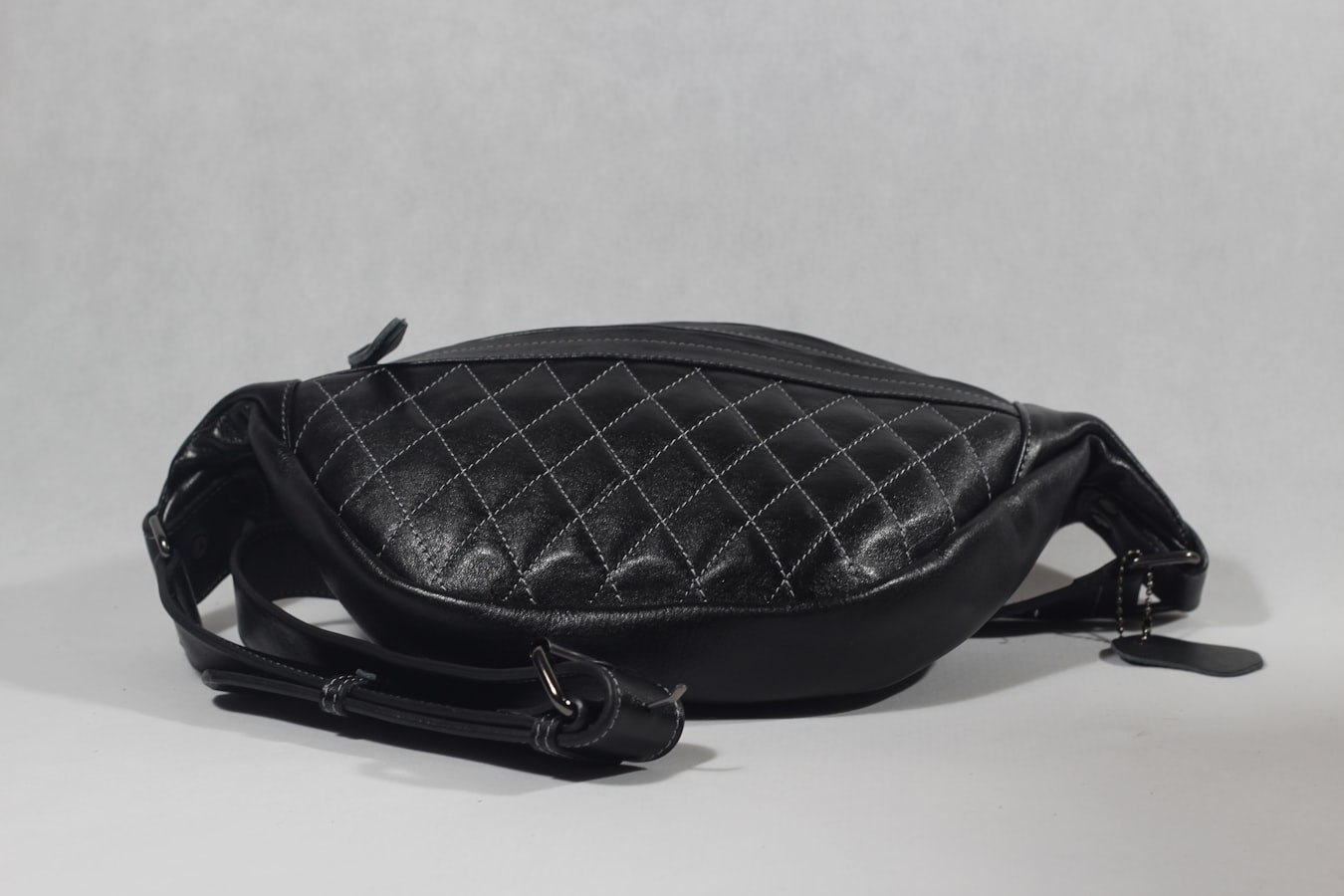
There are handbags you buy because they’re pretty, and then there are handbags you buy because they come with a century of couture, a royal anecdote, and a resale chart that looks like a tech stock. The Lady Dior sits firmly in the second camp. Understanding Lady Dior bag history is basically understanding how a single accessory turned into a cultural talisman — a boxy, cannage-quilted object that’s been photographed on Princess Diana’s wrist, reimagined by Maria Grazia Chiuri, reworked again by Jonathan Anderson for SS26, and quietly out-appreciating a lot of people’s savings accounts. If you’ve been scrolling Rebag tabs at midnight wondering whether this is the year to commit, the short answer is: probably, yes.
This guide is the long answer. We’re walking through the full Lady Dior bag history — the 1994 Chouchou origin, the Bernadette Chirac gift, the Diana Met Gala moment, the Art project reinventions, the size breakdown, the 2026 retail ladder, the resale math, and what Jonathan Anderson’s new vision at 30 Avenue Montaigne means for the bag’s next chapter. By the end you’ll know exactly which size to chase, which colour holds its value, and why the stylists at British Vogue and Who What Wear still default to this one when a client says “something timeless.” Consider this your editor-to-friend briefing before you tap the card.
From Chouchou to Lady Dior: The 1994 Origin Story
The bag didn’t even start life as the Lady Dior. In 1994, under Dior’s then-creative director Gianfranco Ferré, the house quietly launched a structured, top-handled handbag simply called the Chouchou — French for “favourite.” It was all there from day one: the architectural silhouette, the padded lambskin, the cannage stitch inspired by the Napoléon III cane chairs that once lined Christian Dior’s couture salons. The four dangling gold letters spelling D.I.O.R were a wink at couture tradition, not a logo flex. For roughly a year, the Chouchou lived a perfectly respectable life as a well-made French handbag nobody outside Paris was obsessing over. That changed in September 1995, the month a small leather accessory quietly walked into history on the arm of a British princess.

The Princess Diana Moment That Rewrote Everything
In September 1995, Bernadette Chirac — the then-First Lady of France — gifted Diana, Princess of Wales, a black Chouchou ahead of a Cézanne exhibition at the Grand Palais. Diana liked it so much she reportedly ordered it in every colour and carried it everywhere: state visits, hospital openings, her first Met Gala in December 1996. The tabloid economy did the rest. By 1996, Dior had formally rechristened the bag Lady Dior in her honour, and the waiting lists went transatlantic. This is the detail people forget when they call it a marketing story: Dior didn’t pay for product placement, didn’t brief a stylist, didn’t run a campaign. A royal simply liked a bag. That organic endorsement is the reason Lady Dior bag history reads more like a biography than a brand file, and it’s also why the bag carries a kind of narrative weight other It-bags can’t fake.

The Cannage, the Charms, the Craft: What You’re Actually Paying For
Pick up a Lady Dior and you immediately feel the difference between a status bag and a made-object. The cannage quilting is stitched by hand in Italy, the padded lambskin is supple but structured enough to sit on a restaurant floor without collapsing, and the gold-tone D.I.O.R charms are weighted so they chime rather than rattle. Each bag takes roughly eight hours of skilled atelier work and passes through multiple artisans. The top handles are rolled, not folded. The interior is lined in leather, not canvas. These are the kind of quiet engineering choices that justify the price tag and, crucially, explain why the bag survives decades of daily use — an underrated detail when you’re evaluating it as an investment rather than a trophy.

Lady Dior Sizes and 2026 Prices: The Full Breakdown
Here’s the current Lady Dior price 2026 ladder in classic lambskin, because vague “luxury brands are expensive” talk helps no one. The Micro starts around $4,500 USD. The Mini (17x15x7 cm) sits near $5,500. The Small (20x17x8 cm) runs around $6,100. The Medium (24x20x11 cm) — the Diana size, the one most editors recommend — lands at roughly $6,500 in the US, €6,400 in the EU, £5,700 in the UK, and AU$10,500 in Australia. The Large (32x25x12 cm) pushes past $8,000. Exotic skins, Art editions, and seasonal collabs climb significantly higher. Dior has held 2026 prices relatively stable so far, a rare beat of mercy in a year where Chanel and Hermès have both nudged upward again. For most buyers, the Small or Medium in black, beige, or navy is the sweet spot — historically the strongest resale performers, and the colours the bag was practically designed for.

Jonathan Anderson’s SS26 Rework: A New Chapter
When Jonathan Anderson took over as Dior’s creative director in 2025, the biggest question wasn’t the couture — it was what he’d do with the Lady Dior. His Spring/Summer 2026 debut answered it beautifully. Anderson stripped away the dangling alphabet charms for some looks, framing a single D.I.O.R medallion with a delicate leather bow. For others, he loaded the bag with three-dimensional buttercups, bees, and hand-embroidered four-leaf clovers — a nod to Christian Dior’s famous superstitions and Anderson’s own Irish heritage. Fall 2026 pushed further, recalibrating the proportions and introducing polka-dotted, bow-tied variants. The point isn’t that the classic is going anywhere; it’s that Anderson has publicly positioned the Lady Dior as what he calls a “contemporary talisman,” which is editor-speak for “this bag has a long runway ahead.”

Is the Lady Dior Actually a Smart Buy in 2026?
Now the Lady Dior investment question, because vibes aren’t a financial plan. A Lady Dior Medium that retailed around $2,250 in 2009 is $6,500 in 2026 — roughly a 188% jump in fifteen years. Resale platforms like Fashionphile, Vestiaire Collective, and Rebag consistently show the classic Lady Dior retaining 60 to 75 percent of retail, with black lambskin Medium bags sometimes reselling for 80 percent plus within the first few years. Catawiki and Sotheby’s luxury handbag reports have flagged the Lady Dior as one of the Tier 1 bags averaging 12–15% annual appreciation, and Gen Z collectors are driving serious demand on vintage Minis via Depop and TheRealReal. Pair that with the quiet-luxury shift pulling buyers away from logo-heavy Balenciaga and Gucci pieces, and the 2026 case writes itself. You’re not chasing a trend. You’re buying a blue-chip handbag at the start of a new creative era.

Do’s and Don’ts: Buying the Lady Dior
| Do | Don’t |
|---|---|
| Do buy the Medium or Small in classic lambskin if resale matters | Don’t buy a neon seasonal colour and expect strong resale |
| Do stick to black, beige, navy, or burgundy for highest retention | Don’t assume all exotic skins appreciate — some depreciate fast |
| Do buy directly from Dior boutiques or Dior.com when possible | Don’t buy from unverified Instagram resellers, even “authenticated” ones |
| Do keep the dust bag, box, card, and receipt — resale value drops 10-20% without them | Don’t store it stuffed flat; the padded lambskin needs its shape |
| Do consider pre-loved from Fashionphile, Vestiaire, or Collector Square | Don’t skip authentication on a bag under $3,500 — that’s the fake zone |
| Do size up to Medium if you use a laptop sleeve or 13″ tablet | Don’t size down to Micro thinking “it’s cuter” — Micros hold less value long-term |
| Do try it on with your actual everyday outfit before committing | Don’t impulse-buy on holiday in Paris without checking EU VAT refund eligibility |
| Do condition the lambskin every 6 months with a neutral cream | Don’t use baby wipes or household leather sprays — lambskin is delicate |
| Do insure it under a personal articles policy once you hit the $5K mark | Don’t carry it in heavy rain; lambskin water-spots permanently |
| Do think of it as a 10-year piece, not a seasonal accessory | Don’t chase every Jonathan Anderson limited edition unless you love it |
FAQs
Is the Lady Dior bag worth it in 2026? For most buyers eyeing a first “real” luxury handbag, yes. You’re paying for a hand-stitched Italian object with a royal origin story, a creative director bringing fresh energy to the house, and a resale market that consistently holds 60-75% of retail. Compared to newer It-bags with no track record, the Lady Dior is about as close to a safe bet as the handbag market offers. Just go in knowing you’re committing to a decade-plus piece, not a one-season trophy.

What size Lady Dior should I buy? The Medium (24x20x11 cm) is the safest answer — it’s the size Princess Diana carried, it fits a phone, wallet, sunglasses, and a small book, and it has the strongest resale data. If you’re petite or prefer an evening-leaning bag, the Small is elegant and still practical. The Mini and Micro are adorable but more of a style purchase than an investment one. The Large is lovely but skews formal and sells slower on the resale market.
Which colour Lady Dior holds its value best? Black lambskin first, then beige, navy, and burgundy. These four shades account for the majority of strong resale listings on Fashionphile and Vestiaire. Seasonal colours like pastel pink, mint, or red can lose 30-40% of retail within two years. If you want colour, buy it because you love it, not because you expect it to appreciate.
Who designed the Lady Dior bag originally? The bag was designed in 1994 under Gianfranco Ferré, Dior’s creative director at the time, and was initially called the Chouchou. It was renamed Lady Dior in 1996 after Princess Diana’s very public love for the style. Since then it’s been reinterpreted by every subsequent Dior creative director — John Galliano, Raf Simons, Maria Grazia Chiuri, and now Jonathan Anderson for SS26 onward.
How can I tell if a Lady Dior is authentic? Check the cannage stitching (perfectly even, no loose threads), the D.I.O.R charm weight (heavy, not tinny), the date code and authenticity card, the interior stamp, and the hardware screws. For any bag over $2,500, use a paid authentication service like Entrupy or Real Authentication before completing a resale purchase. Dior boutiques will not authenticate bags, so don’t rely on that.
Will Jonathan Anderson’s new designs affect the classic Lady Dior’s value? If anything, positively. Creative director changes historically boost interest in a house’s heritage pieces, and Anderson has explicitly said he sees the Lady Dior as a “contemporary talisman” he intends to build around. Expect his SS26 and FW26 reinterpretations to drive renewed demand for classic editions, which typically lifts resale on the originals. Long term, this is the best kind of news for current owners.
Is it better to buy a Lady Dior new or pre-loved? Pre-loved, if you’re budget-conscious. A well-kept Medium from 2020-2023 often sells for 25-35% below retail on Fashionphile or Collector Square, which is real money on a $6,500 bag. New makes sense if you want a specific current-season colour, the full boutique experience, or plan to keep it forever. For first-time luxury buyers, pre-loved is honestly the smarter entry point — and if you want more guidance on that philosophy, our piece on Luxury vs Budget Fashion: What Women Should Invest In covers the full framework.
How does the Lady Dior compare to the Chanel Classic Flap as an investment? The Chanel Classic Flap has historically been the gold standard for handbag appreciation, but its recent price hikes (now over $11,000 for a Medium) have pushed many buyers toward the Lady Dior as a more accessible Tier 1 alternative. The Lady Dior offers comparable craftsmanship, stronger cultural narrative via Princess Diana, and a lower entry point — making it arguably the smarter 2026 buy for anyone starting their investment collection.
Conclusion
The Lady Dior bag history is, in the end, a story about how a well-made French handbag became an icon entirely by accident — gifted to a princess, reinterpreted by five creative directors, and now pulled into a new era under Jonathan Anderson. If you’ve been waiting for the right moment to commit to your first serious luxury piece, 2026 is genuinely it: prices are stable, the creative direction is fresh, and the resale data keeps quietly proving the buyers who moved early were right. Buy the Medium in black lambskin, keep the box, and treat it like the ten-year wardrobe anchor it was built to be.