

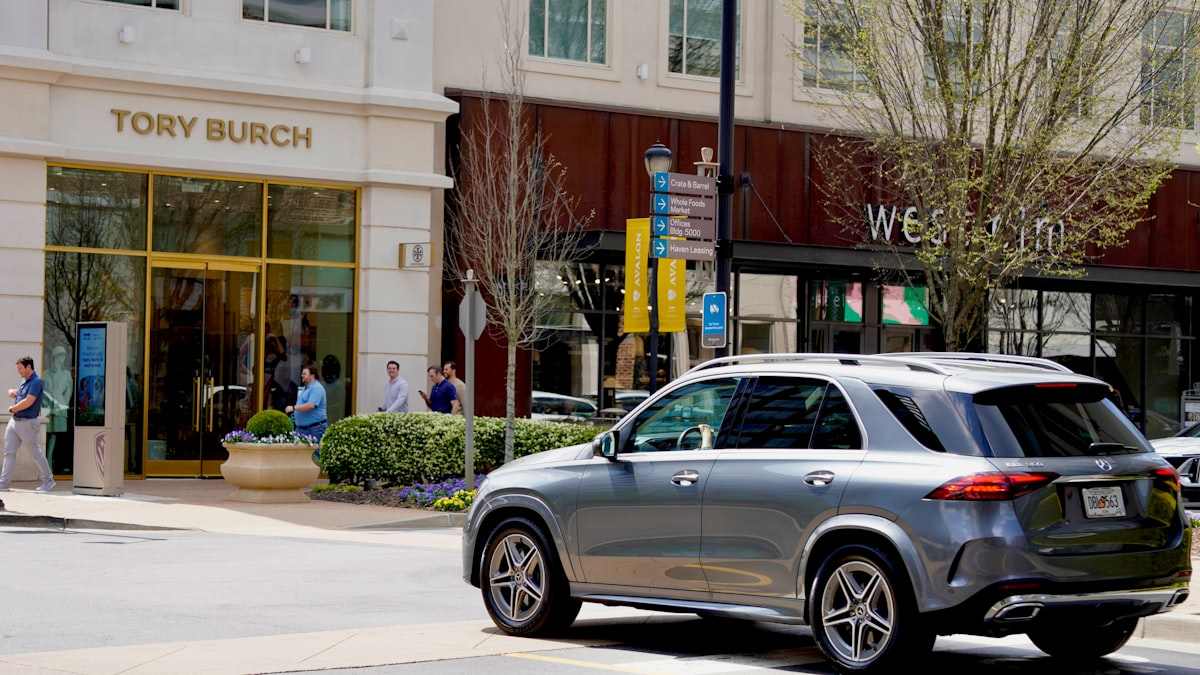
Something interesting happened while everyone was busy debating whether Bottega Veneta or The Row would win the quiet luxury war. A tier below the European megahouses, a group of American mid luxury brands started quietly posting numbers that would make most fashion conglomerates jealous. Coach just reported an $2.14 billion quarter. Tory Burch is raising $700 million to buy back her company’s private equity stake. And Kate Spade, the brand everyone had written off two years ago, just installed a new CEO with a plan sharp enough to make Wall Street pay attention. The accessible luxury space, once dismissed as “outlet mall chic,” is having a genuine creative and commercial moment, and the timing could not be more interesting.
What changed? For one, European luxury houses priced themselves into absurdity. A medium Chanel Classic Flap now crosses $11,000. A Loewe Puzzle sits around $3,900. For a generation of shoppers raised on TikTok hauls and resale culture, that math stopped making sense, especially when brands like Coach, Tory Burch, and Kate Spade started delivering genuinely well designed product at a fraction of the cost. The affordable luxury fashion market is projected to grow from $131 billion in 2026 to nearly $175 billion by 2034, and North America is leading that charge. These are not charity numbers. This is a legitimate market correction, and the three brands at the center of it each tell a different story about how to win right now.
Coach: The Blueprint for a Mid Luxury Comeback
Coach’s resurgence is the most documented turnaround in recent American fashion history, and in 2026 it shows zero signs of slowing down. The brand posted 18% revenue growth in Tapestry’s Q2 FY2026, crossing $2.14 billion in a single quarter, numbers that dwarf most standalone European houses outside the LVMH empire. The Tabby bag, now a standing collection rather than a seasonal style, still accounts for roughly 10% of total sales, with prices ranging from $450 to $895. That is real money for a bag that does not need a waitlist or a sales associate relationship to purchase.

What makes Coach’s story instructive for anyone watching American mid luxury brands is how deliberately they courted Gen Z without alienating their existing customer. Creative director Stuart Vevers leaned into heritage, the brand’s leather craftsmanship dates back to 1941, while wrapping it in culturally fluent packaging. The Spring 2026 “Explore Your Story” campaign partnered with Sunnie, a Gen Z media platform backed by Reese Witherspoon, and sent a Tabby Tour to college campuses across the US and Asia. Coach ranked first in social media engagement during NYFW this past February, beating out houses with ten times its ad budget. The Pillowed Tabby, a softer rework of the original, became the bag Marie Claire called “the best spring bag of 2026.” At $550, it undercuts comparable styles from Loewe and Bottega by more than $2,000.
Tory Burch: Going Private and Going Harder
Tory Burch is playing a different game entirely, and as of April 2026, it just became one of the biggest financial stories in American fashion. The company is seeking a $700 million leveraged loan to buy back General Atlantic’s minority stake, a position the PE firm has held since 2012. If the deal closes, and reporting from Bloomberg and WWD suggests it will, Tory Burch LLC will be controlled by BDT & MSD Partners, the designer herself, and her family. That is a rare move for any fashion brand in 2026: going more private, not less, at a moment when most competitors are chasing IPOs or conglomerate buyouts.

The product backs up the financial confidence. Burch’s Fall 2026 collection, shown in February, centered on what she called “longevity”, enduring pieces built to outlast trend cycles. Think tailored trenches, structured leather goods, and office ready trousers that feel expensive without the sticker shock. Her Spring 2026 runway at New York Fashion Week generated the highest social engagement of any show that season, driven by TikTok interviews with celebrity attendees. Tory Burch handbags sit in the $298 to $898 range for most styles, which slots them perfectly below Khaite and The Row but above Coach and Kate Spade in the accessible luxury fashion hierarchy. She is building a house, not chasing a moment.
Kate Spade: The Hardest Turnaround in the Room
Let us be honest about Kate Spade’s position: it is the most precarious of the three. Fiscal 2026 guidance points to a high single digit revenue decline, and the brand generated $360 million in Q2 against Coach’s $2.14 billion within the same parent company. But writing Kate Spade off would be a mistake, because the new leadership team is doing genuinely interesting work.

Eva Erdmann, who joined as CEO and brand president after 11 years at L’Oréal spanning Urban Decay, Lancôme, and YSL Beauté, has a cosmetics executive’s instinct for brand heat. Her first major move was ruthless editing: Kate Spade cut more than 30% of its handbag SKUs to concentrate marketing spend behind fewer hero products. The Duo, a multiway bag retailing between $295 and $495 that converts from shoulder to crossbody to clutch, anchors the new “Spark Something Beautiful” campaign featuring Ice Spice, Charli D’Amelio, and Laufey. Meanwhile, the Sam bag, the nylon icon that defined 1990s New York, was rereleased in a mini version at $158, a nostalgia play aimed squarely at millennial buyers who carried the original and Gen Z shoppers discovering it through vintage resale. Erdmann’s mantra is blunt: “If everything is always on promotion, it’s not aspirational.” Promotions are being scaled back. The question is whether the customer will follow the price up.
Why the Mid Luxury Tier Is Winning Right Now
The math behind the American mid luxury brands resurgence is surprisingly simple. European luxury houses spent 2023 through 2025 raising prices 8 to 12% annually, pushing entry level leather goods past $2,000 and ready to wear into territory that competes with rent payments. Meanwhile, ultra fast fashion from Shein and Temu cratered the bottom of the market, making $15 dresses feel disposable rather than democratic. That left a massive gap between $200 and $900 where quality, design, and brand equity could coexist, and American brands were already sitting there.

McKinsey’s State of Fashion 2026 report confirms what the sales numbers suggest: the midmarket is now the fastest growing segment in global fashion, replacing luxury as the primary value creator. Millennials aged 26 to 40 dominate with 42% market share, and they are spending on brands that signal taste without requiring a financial advisor. Coach’s $550 Tabby, Tory Burch’s $498 Lee Radziwill bag, Kate Spade’s $395 Duo, these are not compromise purchases. They are considered ones, made by women who could theoretically buy a Celine Triomphe but would rather put the remaining $2,000 toward a trip to Lisbon. If you are thinking about where your money goes furthest, our guide on luxury vs budget fashion investments breaks down the math in detail.
What Separates a Good Mid Luxury Brand From a Forgettable One
Not every brand in this price bracket is created equal, and the graveyard of mid luxury labels that flamed out, remember DKNY’s premium push? Tory Burch Sport’s quiet sunset?, proves that sitting in the right price range is not enough. The brands winning in 2026 share three traits: a clear hero product (Coach’s Tabby, Kate Spade’s Duo), a willingness to cut SKUs rather than flood the market, and a cultural strategy that goes beyond paid Instagram posts.

Coach’s campus tour and Tory Burch’s TikTok first NYFW approach both reflect a shift from broadcasting to participating. These brands are showing up in spaces where their target customer already spends time, rather than expecting her to come to them. And critically, all three have resisted the urge to chase the quiet luxury aesthetic that dominated 2023 and 2024. Coach leans into color and charm accessories. Kate Spade doubled down on optimism and wit. Tory Burch kept her signature graphic prints. In a market saturated with beige minimalism, personality turned out to be the differentiator. For more on how to look expensive on a budget without defaulting to safe neutrals, that is worth a read too.
Do’s and Don’ts
| Do | Don’t |
|---|---|
| Invest in hero bags that hold resale value (Coach Tabby, Tory Burch Lee Radziwill) | Buy the cheapest style from a mid luxury brand just for the logo |
| Check resale platforms like The RealReal for mid luxury pieces at further discount | Assume mid luxury means lower quality, construction on Coach leather rivals houses twice the price |
| Follow brand campaigns for early access and limited colorways | Wait for end of season sales if you want a specific hero product, they sell out |
| Mix mid luxury accessories with high street clothing for a balanced wardrobe | Carry a mid luxury bag with visible outlet tags or packaging, it undermines the look |
| Consider Kate Spade’s Duo if you need one bag for multiple occasions | Buy into a brand turnaround before seeing at least two strong collections |
| Look at Tory Burch for workwear that reads polished without corporate stiffness | Overlook Tory Burch’s ready to wear, most people only know the bags |
| Track Tapestry’s earnings calls for insight into where Coach and Kate Spade are heading | Assume all American mid luxury brands have the same customer or quality level |
| Try Coach’s Pillowed Tabby if you prefer a softer, less structured silhouette | Sleep on the Sam bag reissue, at $158, it is the entry point of the year |
| Pay attention to creative director vision, not just brand name | Chase every micro trend collaboration, stick with the mainline for lasting value |
| Buy mid luxury leather goods in classic colors first, then experiment | Compare mid luxury prices to fast fashion, compare them to European luxury instead |
FAQs
What exactly qualifies as an American mid luxury brand? American mid luxury brands typically sit between mass market fashion and European heritage luxury, with handbag prices ranging from roughly $150 to $900 and ready to wear from $100 to $600. Coach, Tory Burch, Kate Spade, Michael Kors, and Marc Jacobs are the most recognized names. What distinguishes them from high street brands is genuine leather construction, in house design teams with runway shows, and standalone retail stores in premium locations. They occupy a space where brand recognition carries weight but a purchase does not require financing.


Is Coach actually considered luxury now? Coach sits firmly in the accessible luxury tier rather than true luxury, but the gap is narrowing. Under Stuart Vevers, the brand has been steadily elevating materials, reducing promotional activity, and building cultural cachet through campaigns and collaborations. Tapestry’s stated goal is to grow Coach into a $10 billion brand, and the 18% revenue growth posted in Q2 FY2026 suggests the trajectory is real. The Tabby bag doubled in year over year sales, and resale values on platforms like Vestiaire Collective have climbed steadily. Coach is not Hermès, but it is no longer the outlet driven brand it was a decade ago.
What is the best Kate Spade bag to buy right now? The Duo ($295 to $495) is Kate Spade’s current flagship and the most versatile option, it converts between shoulder, crossbody, clutch, and belt bag configurations. If you want something with cultural currency and a lower entry price, the rereleased Mini Sam at $158 is excellent, especially in the yellow and light blue colorways that reference the original 1993 nylon version. Both styles are part of CEO Eva Erdmann’s strategy to concentrate the brand around fewer, stronger products rather than overwhelming the customer with dozens of similar options.
How does Tory Burch compare to brands like Khaite or The Row? Tory Burch occupies the tier just below Khaite and The Row in both price and positioning. A Tory Burch handbag typically runs $298 to $898, while Khaite bags start around $1,200 and The Row’s leather goods begin north of $2,500. The design language is also different, Tory Burch retains a preppy, graphic print DNA that feels more accessible and decorative, while Khaite and The Row lean into minimalist, fabric forward design. For everyday wardrobing, Tory Burch’s Fall 2026 collection of tailored trenches and structured trousers competes directly with those brands at a significantly lower price point.
Why are American mid luxury brands outperforming European luxury houses? Several factors converge. European luxury houses raised prices aggressively between 2023 and 2025, pushing entry level products beyond what many aspirational shoppers would pay. Simultaneously, American brands invested heavily in digital marketing, Gen Z engagement, and cultural partnerships that made them feel relevant rather than legacy. Coach’s TikTok driven Tabby Tour and Kate Spade’s campaigns with Ice Spice and Charli D’Amelio reach consumers where they already are. The result is a value proposition that combines real design, acceptable quality, and cultural fluency at a price point the 26 to 40 demographic, which holds 42% of the affordable luxury market, finds rational.
Should I buy mid luxury bags as investment pieces? Mid luxury bags are not traditional investment pieces in the way Hermès Birkins or Chanel Classics are, meaning you should not expect them to appreciate above retail. However, hero styles from Coach and Tory Burch hold 40 to 60% of their retail value on resale platforms, which is strong for the category. The Coach Tabby in particular has shown steady resale appreciation as the brand’s cultural profile rises. Buy what you will actually carry, in a classic color and material, and think of the resale value as a bonus rather than a strategy.
Conclusion
The American mid luxury tier has not been this interesting, or this commercially powerful, in at least a decade. Coach is printing money. Tory Burch is betting on independence. Kate Spade is gambling on fewer, sharper bets under new leadership. Whether you are shopping for your first designer bag or rethinking where your fashion budget hits hardest, these three brands deserve a closer look in 2026 than they have in years. The sweet spot between fast fashion and untouchable luxury just got a lot more crowded, and a lot more compelling.