

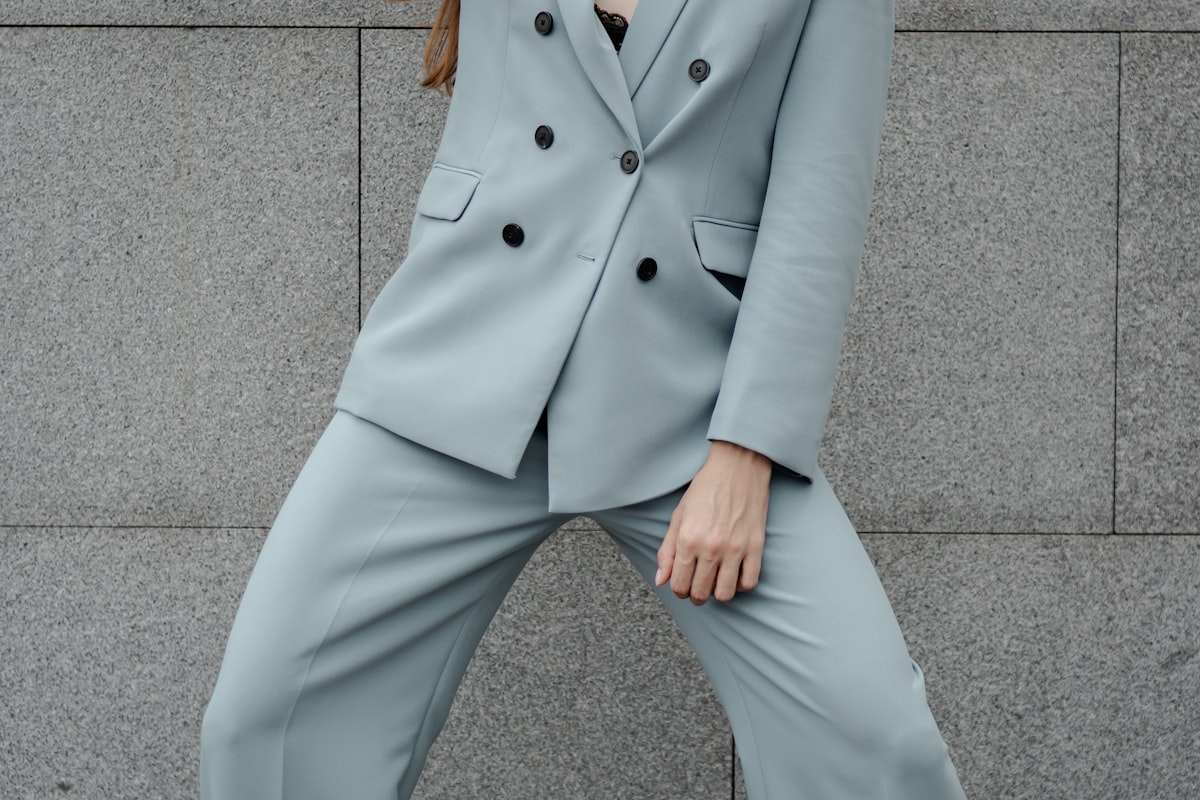
The power suit women 2026 conversation started the moment Anthony Vaccarello walked his first model out at the Saint Laurent Winter 2026 show in a single-breasted black jacket so sharp it looked drawn with a ruler. For the last few seasons the fashion mood has been slip dresses, sheer layers and the kind of underdressed sensuality that reads great on a phone screen and nowhere else. Tailoring, meanwhile, sat quietly in the wings — worn by Zoe Kravitz, hoarded by Row devotees, whispered about on Substack. Then Paris happened. Vaccarello stripped the house back to its foundational codes, Stella McCartney sent out exaggerated shoulders in Paris, Khaite cinched everything at the waist, and suddenly the suit wasn’t just back — it was the loudest argument on the runway.
What makes this cycle different from the 2019 girlboss blazer moment is the attitude underneath it. This isn’t the Ganni-pink pantsuit you wear to a LinkedIn photoshoot. It’s colder, more architectural, more adult. The Row has spent a decade quietly teaching its customer that a wool trouser is worth five dresses, and the Olsens’ influence is now visible in every house that takes itself seriously. If you care about how clothes are actually built — the shoulder roll, the break on the trouser, the weight of the canvas inside the jacket — 2026 is your year. Below, the three silhouettes driving the conversation, the houses doing it best, and how to think about investing in one.
Saint Laurent FW25: Vaccarello Goes Back to the Spine
For Winter 2026, Anthony Vaccarello did something he rarely does — he took his own hand off the volume dial. The opening looks were sharply cut black suits, single- and double-breasted, directly quoting the house’s late-1970s and early-1980s tailoring lineage. No bandage dresses, no crystal-mesh, no distractions. The point was the architecture: a shoulder built on real canvas, a nipped waist, a trouser that breaks cleanly on a pointed boot. Vaccarello called it a return to “foundational structure,” and industry reviewers read it as his most confident collection in years. If you’ve been waiting for a reason to take Saint Laurent tailoring seriously again, this was it — and the SS26 follow-up doubled down, cracking the broad-shouldered silhouette open with bows, jewel-toned gowns and a full-on ’80s Rive Gauche rebound.

The Row: The Quiet Revolution That Got Loud
The Row has been making the best suits in the world for about six years now, and in 2026 everyone finally caught up. Mary-Kate and Ashley Olsen built the house in 2005 around a simple idea — tailoring as vocabulary, not seasonal filler — and their Resort 2026 show in Paris reinforced it. Coats, trousers and shirting aren’t accessories to the collection; they are the collection. A single-breasted wool jacket at The Row starts around the $3,500 mark and climbs past $5,000 depending on fabric, and a Margaux bag to finish the look is $5,090. That’s not a casual purchase, but it’s also not the point — the point is that a Row suit is cut so precisely it erases the logic of buying three cheaper ones. This is the new luxury equation: fewer, heavier, quieter. And it’s reshaping how even the high street is cutting a lapel.

The Three Silhouettes Anchoring 2026 Tailoring
Strip the runways down and three shapes keep reappearing. The first is the broad-shouldered power suit — think Vaccarello’s black smoking, Stella McCartney’s exaggerated Spring/Summer 2026 shoulder, the kind of jacket that changes your posture the second you put it on. The second is the peplum jacket, which showed up across multiple houses and gives you structure without the full masculine quote. The third is the statement overcoat — worn alone, as the entire argument of the look, often over nothing more than a silk slip or tailored trouser. Layer in the Khaite-style cinched waist (belts, fitted bodices, shrunken proportions) and Ferragamo’s tie-waist tailoring from SS26, and you have the grammar of the season. Pick whichever silhouette actually matches how you move through your day — that’s the one worth investing in.

The New Le Smoking: How to Wear Black Tailoring in 2026
Saint Laurent’s original le smoking, designed by YSL in 1966, is the reference point every tailoring conversation keeps circling back to. Vaccarello’s FW25 reimagining proved why: a black tuxedo jacket is still the most useful thing a woman can own. The 2026 way to wear it is more extreme than the 2015 way. Shoulders sit further out. Lapels are wider, often satin-faced. The trouser is either very wide and puddling, or cropped sharply above a pointed heel — nothing in between. Underneath, you wear less, not more: a plain white cotton poplin, a black silk camisole, sometimes nothing but a bra top if the room is right. Skip the chunky necklace, skip the tonal bag, let the suit do all the talking. This is the outfit that makes you look like you know something everyone else doesn’t.

Runway to Real Life: Where to Actually Shop the Trend
If you’re not ready to drop $4,000 on a Row jacket, the high street has caught the memo with surprising conviction. Mango Selection is running elevated tailoring this season — sharp single-breasted blazers around £120–£160, matching wide-leg trousers in the £60–£90 range, in wool-blend fabrics that read much more expensive than they are. Massimo Dutti’s Studio line is the other sleeper pick: oversized silhouettes, proper collars, waistcoats, wide-leg trousers, all hovering around the £150–£250 mark per piece and built with a noticeably heavier cloth. Zara’s ZW edit has pastel suiting and box-pleat skirts for anyone who wants the shape without the severity, and Aritzia’s Babaton Effortless Pant and Conan blazer remain the most copy-and-paste Row alternatives on the market. For a bridge to real luxury, Khaite, Toteme and Tibi sit in the $800–$2,000 jacket range with tailoring that genuinely stands up to the heritage houses. Internal reading: our Business Casual for Women styling guide and Luxury vs Budget Fashion are the smart companions here.

Do’s and Don’ts
| Do | Don’t |
|---|---|
| Invest in one serious jacket before buying a matching trouser | Buy a full suit set in cheap fabric just to “have one” |
| Check the shoulder line in the mirror — it should sit on your actual shoulder | Let a too-big blazer read “borrowed from dad” unless that’s the styling point |
| Choose wool, wool-blend or heavyweight crepe | Settle for thin polyester suiting that wrinkles on the hanger |
| Try Mango Selection or Massimo Dutti Studio before designer | Assume high street can’t deliver — Studio and Selection genuinely can |
| Wear your suit with almost nothing underneath — white cotton or black silk | Overload with chunky jewelry, scarves and a statement bag all at once |
| Tailor the sleeve and hem locally after buying | Skip alterations and let the fit undercut the investment |
| Consider The Row, Khaite, Toteme or Tibi for real longevity | Chase microtrend pastel sets you’ll retire by August |
| Style with a pointed heel, loafer or sharp ballet flat | Pair with sneakers unless you’re going for deliberate Phoebe Philo tension |
| Let one silhouette lead your buy | Try to own all three in the same season |
| Think 10-year cost-per-wear on anything over $1,000 | Judge a jacket only by the retail price tag |
FAQs
Is the power suit women 2026 trend actually wearable day-to-day, or is it a runway fantasy? It’s genuinely wearable, which is what separates this cycle from past blazer moments. The Row, Toteme and Khaite have spent years proving tailoring can live in a normal life — offices, dinners, flights, weekends with a white tee underneath. The shapes you see at Saint Laurent FW25 translate surprisingly cleanly. You just have to commit to the proportions: don’t size down to “soften” it, and don’t pair it with apologetic styling.


How much should I realistically spend on a serious tailored jacket in 2026? Under $300 buys you a credible high-street version from Mango Selection, Massimo Dutti Studio or Aritzia Babaton. The $800–$2,000 range is where contemporary labels like Khaite, Toteme and Tibi live, and that’s the sweet spot for most people building a real wardrobe. Above $3,000 you’re paying for The Row, Saint Laurent or bespoke, and that’s only worth it if you’ll wear it fifty-plus times.
What’s the difference between a Saint Laurent suit and a Row suit in 2026? Saint Laurent under Vaccarello is about glamour, sharpness, and a slightly theatrical shoulder — the suit as declaration. The Row is about quiet, clean construction and fabric weight you can feel across a room — the suit as architecture. Saint Laurent wants to be noticed, The Row wants to be understood. Both are correct answers to a different question.
Can I do the power suit trend if I’m petite or curvy? Yes, but the tailoring has to actually be tailored. Petite frames should look at Mango, Reiss and Theory for cuts that don’t drown the shoulder; curvier frames should prioritize jackets with real waist suppression (Khaite, Veronica Beard, The Row’s Sharlie silhouette). Whatever you buy, spend another $60–$120 at a local tailor on sleeves and hems. Off-the-rack rarely lands perfectly.
What do I wear under a 2026 power suit? Less than you think. A plain white cotton poplin, a black silk camisole, a fine rib tank, or a bra top if you’re confident. The point of this season’s tailoring is the jacket itself — layering a printed blouse underneath reads very 2018. If you want contrast, go textural: silk against wool, cotton against crepe.
Is the oversized blazer still in, or has it been replaced by something sharper? Both, actually. Oversized is still wearable if the shoulder is engineered, not sloppy — think The Row’s boyfriend shapes. But the bigger story for 2026 is precision: cleaner cuts, stronger shoulders, a defined waist. If you’re buying new this year, lean sharp over slouchy.
Are colorful suits part of the 2026 conversation, or is it all black? Black leads, especially after Vaccarello’s FW25 show, but SS26 opened the door to jewel tones — emerald, blackberry, saffron at Saint Laurent, soft pastels at Zara’s ZW. If you already own a black suit, a single colored jacket in a proper wool is the most interesting second move.
Conclusion
The power suit women 2026 moment isn’t a costume revival — it’s a recalibration. Saint Laurent went back to its spine, The Row kept doing what it’s always done, and the high street finally learned how to cut a real shoulder. Whether you buy into it at Mango, Massimo Dutti, Khaite or The Row, the rule is the same: one serious jacket, worn with conviction, beats a closet of almost-suits every time. Start with the shoulder, let the rest follow.