

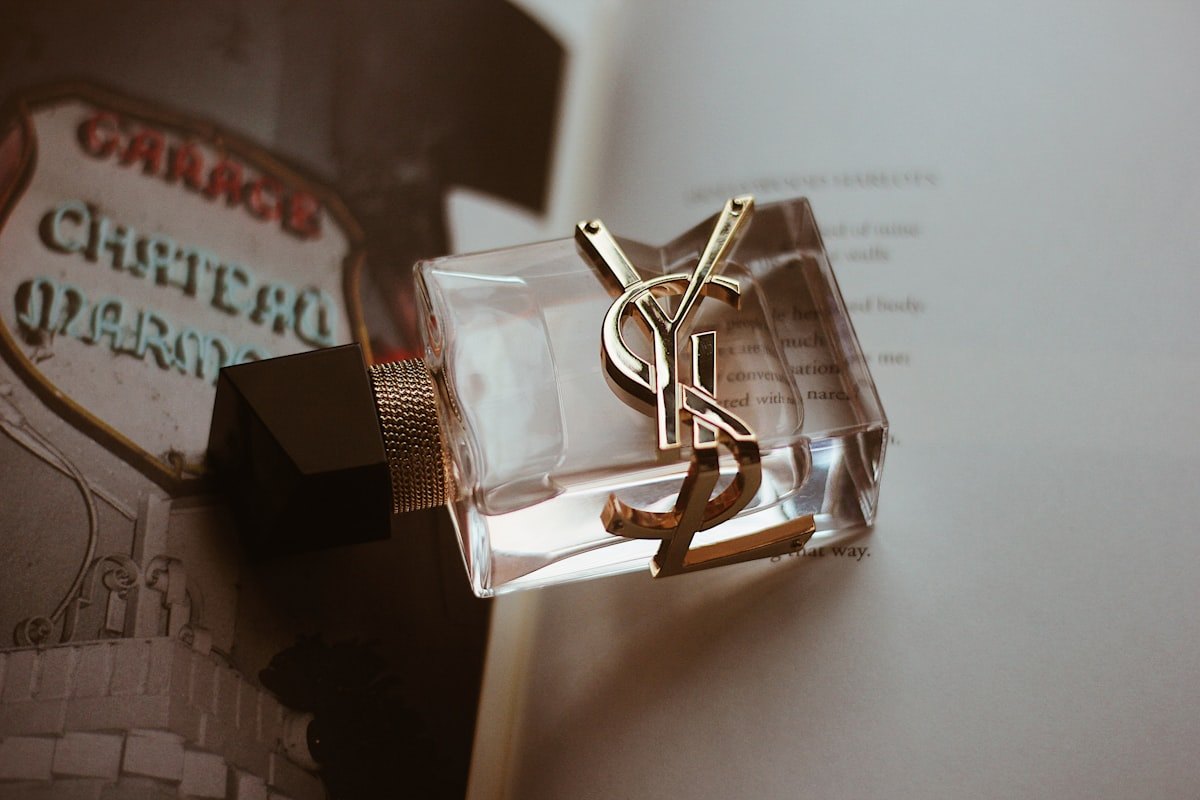
The Saint Laurent Le 5 à 7 has been quietly running laps around every other shoulder bag since Anthony Vaccarello introduced it in 2021. Four years later, it is still the hobo that fashion editors reach for when they want something minimal, slightly nonchalant, and unmistakably expensive. The smooth leather version in noir retails around $2,250, the grained supple leather pushes past $3,600, and even the canvas iteration starts at roughly $1,900. Those numbers are not a typo. And yet the bag keeps selling, kept alive by a silhouette so clean it practically begs to be copied — which, naturally, every high-street chain from Inditex to H&M Group has tried to do. The question circulating on every fashion corner of TikTok and Reddit right now is not whether dupes exist but whether any of them are actually convincing enough to carry in public without a flicker of self-consciousness.
That is exactly what this piece sets out to answer. We pulled Mango’s most-discussed YSL Le 5 à 7 dupe — a faux-leather shoulder bag that lands between $40 and $50 depending on the season — alongside Bershka’s entry-level hobo, which starts around $25 to $35. Both belong to the Inditex and Mango stable of trend-responsive high-street labels that move fast when a luxury silhouette gains momentum. We are comparing them against the real Saint Laurent across five dimensions that actually matter when you are standing in front of a mirror deciding whether something looks right: shape, hardware, leather quality, strap drop, and overall “read” at a distance. Because the dirty secret of the dupe economy is that most $40 bags do look fine in a flat lay and fall apart the second you sling them over a shoulder in daylight. Let us see which ones survive.
Why the Le 5 à 7 Silhouette Became Uncopyable (Almost)
Vaccarello designed the Le 5 à 7 with a very specific curve — a slim crescent that sits flush against the body, tapering at both ends so the bag almost disappears under your arm. The name itself references the French concept of “cinq à sept,” that ambiguous window between five and seven in the evening, and the bag was built to serve that exact energy: going somewhere interesting with very little baggage. What makes the silhouette tricky to replicate is the ratio. The curve has to be gradual, the width has to stay narrow enough to read as intentional rather than just a floppy sack, and the single strap needs to hit at a length that lets the bag rest in the hollow just above the hip. Get any of those proportions wrong by even a centimetre and the whole thing starts looking like a deflated banana. Saint Laurent achieves this with stiff-but-supple calfskin that holds its shape while still draping naturally. That tension between structure and softness is genuinely hard to fake in polyurethane.

The Mango Contender: Close, but Read the Fine Print
Mango’s version — typically marketed under their core accessories line, not the pricier Mango Selection tier — has earned a genuine cult following on TikTok. Creators have called it “the closest to the original” they have seen at the high street, and the shape does hold up surprisingly well. The crescent is slightly wider than the Saint Laurent, which actually makes it more practical for daily use (you can fit a phone, cardholder, keys, and lip product without the seams straining). The magnetic closure works smoothly, the strap is adjustable, and in black, from roughly two metres away, the overall profile is convincingly similar. Where Mango falls short is in three specific areas. First, the faux leather has a matte finish that photographs well but feels plasticky to the touch — a dead giveaway if someone handles the bag. Second, the hardware is lightweight gold-tone alloy rather than solid brass, and it scratches within weeks of regular use. Third, there is no internal structure or suede lining — just a thin polyester interior that wrinkles and pills. At $40 to $50, none of this is unreasonable. But it does mean the bag has a roughly one-season lifespan before it starts looking tired.

The Bershka Entry: Budget King or Costume Prop?
Bershka sits a full tier below Mango in the fast-fashion hierarchy, and their bags reflect that positioning. Their hobo and shoulder bag options start as low as $20 on Poshmark and hover around $25 to $46 at retail depending on the style. The version most often compared to the Le 5 à 7 is a slim crescent shoulder bag in faux leather with a minimal gold-tone accent where the YSL cassandre would sit. On paper, the dimensions are close. In practice, the bag struggles with two fundamental problems: the faux leather is stiff and creases rather than drapes, creating hard fold lines across the body of the bag within hours of carrying it. And the strap, while the right length, is a flat strip with no padding and no taper, which makes it slip off rounded shoulders constantly. In a photo — flat on a bed, styled with a blazer and sunglasses — it looks passable. On a body, in motion, walking through an airport or a restaurant, it reads immediately as costume. That is not snobbery; it is physics. The materials simply do not behave the way the silhouette demands.

The Hardware Test: Where Every Dupe Falls Apart
If you only take one lesson from this comparison, make it this: hardware is the single biggest tell between a real luxury bag and a dupe. The Saint Laurent Le 5 à 7 uses a brass YSL cassandre clasp with a weight and finish that feels like jewellery. It has heft. It catches light with a warmth that cheap alloy cannot replicate because brass naturally oxidises to a richer tone over time while plated zinc turns greenish or dull. Mango’s hardware is acceptably heavy for the price — noticeably lighter than Saint Laurent’s, but not embarrassingly so. Bershka’s hardware is essentially decorative tin. It bends if you press it firmly with a thumb. If you are someone who touches and fidgets with bag clasps (most of us are), the Bershka hardware will not survive three months of daily use without visible wear. For anyone considering a mid-range alternative, brands like DeMellier (the Tokyo Mini Hobo at around $465) or the Charles & Keith Cesia at $80 offer hardware that sits much closer to the luxury standard without reaching Saint Laurent pricing.

The Real Math: Cost Per Wear Changes Everything
Here is where the conversation gets honest. The Saint Laurent Le 5 à 7 in smooth leather costs approximately $2,250. If you carry it four times a week for five years — which the leather quality supports — that is roughly $2.16 per wear. The Mango version at $45, carried three times a week for one season (about four months), works out to $0.94 per wear. The Bershka at $30, used twice a week for maybe two months before it deteriorates, lands at $1.87 per wear. The Mango actually wins on pure cost-per-wear math. But the Saint Laurent wins on cost-per-year and cost-per-compliment by a wide margin, because it continues appreciating aesthetically while the dupes depreciate. The honest middle ground for most budgets? Buy the Mango to test whether the silhouette works with your wardrobe and body proportions. If you reach for it constantly, that is your sign to save for the real thing — or explore the pre-loved market on Vestiaire Collective or Fashionphile, where used Le 5 à 7 bags in good condition trade around $1,200 to $1,600.

How the Hobo Trend Is Evolving Into SS26
The hobo silhouette is far from finished. Saint Laurent’s SS26 collection — Vaccarello’s thirtieth show for the house, and part of his ten-year anniversary at the helm — continued to lean into the slim, body-conscious bag shapes that made the Le 5 à 7 iconic. Meanwhile, Miu Miu showed slouchy suede hobos, Loewe offered textured leather versions, and Margesherwood’s dumpling bag brought a softer, rounder take on the same energy. At the high street, expect Zara, Mango, and COS to continue iterating on the crescent shape through late 2026, likely adding raffia and woven versions for summer. The trend has legs precisely because it is not a novelty — it is a return to the kind of bag women actually carried in the 1990s and early 2000s, updated with slimmer proportions and more intentional hardware. If you are investing in any version of this shape, you are not chasing a micro-trend. You are buying into a silhouette cycle that has at least another two seasons of runway support.

Do’s and Don’ts
| Do’s | Don’ts |
|---|---|
| Compare strap drop length before buying — the Le 5 à 7 sits higher than most dupes | Don’t assume all black faux leather looks the same; matte vs semi-gloss is a major tell |
| Check hardware weight in store by pressing the clasp gently | Don’t buy Bershka expecting it to last beyond one season of regular use |
| Use the Mango dupe as a silhouette test before committing to Saint Laurent | Don’t skip the pre-loved market — Fashionphile and Vestiaire have Le 5 à 7 bags from $1,200 |
| Store hobo bags stuffed with tissue to maintain the crescent curve | Don’t carry a dupe with visible branding from another house — it confuses the look |
| Match your dupe’s hardware tone to your jewellery for a cohesive read | Don’t expect polyurethane to drape like calfskin — it creases differently |
| Consider DeMellier or Charles & Keith if your budget is $80 to $500 | Don’t overlook strap width — thin flat straps dig into shoulders and slip off |
| Photograph yourself carrying the bag before deciding — flat lays lie | Don’t buy white or cream dupes; discolouration shows fastest on faux leather |
| Read return policies carefully — fast-fashion bag quality varies batch to batch | Don’t dismiss the original as overpriced without calculating cost per wear |
| Follow Saint Laurent resale price trends — they hold value well | Don’t ignore the canvas Le 5 à 7 at $1,900 as a lower entry point to the real thing |
| Pair any hobo with a structured blazer to balance the softness of the silhouette | Don’t layer multiple trendy accessories with a dupe — simplicity sells the illusion |
FAQs
Is the Mango hobo bag a direct copy of the YSL Le 5 à 7? Not exactly. Mango’s version borrows the crescent silhouette and single-strap design but uses different proportions — it is slightly wider and lacks the cassandre clasp. The shape is inspired by the same hobo trend rather than being a one-to-one replica. Legally, silhouette shapes cannot be copyrighted, so Mango (and every other high-street brand) is free to produce similar forms as long as they do not replicate logos or patented hardware. The result is a bag that evokes the same energy without pretending to be Saint Laurent.

How long does a Bershka bag realistically last? Based on the materials used — stiff polyurethane faux leather, lightweight alloy hardware, unlined interior — a Bershka hobo bag used three or more times a week will show significant wear within six to eight weeks. Crease lines in the faux leather become permanent, the strap loses its shape, and the hardware tarnishes or chips. If you rotate it lightly as a going-out bag once a week, you might get four to five months. It is designed as a seasonal, disposable accessory, and pricing it honestly as such makes the purchase feel more intentional.
Can you spot a dupe from across a room? Honestly, in dim lighting or at a distance beyond three metres, most black hobo bags read similarly. The tells become obvious up close: hardware quality, leather sheen, strap thickness, and the way the material drapes rather than folds. The Mango version passes the across-the-room test for most people. The Bershka struggles because the stiff faux leather creates an angular shape that the real Le 5 à 7 never has. If your concern is how the bag looks in photos, both dupes work. If your concern is how it feels and ages, the gap is enormous.
Is the YSL Le 5 à 7 a good investment piece? Saint Laurent bags hold resale value better than most non-Hermès, non-Chanel houses. The Le 5 à 7 in smooth black leather retains roughly 55 to 65 percent of its retail value on the secondary market after two to three years of use, according to Fashionphile listings. That is strong for a bag in its price range. The brand also topped the Lyst Index in 2025 as the world’s hottest brand for the first time, which tends to push resale values upward. It is not a Birkin-level investment, but it is a reliable hold.
What mid-range alternatives exist between Mango and Saint Laurent? The gap between $50 and $2,250 is enormous, and several brands fill it well. DeMellier London’s Tokyo Mini Hobo (around $465) uses real leather and solid hardware with a similar minimal aesthetic. The Charles & Keith Cesia (approximately $80) offers a metallic accent shoulder bag that mirrors the YSL profile. Anine Bing’s Cleo Bag sits around $350 to $450 in quality leather. Coach’s Tabby shoulder bag, while a different silhouette, occupies the same “quiet luxury” lane and trades on the secondary market for $200 to $300.
Are designer dupes ethical? This is a nuanced question. Silhouette dupes — bags that borrow a shape but use their own branding and hardware — are legal and widely accepted in the fashion industry. Counterfeits that replicate logos, monograms, or patented clasps are illegal and fund exploitative supply chains. The Mango and Bershka bags discussed here fall firmly in the dupe category: inspired by a trend, not pretending to be Saint Laurent. Whether you are comfortable buying fast fashion at all is a separate environmental question worth considering, but from a legal and ethical standpoint, silhouette-inspired bags are fair game.
Should I buy the canvas or leather version of the real Le 5 à 7? The canvas version starts around $1,900 and offers a more casual, summer-friendly option. The smooth leather version at $2,250 is more versatile across seasons and dresses up more convincingly. If you plan to carry the bag year-round and want maximum outfit range, leather is the smarter buy. If you already own a black leather shoulder bag and want the Le 5 à 7 specifically as a warm-weather piece, the canvas has a distinct charm — and the $350 savings is meaningful. Both hold up well structurally over time.
Conclusion
The Mango hobo is the strongest YSL Le 5 à 7 dupe at the high street — it passes the silhouette test, the price is genuinely low-risk, and it works as a trial run before committing to Saint Laurent. Bershka’s version is harder to recommend unless you need a one-event bag and nothing more. And the real Le 5 à 7 remains, after four years and a full decade of Vaccarello at the house, one of the most quietly convincing shoulder bags you can own. Start with the $40 version, see if the shape lives on your shoulder, and let the bag tell you whether the upgrade is worth it.