

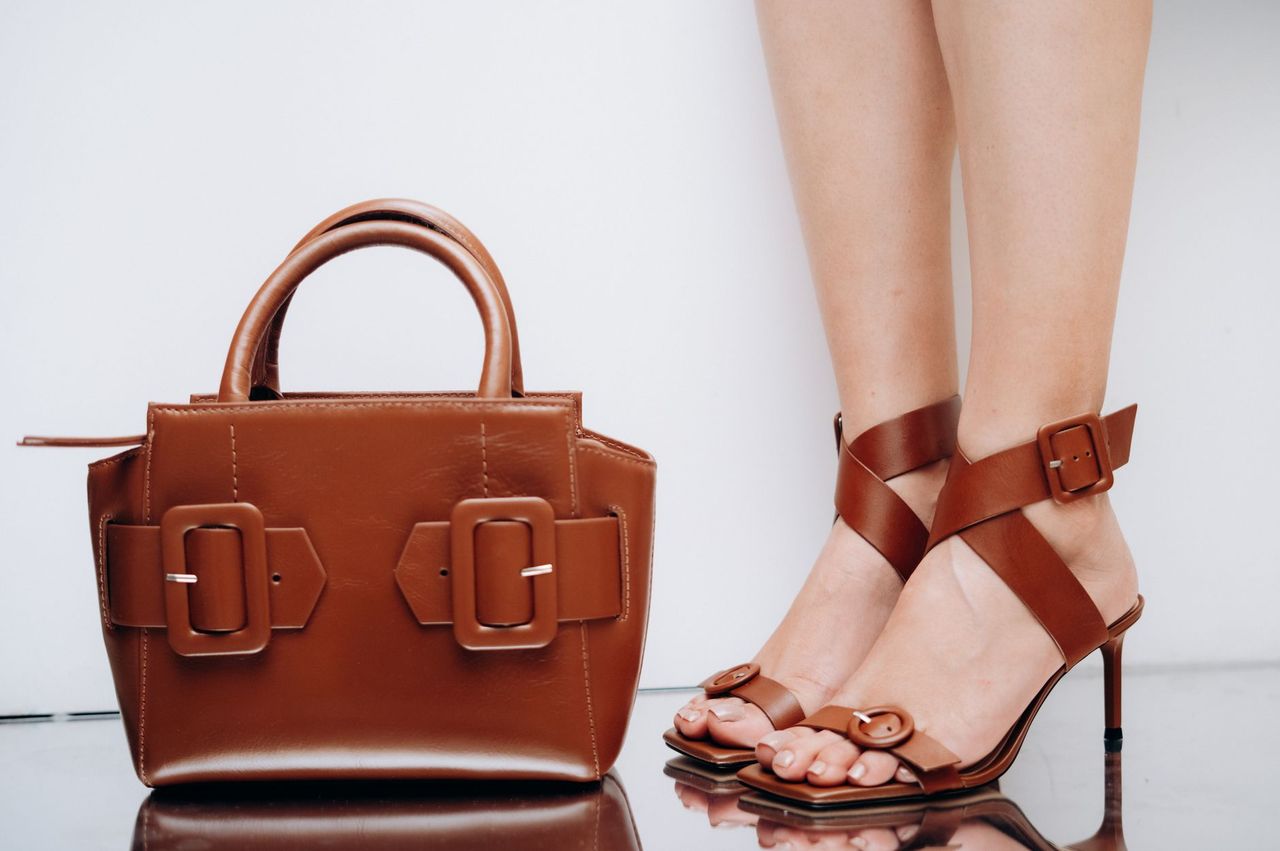
Fifteen years ago, buying a copy of a designer bag was something people did quietly and denied afterwards. Today there are accounts with hundreds of thousands of followers devoted entirely to finding them, retailers who effectively design around them, and a vocabulary that has entered ordinary speech. The word dupe is now used approvingly, in public, by people who could afford the original.
That shift is one of the more interesting things that has happened to fashion consumption in the last decade, and it is not really about money.
The distinction that makes it possible
The entire dupe economy rests on a legal and moral line that most people apply intuitively without ever articulating.
A counterfeit copies the brand
It reproduces a trademark, a logo, a monogram or a name, and pretends to be the original. It is illegal, it funds organised crime, and it is what customs seizes at borders.
A dupe copies the design
It reproduces a silhouette, a proportion, a colour or a construction, and makes no claim to be the original. In most jurisdictions the shape of a garment is far harder to protect than a logo, which is why a mesh flat, a barrel leg jean or a quilted shoulder bag can be produced by twenty companies simultaneously and completely legally.
Fashion has always been the least protected of the creative industries. Copyright covers a novel or a song comprehensively and covers the cut of a trouser barely at all. The dupe economy did not create that gap. It simply learned to occupy it in public.
Why the shame disappeared
Four things changed at once.
Luxury pricing outran incomes
Handbag prices in particular roughly doubled at several houses over a decade, moving items that were once achievable for a professional saving carefully into a different category entirely. When the original becomes structurally unattainable, the copy stops feeling like cheating and starts feeling like exclusion answered.
Quality converged at the middle
Improvements in mass manufacturing narrowed the visible gap between a two hundred dollar bag and a two thousand dollar one, particularly in photographs, which is where most clothes are now seen.
Social platforms rewarded the reveal
The dupe video is a genuinely good piece of content. It has a hook, a comparison, a number and a satisfying conclusion. Algorithms rewarded it, creators produced more of it, and the behaviour normalised through sheer repetition.
Logo status collapsed
When status shifted from visible branding to recognisable silhouette, the copy became functionally equivalent for the purpose most people were buying for. A bag recognisable by its shape is recognisable in a copy too.
What the brands actually do about it
Less than you would expect, and for revealing reasons.
Fighting a silhouette copy in court is expensive, slow and frequently unsuccessful. It also generates precisely the coverage the copy benefits from. Several houses have concluded that the diffusion of their shape into the mass market is closer to free advertising than to theft, since it reinforces which design is the original.
The more common strategy now is to move faster and to compete on the elements that cannot be copied, meaning material quality, resale value, service, repair and the social proof of ownership. A house that sells on shape alone is genuinely vulnerable. A house that sells on leather quality and a lifetime repair guarantee is not.
The exception is counterfeiting proper, where enforcement is aggressive and largely uncontroversial.
The honest ethics
The comfortable version of this conversation stops at the legal line. There is more to it.
Design labour is real labour. Someone drew the shape, and the copy pays them nothing. That is a genuine cost even where nothing illegal has occurred, and the argument that fashion has always copied itself is a description of the industry rather than a defence of it.
Manufacturing conditions matter more than provenance. A dupe made in an audited factory is a better purchase than an unlicensed copy from an opaque supply chain, and considerably better than a counterfeit, which frequently sits alongside serious criminal activity.
Volume is the real problem. The environmental cost of the dupe economy comes not from any individual copy but from the speed of the cycle it enables, where a trend can be identified, copied, sold and discarded within a season.
A practical framework
| Type | What it is | Legal | Worth buying |
|---|---|---|---|
| Counterfeit | Reproduces logo and brand, claims to be genuine | No | No, in any circumstances |
| Direct dupe | Copies a specific design closely, no branding | Usually yes | Sometimes, for short term trend pieces |
| Inspired piece | Shares a category and mood, not a specific design | Yes | Frequently the best value in the market |
| Original at a lower tier | A different brand's own good design at a lower price | Yes | The most defensible purchase of the four |
The fourth row is the one worth thinking about. A great deal of what gets marketed as a dupe is simply a well designed product from a mid tier brand, and calling it a copy does its designers a disservice while also making the buyer feel worse about a perfectly good purchase.
Frequently asked questions
Are dupes legal?
Generally yes, provided they do not reproduce a trademark, logo or protected element. Copying a silhouette is legal in most jurisdictions. Copying a monogram is not.
What is the difference between a dupe and a fake?
A fake pretends to be the original and reproduces its branding. A dupe resembles the original but makes no claim to be it. The distinction is both legal and moral, and it matters.
Do luxury brands actually lose money to dupes?
The evidence is mixed. Counterfeits cause clear losses. Silhouette copies are more ambiguous, since the customer buying a fifty dollar version was rarely going to buy the two thousand dollar one, and the copy often increases awareness of the original.
Is it tacky to buy a dupe?
That norm has largely dissolved for design copies, particularly among people who buy openly and without pretence. It has not dissolved for counterfeits, and the social penalty for being caught carrying one remains significant.
How do I buy a dupe well?
Buy it for a trend you expect to like for two seasons rather than ten, buy from a retailer with a supply chain you can find information about, and check construction rather than appearance, since the difference between a good copy and a bad one is almost always in the finishing.
The Velvet verdict
The dupe economy is not evidence that people stopped caring about design. It is evidence that they stopped accepting the price of admission, and that they became sophisticated enough to separate the shape of a thing from the name attached to it. Whether that is a healthy development depends entirely on how quickly you throw the copy away.