

A handbag rarely fails all at once. It fails in four specific places, in a predictable order, and the pattern is the same whether the bag cost a hundred dollars or two thousand. What separates the bags that age into something better from the ones that age into something apologetic is not price. It is the construction cues that determine how each failure point behaves after six months of real use.
What follows is the forensic version, meaning what causes each wear pattern and how to identify a bag on the shelf engineered to resist it.
Wear pattern one: handle darkening from skin oils
What causes it
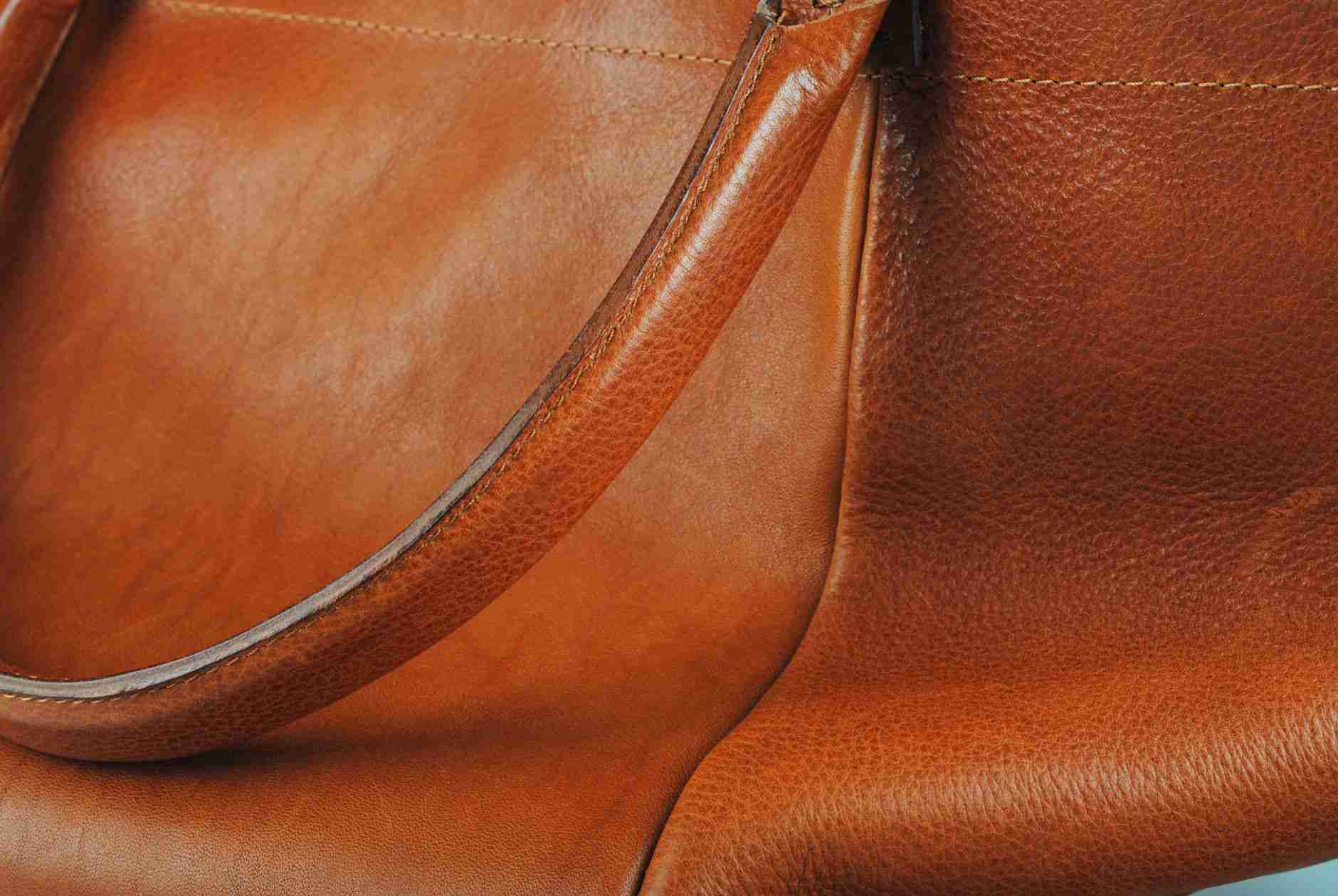
The skin on your palms produces sebum continuously, and the oils it deposits are chemically active. On a top-handle bag, this transfers to the handles every time you carry it. The oil penetrates the finish, oxidises with air exposure, and gradually darkens the leather from a pale tone into a shadowed one. On a dark leather it is disguised, but the leather still stiffens and eventually cracks along the fold line at the top of the handle. This is the most common reason a light or mid-tone handbag begins to look tired, and it does not clean off, because it is chemical rather than surface.
How to prevent it
Apply a wax-based leather protector on day one, before first use, and reapply every six to eight weeks. Carry the bag on the crook of the arm or on the shoulder more often than by the top handle in warm weather, when sebum production increases. Store stuffed and out of light between wears.
How to spot resistance before you buy
A rolled handle stitched through the core resists oil penetration better than a folded and glued one. A tightly grained calf leather resists better than a soft, open-grained nappa. Rub the inside of your wrist against the underside of the handle for five seconds. If the leather feels immediately slick, the finish is thin and will soak up oils quickly.
Wear pattern two: corner scuffing from setting the bag down
What causes it
Every time a handbag is placed on a floor, a café table, a car footwell or a countertop, the four bottom corners take the weight and the friction. The corners are the smallest surface area on the bag carrying the largest per-square-centimetre load, and they abrade first. On a structured bag with a defined base, the corners will start showing lighter leather within two months of daily use. On a soft, slouched bag the wear is more distributed but appears as creasing and eventual splitting along the base fold instead.
How to prevent it
Prevention is engineered rather than behavioural. Metal base feet, meaning four small studs on the bottom, elevate the leather off the surface and transfer friction to metal instead. A bag with base feet will out-wear one without them by years. Behaviourally, stop setting the bag on the floor.
How to spot resistance before you buy
Turn the bag upside down. Base feet should be firmly seated in the leather, not glued to a soft base panel. Press the corners between finger and thumb. A reinforced corner feels dense. An unreinforced one collapses under light pressure and will crease before it scuffs. Cleanly applied, layered edge paint at the base seams indicates the maker has finished the seams properly rather than leaving raw leather to fray.
Wear pattern three: strap-hardware plating loss
What causes it
Metal fittings, meaning D-rings, snap hooks, buckles and chain links, are typically base metal plated in gold, nickel or ruthenium. The plating is measured in microns, and cheaper hardware uses fewer of them. Friction between the strap and the ring, and between chain links themselves, gradually abrades the plating and exposes the base metal underneath, which oxidises to a dull grey or coppery pink. Once worn through there is no cosmetic repair.
How to prevent it
Solid brass hardware, even unplated, wears to a warm patina rather than a base-metal shadow. Heavy-plated fittings, meaning three microns or more, resist visibly for years. Avoid overloading the bag, because weight increases friction pressure at every hardware junction.
How to spot resistance before you buy
Feel the weight of the hardware between your fingers. Solid brass or heavily plated fittings feel dense and cool. Lightweight hardware with a slightly plastic-looking sheen is thin plate over zinc alloy and will fail early. Check the underside of exposed hardware too. If the plating is applied only to the visible surface, the wear-through will begin at the concealed friction points first.
Wear pattern four: leather stretching and sag at the top opening
What causes it
The mouth of a handbag is under constant tension from three sources, which are the weight of the contents pulling downward, the strap or handle pulling upward at the attachment points, and the repeated opening and closing that flexes the top edge. Over months, the leather at the top edge stretches, the opening widens, and the bag begins to sag between the two handle attachments. On a structured bag this appears as a droop across the top edge. On an unstructured bag it appears as a gape that no longer closes cleanly around the zipper.
Once the leather has stretched, it does not return. The bag has permanently changed shape.
How to prevent it
Do not overload the bag. Exceeding the design weight accelerates every failure mode simultaneously, but stretching most of all. Store stuffed with tissue or a shaped insert between uses. Rotate between at least two bags in daily use so no single bag takes the full wear.
How to spot resistance before you buy
The critical detail is top-edge reinforcement. Premium bags use a hidden strip of firmer leather, plastic or metal along the top edge to stop the mouth stretching under load. Run your finger along the inside of the top edge. If it feels uniformly stiff, it is reinforced. Check the handle attachment reinforcement too, meaning the leather patch behind the hardware. A generous, doubled patch spreads the load. A minimal one concentrates it and accelerates stretching.
Which brands actually age well, and why
Polène
Polène is the current reference point for structured leather bags that age correctly, and the reasons are visible on close inspection. Edge paint is layered and burnished, meaning three to four coats hand-applied and polished. Hardware is heavily plated brass with real weight. Base feet are standard on the structured styles. The leather is a full-grain calf with a controlled finish. At around 395 USD, 315 GBP and 595 AUD for the core Numéro Un, it outperforms bags at twice the price on construction cues.
Demellier
Demellier deserves the same reputation for slightly different reasons. The brand uses a firmer bridle-style leather across its structured styles, which resists both stretching and corner scuffing. Hardware is understated but solid. Edge paint is neat rather than showy. At around 495 USD, 395 GBP and 745 AUD for the New York or the Nano Montreal, it is engineered for daily wear rather than styling.
Longchamp
Longchamp is the value benchmark, meaning the Roseau and the Épure styles at 395 USD to 550 USD, 315 GBP to 440 GBP and 595 AUD to 825 AUD. The leather is not the softest and the hardware is not the heaviest, but the construction is honest, the base feet are present, and the top-edge reinforcement is genuine. It ages predictably, meaning slowly and evenly.
Coach
The renewed Coach, particularly the Tabby and Rogue lines at 395 USD to 695 USD, 315 GBP to 555 GBP and 595 AUD to 1045 AUD, has returned to the glove-tanned leather and heavy hardware that built the original reputation. The Tabby in particular ages into a warm patina that improves the bag rather than degrading it.
Strathberry
Strathberry sits at the top of this list on construction, with saddle-quality leathers, brass hardware and pristine edge paint. The Mini Tote at around 495 USD, 395 GBP and 745 AUD is engineered like a bag at double the money. The bar hardware feature is functional as well as decorative, meaning it distributes load away from the top-edge stretching zone.
The construction comparison
| Brand | Edge paint | Hardware weight | Base feet | Top-edge reinforcement |
|---|---|---|---|---|
| Polène | Layered, burnished | Heavy plated brass | Standard | Firm |
| Demellier | Neat, restrained | Solid, matte finish | Standard | Firm |
| Longchamp | Functional | Moderate | Standard | Moderate |
| Coach | Well-executed | Heavy | Standard on most | Firm |
| Strathberry | Pristine | Solid brass | Standard | Firm |
Do's and Don'ts
| Do's | Don'ts |
|---|---|
| Rotate handbags weekly to allow leather to recover between uses | Hang a handbag by one handle in a wardrobe, the shape sags at the shoulder point |
| Condition leather every three months with a neutral cream, more often in dry climates | Expose light-coloured leather to unwashed denim, colour transfer is often permanent |
| Store the bag stuffed with a pillow form or bubble wrap to keep its silhouette | Rest a bag on the pavement or floor, corners take the impact and abrade first |
| Photograph the bag on day one to spot small wear early and address it | Keep receipts inside a leather bag long-term, thermal paper leaches ink onto the lining |
| Store inside its dust bag with silica packets in humid environments | Fold a structured tote when storing, the base memory shows and can crack |
| Retouch the edge paint on straps before it flakes, once flaked it needs full re-paint | Overload the bag beyond its structural design, hardware and stitching fail first |
| Wipe hardware with a soft cloth after wearing, salt and oil dull plating quickly | Attempt to clean a leather bag with baby wipes, the alcohol strips the finish |
| Keep the shoulder strap detached during storage to avoid stress on hardware | Store leather near heat sources or in direct sunlight, both dry the finish out |
| Ask a cobbler to reinforce a corner before it splits, not after | Assume a lifetime warranty covers wear, most brands cover manufacturing defects only |
| Match the bag to the day, structured bags for shorter carries, softer bags for longer | Use a leather bag as a rain bag without a waterproof cover, water spots often set forever |
Frequently asked questions
Rarely, and never fully. A professional leather cleaner can lift some of the surface oil, but the chemical oxidation that has penetrated the finish is permanent. Prevention with a wax conditioner from day one is the only reliable answer.
Yes, by a wide margin. Base feet extend the useful life of a structured bag by years and are the single most cost-effective construction detail. A bag under 300 USD with base feet will out-wear a bag over 600 USD without them.
Between 400 USD and 700 USD, 320 GBP and 560 GBP, or 600 AUD and 1050 AUD, from a brand with visible construction cues, meaning proper edge paint, heavy hardware, base feet and reinforced top edges. Above that bracket you are paying for name and finish, not durability.
No. Ostrich, python and other exotics look distinctive but are more delicate, more sensitive to moisture, and more expensive to repair. A well-finished full-grain calf outlasts most exotics in daily use.
Yes. Leather needs recovery time between uses, and rotating between two or three bags roughly triples the useful life of each compared with wearing one bag daily.
Can handle darkening be removed once it has set in?
Are base feet worth paying extra for on a handbag?
How much should I pay for a bag that will last five years of daily use?
Is exotic leather more durable than calf?
Should I rotate handbags to make them last?
The Velvet verdict
Four failure points, all predictable, all preventable at the purchase stage by reading the right construction cues. Edge paint, hardware weight, base feet and top-edge reinforcement tell you more about how a bag will look in a year than the label or the price ever will. Learn to check them in ninety seconds.