

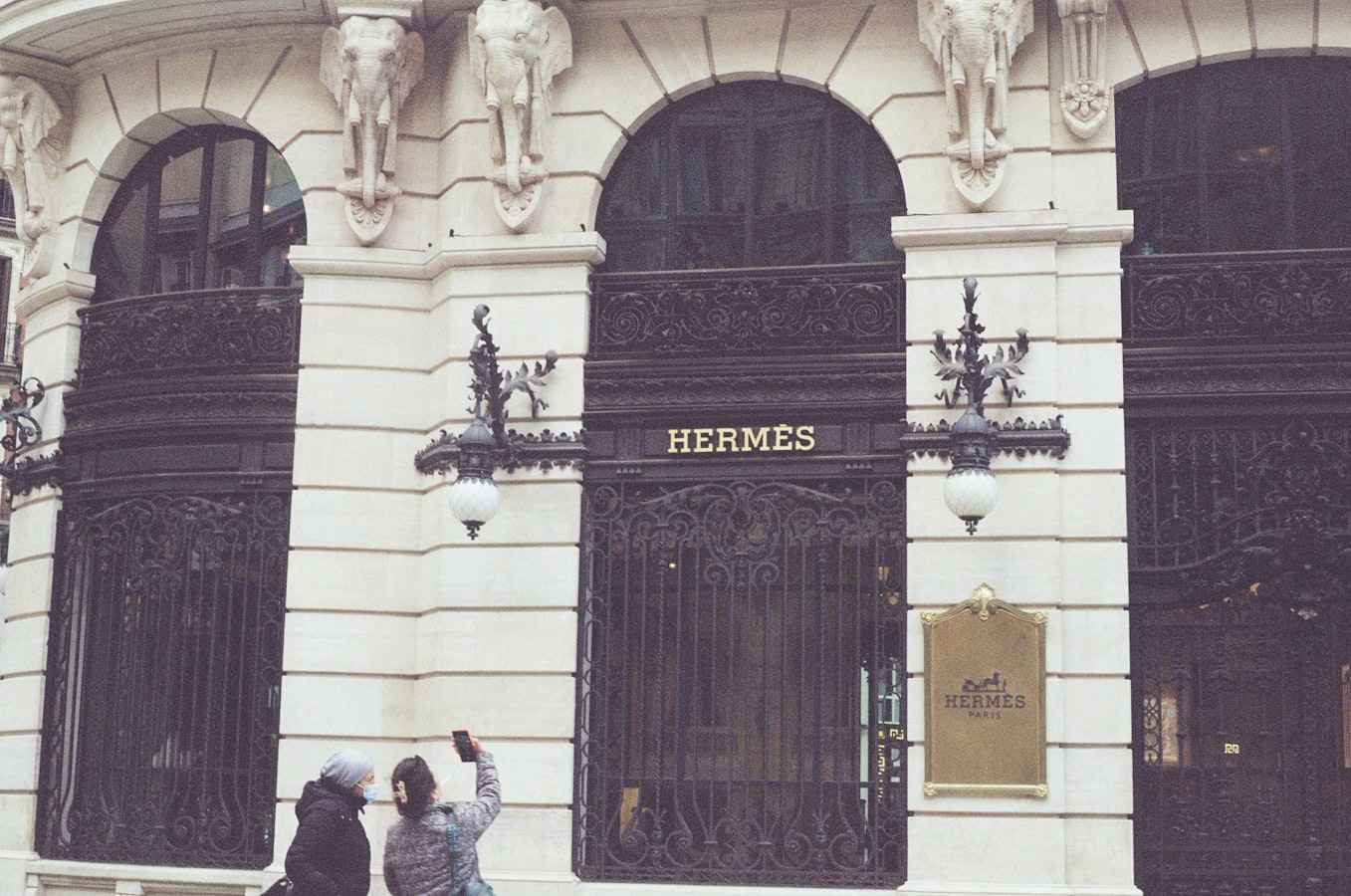
There is no luxury brand on earth that understands the word “no” quite like Hermès. While LVMH scaled Dior and Louis Vuitton into airport-adjacent megastores and Kering reshuffled Gucci’s creative direction every few seasons to chase relevance, the Hermès business model has done something almost perverse by modern corporate standards: it has deliberately refused to sell more product. The result? A company that posted €16 billion in revenue for 2025 — a 9% jump at constant exchange rates — with a recurring operating margin of 41%. That figure alone should stop anyone who thinks scarcity is bad for business. Hermès proved, again, that controlled restraint prints money faster than a Supreme drop ever could.
The centrepiece of this strategy is, of course, the Birkin. And the Birkin’s relationship with availability has become one of the most studied dynamics in luxury commerce. You cannot buy one online. You cannot reserve one by phone. In most boutiques, you cannot even ask for one directly without a sales associate gently steering the conversation elsewhere. The formal waitlist — which Hermès maintained for years — was scrapped long ago when it became functionally infinite. What replaced it is something far more powerful: a cultivation system where your spending history, your relationship with a specific store, and frankly your patience determine whether you ever hold one at all. In 2026, a Birkin 25 in Togo leather retails for $13,500 in the US and €9,600 in Europe. And still, the line goes around the block — metaphorically, and sometimes literally.
How the Hermès Business Model Actually Works
Most fashion brands operate on a basic retail equation: make product, distribute widely, sell through as much inventory as possible, discount what remains. Hermès inverts every part of that formula. The house runs 24 leather goods workshops across France, each staffed by artisans who trained for four to five years before touching their first Birkin hide. A single bag requires roughly 18 to 48 hours of hand-stitching by one craftsperson, depending on the leather and hardware. That is not a bottleneck the brand is trying to fix — it is the bottleneck the brand is built around.

Axel Dumas, the sixth-generation family CEO, reinforced this in Hermès’s February 2026 earnings call when he described the company’s “highly integrated artisanal model” as the foundation for its confidence heading into a volatile year. Hermès plans to open only four additional leather workshops between 2026 and 2030. Compare that pace to, say, Chanel’s aggressive retail expansion or Louis Vuitton’s 23 dedicated leather ateliers already in operation. Hermès is adding capacity, but at a tempo that guarantees demand will outstrip supply for another decade at minimum.
The Waitlist That Doesn’t Officially Exist
Here is the part that frustrates new clients and fascinates business analysts in equal measure. Hermès does not maintain a formal Birkin waitlist. What it maintains is something more opaque: a relationship-based allocation system managed at the store level. A sales associate (your SA, in collector shorthand) tracks your purchase history, notes your preferences, and — if the relationship is strong enough — calls you when a bag matching your profile arrives.

This means a first-time shopper walking into the Madison Avenue flagship with $14,900 in cash will almost certainly walk out empty-handed. Meanwhile, a client who has spent $30,000 over two years on scarves, homewares, and ready-to-wear might receive a call about a Birkin 30 in Gold Togo on a Tuesday afternoon. The system rewards loyalty, not urgency. And it creates a secondary economy of “building a profile” — spending deliberately across Hermès’s other categories specifically to qualify for bag access.
The Antitrust Question Nobody Expected
That profile-building culture got Hermès into legal trouble. In March 2024, a group of plaintiffs filed a class-action antitrust lawsuit in US federal court, alleging that Hermès engaged in an unlawful tying arrangement — essentially forcing customers to buy ancillary products (scarves, jewellery, enamel bracelets) as a precondition for purchasing a Birkin or Kelly. One plaintiff claimed she spent tens of thousands on non-bag items before receiving access. Another was told outright by a sales associate that purchasing additional products was “necessary for a chance.”

In September 2025, US District Judge James Donato dismissed the suit, ruling that the plaintiffs failed to define a plausible product market and did not demonstrate that Hermès wielded monopolistic power. The plaintiffs appealed in February 2026, and the case now sits with the Ninth Circuit. Regardless of outcome, the lawsuit illuminated something the fashion industry already knew: the Hermès business model depends on customers wanting in so badly they will spend their way through the door. Whether that constitutes coercion or simply good brand management depends on whom you ask.
Why Scarcity Beats Scale in Luxury
The fashion industry spent the 2010s chasing scale. Michael Kors saturated American department stores and watched its brand equity collapse. Coach (now Tapestry) flooded outlets before a painful multi-year repositioning under Stuart Vevers. Burberry overexposed its check pattern until it became synonymous with fast fashion knock-offs rather than British heritage. Each of these brands learned the same lesson the hard way: in luxury, availability kills desirability.

Hermès never had to learn that lesson because it never made the mistake. The company has stayed private-family-controlled (the Hermès family holds over 66% of shares), which insulates Axel Dumas from the quarterly-earnings pressure that pushes publicly traded competitors to chase growth at the expense of mystique. When he told analysts in February 2026 that Hermès is “pursuing its long-term development strategy based on creativity, maintaining control over know-how,” he was describing something most public-company CEOs literally cannot do. The stock market rewards next-quarter revenue growth. The Hermès model rewards next-decade brand equity.
The Birkin as Financial Asset
A Birkin 25 in Togo leather retailed for $9,400 in the US in 2016. By January 2026, that same configuration sells for $13,500 — a 44% increase over ten years, outperforming the S&P 500’s average annual return in several of those years. On the resale market, popular sizes and colours regularly trade at 50% to 100% above retail. A rare Himalaya Birkin sold at Christie’s for over $400,000. Knight Frank’s Luxury Investment Index has consistently ranked handbags — driven almost entirely by Hermès — among the top-performing collectible asset classes alongside fine wine and classic cars.

This investment narrative feeds back into the scarcity loop. The more a Birkin appreciates in value, the more people want one. The more people want one, the longer the informal wait. The longer the wait, the more exclusive the bag feels. And the more exclusive it feels, the more it appreciates. Hermès did not invent this flywheel on purpose — Jean-Louis Dumas simply wanted to make excellent bags — but the company has become masterful at sustaining it.
What This Means for the Wider Luxury Market in 2026
Hermès’s Q1 2026 revenue came in at €4.1 billion, up 6% at constant exchange rates, with double-digit growth in the Americas, Japan, and Europe excluding France. Leather goods and saddlery — the division housing Birkin, Kelly, Constance, and Picotin — grew 14.6% in Q4 2025 alone. These are not the numbers of a company struggling with market headwinds. They are the numbers of a company that has made market headwinds irrelevant through structural demand creation.

Other houses are paying attention. Chanel has raised bag prices aggressively (the Classic Flap crossed $11,000 in 2025), partly to create a similar scarcity perception. Bottega Veneta under Matthieu Blazy leaned into limited drops and zero-logo branding to mimic the “if you know, you know” effect. But neither has replicated the full Hermès playbook, because neither controls production end-to-end with the same artisanal rigidity. Hermès’s moat is not just scarcity. It is the fact that the scarcity is structurally real — rooted in genuine production constraints — rather than manufactured through artificial stock-holding.
Do’s and Don’ts
| Do | Don’t |
|---|---|
| Research your local Hermès boutique’s buying culture before your first visit | Walk in and ask for a Birkin on day one — you will be politely redirected |
| Build a genuine relationship with one SA over months or years | Bounce between multiple stores hoping to game the system |
| Buy pieces you actually love across leather goods, scarves, and homewares | Purchase items solely to “build a profile” if you resent the spending |
| Understand that allocation varies wildly by city and country | Assume the process works identically in Paris, New York, and Sydney |
| Track retail price trends — Birkins appreciate, making timing matter | Overpay on the resale market without checking current retail pricing |
| Consider pre-owned from authenticated resellers like Vestiaire or Rebag | Buy from unverified Instagram sellers — counterfeit Birkins are endemic |
| Learn leather types (Togo, Epsom, Swift, Clemence) before committing | Fixate only on colour without understanding how leather affects wear |
| View a Birkin as both a personal object and a potential investment | Treat it purely as a financial asset — wear it, enjoy it |
| Follow Hermès price announcements each January for budget planning | Assume prices stay static — they have risen every year for a decade |
| Read the antitrust case details to understand the allocation debate | Blindly accept or reject the tying allegations without examining facts |
FAQs
Is there an official Hermès Birkin waiting list? No. Hermès discontinued its formal waiting list years ago when demand made it unmanageable. Today, Birkin access is handled through an informal allocation system at the boutique level. Your sales associate tracks your purchase history, preferences, and relationship with the store. When a bag matching your profile arrives, they may contact you — but there is no queue, no number, and no guaranteed timeline. Some clients wait months; others wait years without success.

How much does a Birkin cost in 2026? In the US, a Birkin 25 in Togo leather retails for $13,500 as of January 2026, up from $12,700 in 2025 — a 6.3% increase. The Birkin 30 is $14,900, and the Birkin 35 is $16,300. European prices are lower: the Birkin 25 starts at €9,600. Exotic leathers (crocodile, ostrich) run significantly higher, often exceeding $40,000 at retail and six figures on resale.
Why does Hermès not simply produce more Birkins to meet demand? Because constrained supply is the engine of the entire Hermès business model. Each bag is hand-stitched by a single artisan who trained for four to five years. The company operates 24 leather workshops across France and plans to add only four more by 2030. Scaling production would require either lowering craft standards or industrialising the process — both of which would destroy the brand equity that drives €16 billion in annual revenue.
What happened with the Hermès antitrust lawsuit? In 2024, US consumers filed a class action alleging Hermès forced them to buy ancillary products to qualify for Birkin access. A federal judge dismissed the case in September 2025, finding no plausible antitrust market definition. The plaintiffs appealed to the Ninth Circuit in February 2026, and the case remains active. The outcome could set precedent for how luxury allocation practices are regulated.
Do Birkin bags really outperform the stock market? In certain periods, yes. The Birkin 25’s retail price rose 44% from 2016 to 2026, and resale premiums of 50–100% above retail are common for sought-after configurations. Knight Frank’s Luxury Investment Index has ranked handbags among top-performing collectibles. However, unlike stocks, Birkins are illiquid, condition-sensitive, and carry authentication risk on the secondary market. They are best viewed as a diversification play, not a primary investment vehicle.
How is Hermès different from other luxury conglomerates like LVMH or Kering? Hermès remains family-controlled, with the Hermès family holding over 66% of shares. This insulates the company from short-term shareholder pressure that drives competitors toward aggressive expansion and discounting. While LVMH manages over 75 brands across multiple categories, Hermès operates as a single house with total vertical integration — from tanning leather to retail sales. That structure gives Axel Dumas strategic patience that most publicly traded luxury CEOs simply do not have.
Should I buy a Birkin from a reseller? If you cannot access one at retail, authenticated resale platforms like Vestiaire Collective, Rebag, and The RealReal are legitimate options — but expect to pay a significant premium. A standard Birkin 25 in a popular colour typically resells for $18,000 to $25,000 depending on condition and colour. Always verify authentication, request original receipts where possible, and avoid private Instagram or WeChat sellers, where counterfeit rates remain high.
Conclusion
The Hermès business model is not complicated. Make fewer bags than people want. Hire artisans, not assembly lines. Let the waitlist — official or otherwise — do the marketing. The result is a brand that posted 41% operating margins while most of its competitors wrestled with discount cycles and overexposure. Whether you are building a purchase history at your local boutique or studying the house from an investment lens, the takeaway is the same: Hermès built a waiting-list economy, and it has zero intention of letting you skip the line.