

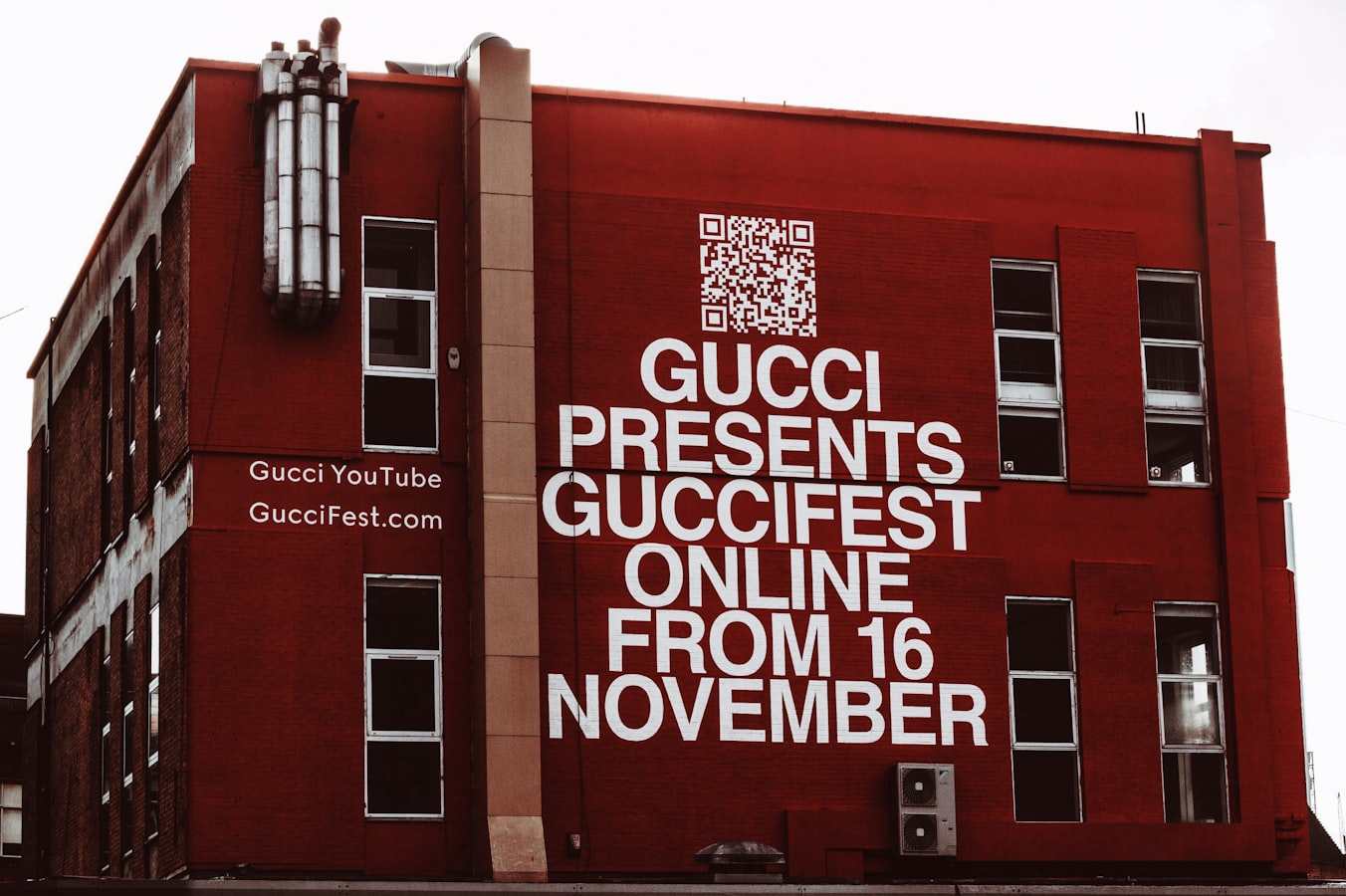
Five years ago, if you walked into a dinner party carrying a head-to-toe monogrammed bag, someone would have quietly judged you. The quiet luxury crowd — all oatmeal cashmere and unbranded suede — had declared logos gauche, a relic of the mid-2000s excess that fashion was supposed to have outgrown. Then something shifted. By late 2025, the GG monogram started appearing on Dua Lipa’s book club outfits. Coach’s signature C canvas was selling out faster than the brand could restock. And Pharrell Williams was threading LV Flowers into pinstripe suiting at Louis Vuitton like they were a natural part of the weave. The logomania trend 2026 is real — but this time, it looks nothing like the flashy, look-at-me branding of two decades ago.
What makes this wave different is intent. The old logomania was about volume — plaster the print on everything from bucket hats to luggage sets and let the world know exactly what you spent. The new version is architectural. Designers are treating monograms as texture, as pattern language, as a way to signal heritage without screaming for attention. Demna’s first Gucci collection opened with a monogrammed travel trunk. Pharrell’s Louis Vuitton FW26 suiting features tone-on-tone Monogram prints so subtle you’d miss them across a boardroom table. Coach, meanwhile, has turned its signature canvas into a Gen Z status symbol by pairing it with $395 price points and TikTok-friendly silhouettes. The logos are back, yes — but they’ve learned to whisper.
The Monogram Cycle: Why Logos Always Return
Fashion’s relationship with logos runs on a surprisingly predictable clock. The early 2000s gave us peak logomania — Dior Saddle bags, Fendi Baguettes dripping in FF jacquard, Louis Vuitton’s Murakami collaboration turning the monogram into pop art. Then came the correction: Phoebe Philo’s Celine stripped everything back, The Row built an empire on zero visible branding, and “stealth wealth” entered the lexicon. By 2020, wearing a logo felt almost confrontational. But pendulums swing. The re-release of the LV x Murakami collection in 2025 triggered a wave of nostalgia-driven demand, and suddenly heritage prints felt fresh again. Resale platforms like The RealReal and Vestiaire Collective reported surging interest in vintage Dior Oblique and Fendi Zucca pieces throughout late 2025, proving that when the culture gets tired of austerity, it reaches for the most recognizable symbols of luxury it can find.

Demna’s Gucci: The GG Monogram Gets a New Architect
When Sabato De Sarno exited Gucci in February 2025 after a turbulent two-year tenure marked by declining revenues, the house needed more than a creative refresh — it needed cultural relevance. Enter Demna, appointed artistic director in July 2025, whose first move was “La Famiglia,” a surprise see-now-buy-now capsule dropped at just ten Gucci boutiques worldwide in December 2025. The collection opened with L’Archetipo, a monogrammed travel trunk that immediately signalled his intentions: the GG monogram wasn’t going anywhere, but it was getting rewired. His Spring 2026 RTW debut doubled down, featuring the GG worn — in the words of multiple reviewers — “with fearless abandon.” But Demna’s approach isn’t maximalist chaos. He’s treating the monogram as raw material, reworking it through oversized proportions, unexpected colourways, and experimental textures. The Pre-Fall 2026 collection paired GG prints and Web stripes with a minimalist silhouette language that felt closer to Tom Ford’s 1990s Gucci than Alessandro Michele’s baroque excess. It’s logomania filtered through a deconstructionist lens, and it’s working.

Louis Vuitton: Pharrell’s Monogram Playground
Pharrell Williams has spent three years at Louis Vuitton treating the house’s monogram like a DJ treats a sample — chopping it, remixing it, layering it into contexts where it was never designed to appear. His Fall/Winter 2026 Formal collection is the most refined example yet. The “Timeless Business” tier threads LV Flowers as micro-patterns into pinstripe suiting, weaves tiny Damier Seeds into jacquard, and renders the monogram in tone-on-tone prints that register as texture rather than branding. It’s corporate logomania, essentially — designed for the person who wants to wear a $3,000 suit that only another LV obsessive would clock. Meanwhile, the 2026 Ski Collection went the opposite direction with metallic gunmetal PVC bags embossed in the Monogram pattern across Christopher backpacks, Keepall duffels, and Shopper totes. The Speedy P9 in grey shearling featured a magnified Monogram rendered in intarsia — visible from across the lodge. Pharrell understands something fundamental about logos in 2026: they work best when you commit to either extreme. Whisper or shout, but don’t mumble.

The Coach Monogram Effect: How a $395 Bag Changed the Conversation
If Gucci and Louis Vuitton represent logomania’s luxury ceiling, Coach is the brand that made it accessible — and arguably more culturally relevant in the process. Under Stuart Vevers, Coach has spent the past two years engineering one of fashion’s most impressive turnarounds, driven almost entirely by handbags. The numbers are staggering: Coach delivered $5.6 billion in annual revenue for Tapestry’s FY2025, up 10% year-over-year, accounting for roughly 80% of the parent company’s total sales. Handbag average unit retail climbed in the mid-teens percentage range. The Tabby Shoulder Bag 26, available in signature canvas from around $395, has become the entry-level logomania piece for Gen Z shoppers who grew up watching their mothers carry Coach but couldn’t afford Gucci. The Brooklyn bag stays perpetually viral on TikTok. Coach Play stores now offer monogramming customisation on Tabby bags — a smart move that turns a logo purchase into a personalised one, which is exactly what younger consumers want. The “Coach Monogram Effect,” as some analysts have started calling it, proves that logomania doesn’t need a four-figure price tag to generate cultural heat.

What Makes 2026 Logomania Different from the 2000s Version
The original logomania era treated logos as social ammunition. You wore Dior head-to-toe because you wanted strangers to know you could. The 2026 version is more layered than that. First, there’s the heritage angle — Demna’s Gucci trunk, Pharrell’s LV Flower pinstripes, Coach’s revival of the signature C canvas all explicitly reference archival designs. These brands aren’t inventing new logos; they’re excavating old ones and presenting them as craftsmanship artefacts. Second, the styling has changed. You’re far more likely to see a single monogrammed piece — a bag, a belt, a jacket liner — worn against otherwise clean lines than a full logo-on-logo outfit. The Fendi Baguette Mini in brown FF jacquard works precisely because it sits against a plain black coat, not a matching FF skirt. Third, price accessibility has expanded. Between Coach’s sub-$500 signature bags and the booming resale market for vintage Dior and Celine monogram pieces, you no longer need $2,500 to participate.

How to Wear the Logomania Trend 2026 Without Looking Like a Billboard
The single smartest move is treating your monogram piece as the accent, not the outfit. A Coach Tabby 26 in signature canvas against a white tee and tailored trousers reads confident. A Gucci GG belt peeking from under an oversized blazer reads intentional. A Louis Vuitton Speedy in classic monogram with minimal jewellery reads editorial. The mistake people make is matching — a logo bag with logo shoes with a logo belt creates visual noise, not style. Pick one piece, let it do the work, and keep everything else relatively quiet. Vintage is also a strong play right now: a 1990s Fendi Zucca baguette from The RealReal carries more cultural credibility than anything off the current season rack, and it costs a fraction of the price.

Do’s and Don’ts
| Do’s | Don’ts |
|---|---|
| Invest in one signature monogram piece and build outfits around it | Don’t match your logo bag with logo shoes and a logo belt |
| Try Coach’s signature canvas Tabby as an affordable entry point | Don’t dismiss accessible brands as “not real” logomania |
| Look at vintage Dior Oblique and Fendi Zucca on resale platforms | Don’t pay full retail for a style you can find on Vestiaire Collective |
| Pair monogram accessories with clean, unbranded clothing | Don’t wear head-to-toe monogram unless you’re on a runway |
| Consider tone-on-tone logo prints for subtle impact | Don’t assume all logomania is loud — the trend has a quiet lane |
| Follow Demna’s lead and mix GG monogram with minimalist silhouettes | Don’t ignore the craftsmanship behind heritage prints |
| Explore Coach Play stores for personalised monogramming | Don’t buy a logo piece just because it’s trending — wear what you’d carry in five years |
| Use a single logo belt or scarf to add dimension to a simple outfit | Don’t treat monograms as a substitute for personal style |
| Check Pharrell’s LV tone-on-tone suiting for menswear-inspired styling | Don’t sleep on the Brooklyn bag if the Tabby waitlist is too long |
| Layer a vintage monogram piece with contemporary basics for contrast | Don’t confuse logomania with conspicuous consumption — the 2026 version is smarter |
FAQs
Is the logomania trend 2026 the same as the 2000s version? Not at all. The 2000s version was about saturation — logos on everything, matched sets, maximum visibility. The 2026 iteration treats monograms as heritage texture. Designers like Demna at Gucci and Pharrell at Louis Vuitton are threading logos into fabric construction (tone-on-tone jacquard, micro-patterned pinstripes) rather than stamping them across entire surfaces. The cultural meaning has shifted too: wearing a monogram in 2026 signals awareness of a house’s history, not just awareness of its price tag.

Which brands are leading the logomania comeback? Gucci under Demna is making the boldest archival moves, reintroducing the GG monogram through deconstructed silhouettes and his Pre-Fall 2026 collection. Louis Vuitton under Pharrell Williams continues to remix the LV Flower and Damier patterns across both casual and formal lines. Coach, under Stuart Vevers, has arguably had the biggest cultural impact by making monogram bags accessible at the $395-$695 price range and capturing Gen Z through TikTok virality. Fendi, Dior, and Celine are also participating through mini bag revivals and archival prints.
How much does a monogram bag cost in 2026? The range is enormous. A Coach Tabby Shoulder Bag 26 in signature canvas starts around $395. A Louis Vuitton Speedy 30 in classic monogram canvas sits around $1,800-$2,000. Gucci’s GG monogram bags under Demna’s direction range from approximately $1,500 to $3,500 depending on size and material. Vintage options on resale platforms can be significantly cheaper — a pre-owned Fendi Baguette in Zucca canvas often trades between $400 and $800, making secondhand shopping one of the smartest entry points into the trend.
Is logomania appropriate for professional settings? Absolutely, if you calibrate correctly. Pharrell’s LV FW26 Formal collection literally designed tone-on-tone monogram suiting for boardrooms. A subtle logo belt, a structured monogram bag in muted tones, or a silk scarf with discreet house prints all work in corporate environments. The key is choosing pieces where the monogram reads as pattern rather than advertising. Avoid neon colourways or oversized logos in conservative offices.
Will this trend last or is it just a moment? Logo trends have historically run in three-to-five-year cycles. The current wave started building in late 2024 with the quiet luxury fatigue and gained serious momentum through 2025’s archival revivals. Given that major houses like Gucci and Louis Vuitton are investing their most high-profile creative directors in monogram-forward collections, this cycle likely has at least two to three more strong years. The resale market’s sustained demand for vintage monogram pieces also suggests this is not a flash trend.
How can I try logomania on a budget? Coach is your best friend here. The Tabby 20 in signature canvas and the Brooklyn bag offer genuine designer monogram under $500. Beyond new retail, the resale market is rich with options — vintage Dior Saddle bags, early-2000s Fendi Baguettes, and classic LV Pochettes all trade at accessible prices on platforms like The RealReal, Rebag, and Vestiaire Collective. You can also start small with monogram accessories: a Gucci belt, an LV card holder, or a Coach signature wristlet.
What’s the difference between monogram and logomania? Monogram refers specifically to a repeating pattern of a brand’s initials or symbols woven or printed onto fabric — think Louis Vuitton’s LV Flowers and quatrefoils, or Coach’s interlocking C pattern. Logomania is the broader cultural trend of embracing visible branding in fashion, which includes monograms but also extends to oversized logo prints, branded hardware, and house-code motifs like Gucci’s Web stripes or Fendi’s FF. In 2026, the two terms are used almost interchangeably, but technically monogram is a subset of logomania.
Conclusion
The logomania trend 2026 is proof that fashion never truly abandons its most powerful symbols — it just learns new ways to deploy them. Whether you enter through a $395 Coach Tabby, a vintage Fendi find on The RealReal, or a full Demna-era Gucci look, the monogram is no longer a guilty pleasure. It’s a design language. Wear it with intention, keep the rest of your outfit simple, and let the pattern speak for itself.