

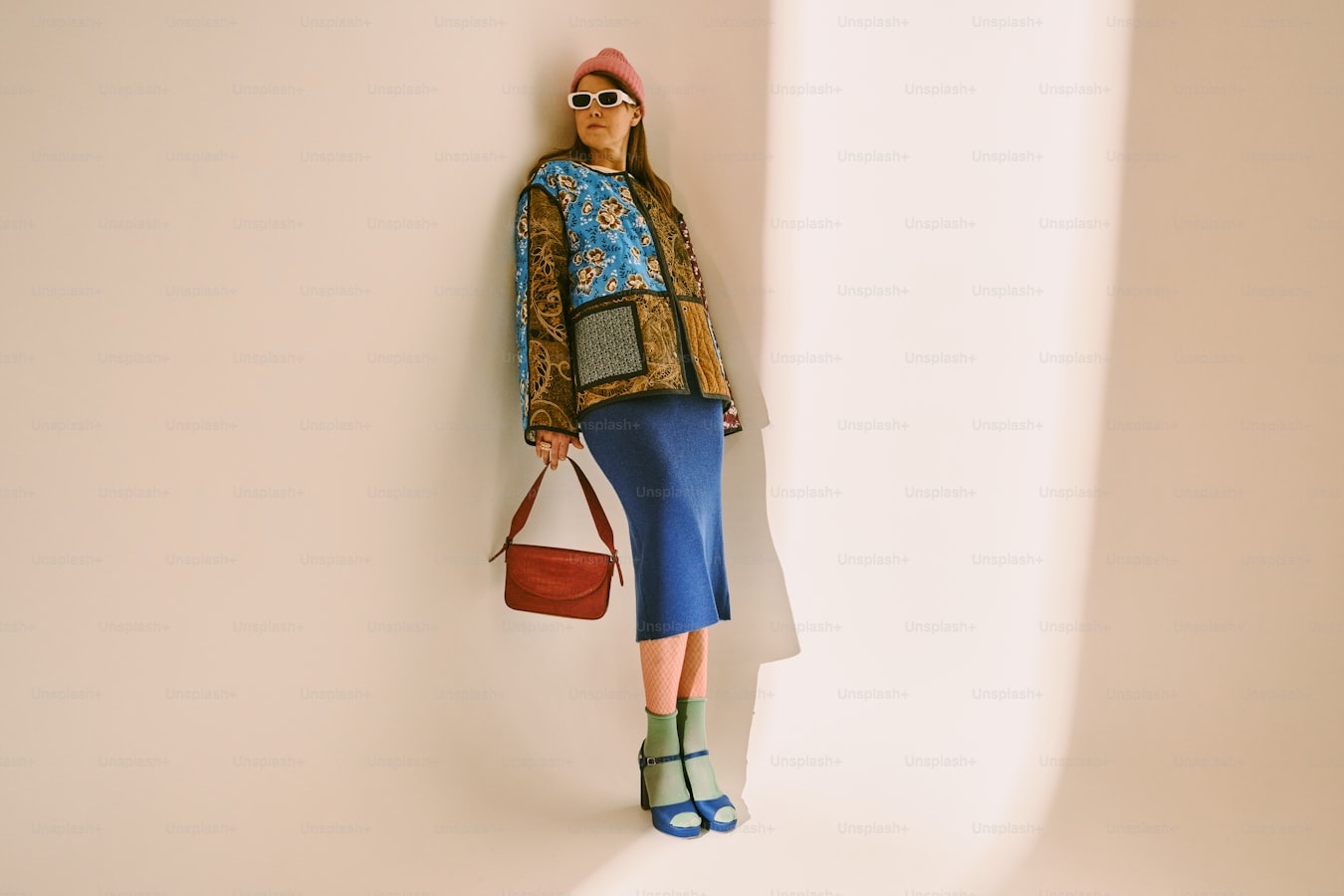
Luxury fashion hasn’t felt this split down the middle since the Tom Ford Gucci years went head-to-head with Helmut Lang’s empty white rooms. Walk the SS26 and FW26 shows in your head for a second: Daniel Roseberry is stitching 25,000 silk feathers onto a Schiaparelli bustier, Demna is turning Gucci into a body-first, logo-drenched family drama, Alessandro Michele is burying Valentino under embroidery and symbolism in Rome — and on the other side of the room, Mary-Kate and Ashley Olsen are still refusing to let anyone photograph a single look at The Row. This is the maximalism vs minimalism fashion argument in its purest 2026 form, and it is not a soft seasonal mood swing. It is an actual ideological divide about what luxury is for.
The question underneath all of it is simple but uncomfortable: is luxury something you feel (restraint, weight, hand, time) or something you see (drama, story, spectacle, meme)? Gen Z has looked at the last four years of “quiet luxury” Sofia Richie TikToks, the endless beige cashmere round-ups, the Succession-core carousels — and half of them have quietly walked away from the beige room. The other half are doubling down on it and buying their first Toteme coat at 24. Both camps think they’re the grown-ups. Below, a real breakdown of who’s designing what, who’s buying, and why this split matters more than any single trend cycle has in years.
The Maximalist Camp: Schiaparelli, Gucci, Valentino
Daniel Roseberry’s Schiaparelli SS26 couture show, titled “The Agony and the Ecstasy,” was the loudest opening statement of the year. Inspired by a visit to the Sistine Chapel, Roseberry sent out scorpion-tailed bustiers, chimera silhouettes and one gown that reportedly took 8,000 hours of embroidery. A single crested bustier was covered in 25,000 hand-applied silk thread feathers. This is maximalism at its most uncompromising — not more stuff on the body, but more hours, more obsession, more feeling. Roseberry himself said the collection stopped asking how a dress should look and started asking how it felt to make it. That shift — from image to process — is the real engine of maximalism 2026.

Then there’s Demna, who took over Gucci in March 2025 after a decade at Balenciaga. His debut, staged during Milan Fashion Week, arrived as a 37-look lookbook shot by Catherine Opie plus a Spike Jonze and Halina Reijn short film called “The Tiger.” He dubbed the Fall 2026 runway “Gucci Primavera,” cast Kate Moss, Emily Ratajkowski and Karlie Kloss, and called the cast of characters “La Famiglia.” Industry reviews described the clothes as hedonistic, body-first and unapologetically sexy. It’s a different flavor of maximalism from Schiaparelli’s — less couture cathedral, more Italian family dinner where everyone is dressed like a cinematic villain — but it is maximalism all the same.
Alessandro Michele’s Valentino lives in a third register. His FW26 “Interferenze” show in Rome was pure accumulation: layered silhouettes, ornate embroidery, pattern on pattern, the same romantic-aristocratic density he made famous at Gucci, now aged up. The thing all three houses share is a refusal to pretend that restraint is the only form of taste. They’re betting that a generation raised on visual overload wants their clothes to speak up too.
The Minimalist Camp: The Row, Khaite, Toteme
Across the aisle, the quiet luxury trio is in rude financial health. The Row, founded by Ashley and Mary-Kate Olsen, is estimated to clear $250 million in annual revenue. Khaite and Toteme, the two best-known challengers, have each crossed $100 million. None of them chase runway spectacle. The Row famously bans phones at its shows. Toteme — founded in 2014 by Elin Kling and Karl Lindman — built a cult on straight-cut coats, scarf prints and the kind of off-white knit that looks like nothing and costs $890. Khaite, under Catherine Holstein, pairs American ease with a sexier edge: low-slung leather, slouchy cashmere, the occasional viral boot.

What unites them in 2026 is a subtle evolution. Quiet luxury is no longer the bleached, almost monastic Céline-era uniform it was in 2023. Texture, deeper neutrals, shawl collars, heavier wools and a bit of individual quirk have crept back in. The governing principle is still craftsmanship you can feel through the fabric rather than see from across the room — but it’s allowed to have a pulse now. The challenger brands like Lemaire, Joseph and the resurgent Jil Sander under Luke and Lucie Meier belong here too. If the maximalist camp is selling story, this camp is selling hours of cutting and a lining you’d actually want to see.
Which Side Is Gen Z Actually Buying?
The honest answer is: both, and it depends on income bracket and what app they spend the most time on. TikTok-native Gen Z — the ones building outfits on accounts like @llolfashiondump (1.2M followers) and remixing ballet-core, blokecore and mob-wife-core — is overwhelmingly maximalist. Istituto Marangoni’s 2026 industry report put it bluntly: Gen Z doesn’t dress to look rich, they dress to look more. For them, Schiaparelli, Valentino under Michele and Demna’s Gucci are the new aspirational triangle. A Schiaparelli lock earring and a thrifted fur are more fluent than a $4,000 Loro Piana sweater nobody can read from the other side of a bar.

But there’s a quieter, slightly older, slightly higher-income Gen Z cohort — the ones on Substack rather than TikTok, working their first real finance or consulting job — who are buying their first Toteme coat and saving for a The Row bag the way their older sisters saved for a Chanel classic flap. For them, quiet luxury is a visible refusal of the algorithm. Both groups think they’re rebelling. The market is quietly big enough for both to be right.
How to Shop the Divide Without Picking a Side
You don’t have to live at one end. The most interesting personal style in 2026 is hybrid: a Toteme signature coat over a Michele-era floral dress, a Khaite cashmere tank with a Schiaparelli gold-tone earring, a Gucci horsebit loafer with a plain cream cashmere turtleneck. Think of it as choosing your loud piece and your quiet piece per outfit, the way a good editor chooses one strong headline and one clean photograph per page. If you’re nervous about maximalism, start with accessories — a big earring, a painted bag, a printed scarf — before you touch an embroidered dress. If you’re nervous about minimalism, start with a single investment coat and wear it over everything for a season. For more on where to actually spend, see our guide to luxury vs budget fashion and the wardrobe math in how to look expensive on a budget.

Do’s and Don’ts
| Do | Don’t |
|---|---|
| Treat maximalism as a point of view, not just more stuff on the body | Pile on trends without a single anchor piece — it reads chaotic, not considered |
| Invest in one strong maximalist accessory before buying a full look | Drop $6,000 on a Schiaparelli-style couture reference as your first experiment |
| Buy minimalist pieces for their cut and fabric weight, not their beige-ness | Assume “quiet luxury” means boring or safe — a bad minimalist look is just sad |
| Let your coat do the heavy lifting in a minimalist outfit | Layer a Toteme coat over a Shein dress and expect the coat to save you |
| Mix tiers intentionally (luxury shoe + high-street knit is editor-approved) | Head-to-toe logo any single house — it reads try-hard in 2026 |
| Follow Daniel Roseberry, Demna and Alessandro Michele directly on Instagram | Take your cues only from reseller TikTok edits |
| Understand which camp a brand belongs to before you buy | Confuse Khaite’s sexier edge with loud maximalism — it’s still minimalism |
| Build a core of 5–8 quiet pieces you wear weekly | Let every item in your closet be a statement — nothing will read |
| Revisit vintage Gucci, YSL Rive Gauche and Dior for real maximalist reference | Copy whole runway looks literally off Vogue Runway |
| Let your body and life decide, not the algorithm | Flip camps every six weeks because a TikTok told you to |
FAQs
Is quiet luxury officially over in 2026? No, but its monopoly is. The Row, Khaite and Toteme are all growing in revenue, and the challenger minimalist houses — Lemaire, Jil Sander, Joseph — are having arguably their best commercial years in a decade. What’s over is the idea that quiet luxury is the only intelligent way to dress. Maximalism has pulled up alongside it as a fully legitimate, editor-approved alternative, and the smartest closets now carry pieces from both camps.


Why is Gen Z driving the maximalism revival? Because Gen Z grew up on a visual internet where restraint reads as invisibility. Istituto Marangoni’s 2026 report found that Gen Z “dresses to look more, not rich.” Maximalism also lets them use fashion as identity signaling — vintage, thrift, -core aesthetics, DIY — without needing a $5,000 budget. Schiaparelli and Michele-era Valentino are their aspirational peak, but the actual wardrobe is built from mixing high and low.
What’s the difference between Schiaparelli’s and Gucci’s maximalism? Schiaparelli under Daniel Roseberry is couture maximalism — hours, handwork, surrealism, symbolism. Think “The Agony and the Ecstasy,” 8,000-hour embroideries, scorpion-tail bustiers. Demna’s Gucci is cultural maximalism — characters, casting, body-consciousness, film, celebrity. Schiaparelli is selling fantasy you can barely wear to dinner; Gucci is selling a version of Italian sex and family you can actually buy in a loafer and a slip dress.
Is The Row really worth the price tag? If you care about fabric weight, cut, lining, and how something feels at month six of wearing it three times a week, yes. If you care about being seen in something specific, no — The Row is deliberately hard to identify from across a room. The brand’s core buyer is someone who already has the credit card and wants the opposite of a logo. For most shoppers, one piece a year is plenty, and Toteme is the logical first step in for less than half the price.
Can I mix maximalist and minimalist pieces? Yes, and in 2026 it’s the most editor-approved way to dress. The trick is the 80/20 rule: 80% quiet, 20% loud. A clean Toteme coat, a plain cashmere, straight trousers, and then one Schiaparelli-inspired earring or a vintage Gucci bag. Or flip it for events: 80% loud, 20% anchor. What doesn’t work is 50/50 — that reads as indecision.
What high-street brands are tracking each camp? For minimalism, watch COS, Arket, Massimo Dutti, Uniqlo C by Clare Waight Keller and Aritzia Babaton — all of them are refining their clean-line offering season on season. For maximalism, look at Zara TRF for print-heavy pieces, H&M Studio’s occasional drops, Mango Selection for embellishment, and of course vintage and resale for the real thing. Mixing a Zara TRF embroidered top with a Massimo Dutti trouser is the most 2026 outfit there is.
Who are the designers to actually watch this year? Daniel Roseberry at Schiaparelli, Demna at Gucci, Alessandro Michele at Valentino, the Olsens at The Row, Catherine Holstein at Khaite, Elin Kling at Toteme, Luke and Lucie Meier at Jil Sander, and Sarah Burton at Givenchy. If you follow those eight accounts on Instagram, you have a more accurate read on luxury 2026 than most trend reports.
Conclusion
The maximalism vs minimalism fashion divide in 2026 isn’t a fight you have to pick a side in — it’s a map of where luxury is actually spending its energy right now. Schiaparelli, Gucci and Valentino are betting that clothes should feel like something; The Row, Khaite and Toteme are betting that clothes should fit like nothing else you own. The smartest move is to know which camp every piece in your closet belongs to, and to buy accordingly. Start with one honest question: do I want to be seen, or do I want to be felt? Then shop like you mean it.
