

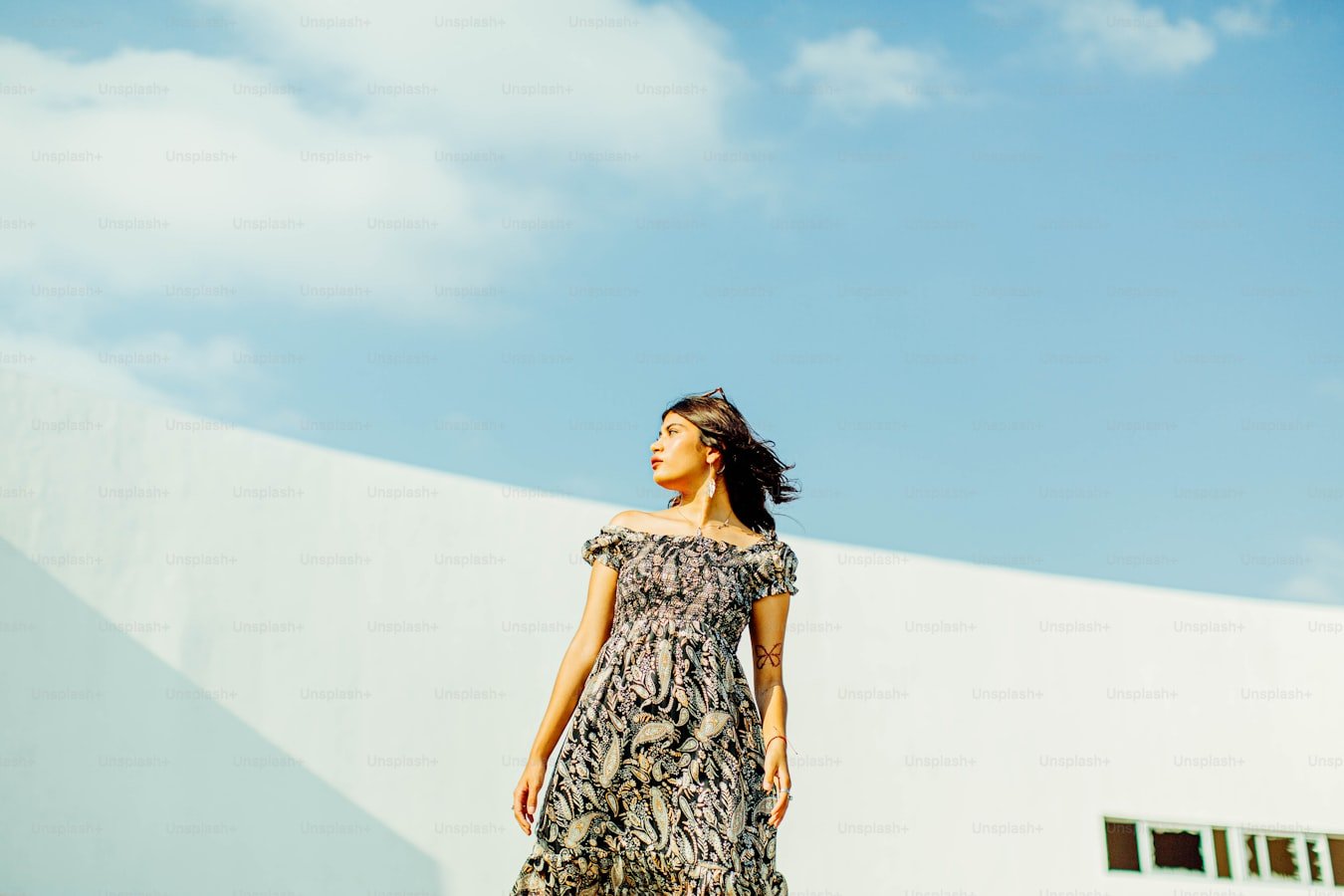
Something shifted on the Spring/Summer 2026 runways. Not a dramatic, headlines screaming shift, more of a quiet, collective exhale. At Chanel, Tory Burch, Versace, and Ferragamo, the waistline dropped. Literally. Seams slid from the natural waist down to the hip, hemlines swayed with that easy, unstructured movement that immediately reads as cool rather than constructed. The drop waist dress trend 2026 is not a fringe experiment. It showed up at four major houses in a single season, which is basically fashion’s version of a unanimous vote. And if history teaches us anything, it is that when this silhouette arrives, it tends to stick around for a while.
What makes this particular resurgence feel different from, say, the brief drop waist flirtation we saw around 2015 is the sheer range of price points absorbing it. Within weeks of the SS26 shows, Aritzia’s Babaton line, already a favourite for women who want runway adjacent shapes without the runway receipt, started listing drop waist poplin and satin dresses in the $128-$148 range. Colours and sizes began selling out before most fashion editors had even filed their trend reports. Meanwhile, on TikTok, searches for “drop waist Aritzia dress” spiked hard enough to generate their own trending sound. The silhouette has crossed over from editorial to everyday, and the bridge between Chanel’s archive and your spring wardrobe has never been shorter.
Coco Started This (Literally)
You cannot talk about the drop waist without talking about Coco Chanel, because she essentially invented the modern version of it. Around 1918, Chanel adapted Madeleine Vionnet’s chemise dress into something looser, sportier, and more deliberately masculine, she dropped the waist, stripped out the boning, and replaced silk with jersey knit. In her own words, she “let go of the waistline.” The result became the defining silhouette of the 1920s flapper era, a look that rejected the corseted hourglass figure in favour of something that let women actually move. Chanel borrowed from sailor uniforms and mechanic’s dungarees, favouring flannels and knits over taffeta. That utilitarian DNA is still embedded in every drop waist dress you see today, the silhouette has always been about freedom dressed up as elegance, not the other way around.

What the SS26 Runways Actually Showed
The drop waist silhouette dominated SS26 across four continents’ worth of fashion weeks. At Chanel, creative direction leaned heavily into 1920s references: silky drop waisted twinsets paired with pleated coats, patchwork flapper dresses dusted with floral embroidery, and Jazz Age inflected knits that felt like a Sonia Delaunay painting come to life. At Tory Burch in New York, models wore modernised flapper dresses accessorised with muted gold sardine pins and pendant necklaces, a clever, slightly irreverent nod to the era without costuming it. Versace leaned into Art Deco with sequined, silvery drop waist dresses that caught the light like mercury. And at Ferragamo, Maximilian Davis anchored his entire collection in 1920s Africana references, giving the silhouette a cultural depth that most trend reports glossed over entirely. This was not one house having a moment. This was a consensus.

Why This Silhouette Keeps Coming Back
The drop waist works because it solves a problem most dress silhouettes quietly ignore: it flatters without constricting. By lowering the seam to the hip, the bodice elongates the torso and the skirt moves independently from the body. You get structure at the top and freedom at the bottom. For women with shorter torsos or broader shoulders, the dropped seam creates a visual lengthening effect that a natural waist dress simply cannot replicate. The 1920s dress trend 2026 iteration specifically favours midi and mini hemlines over floor length flapper recreations, which keeps the look modern rather than costume adjacent. Fabrics like poplin, linen, and lightweight crepe dominate the daywear versions, while satin and embellished fabrics hold court for evening. The silhouette is genuinely one of the few that transitions from a Tuesday morning coffee run to a Friday night dinner without requiring a total outfit change, you just swap the shoes.

The Aritzia Factor: Luxury Shape, Real Life Price
This is where the drop waist dress trend 2026 gets genuinely interesting for anyone who does not have a Chanel budget. Aritzia’s Babaton line has become the unofficial bridge between runway trend and wearable wardrobe, and their drop waist offerings this season prove why. The Babaton Worldly Poplin Dress, a crewneck fit and flare midi with a clean drop waist, retails around $128. The Astonish Dress, a scoopneck version in a slightly dressier fabric, sits at roughly $148. Both have been moving fast: multiple colourways have sold out on the Aritzia site, and resale listings on Poshmark are already popping up at or above retail. The construction is solid, these are not fast fashion imitations that lose their shape after two washes. The poplin versions hold a crisp line through the bodice while allowing the skirt to move, which is exactly the balance the silhouette needs. If you are looking at luxury investment pieces and wondering where a drop waist dress falls on the spectrum, Babaton is a strong entry point before committing to a four figure version from Khaite or The Row.

How to Actually Style It (Without Looking Like a Costume)
The single biggest mistake people make with a drop waist dress is leaning too hard into literal 1920s styling. Finger waves and a long cigarette holder are for Halloween. For 2026, the trick is contrast. Pair a feminine, satin drop waist midi with chunky loafers or flat leather sandals to ground the look. Layer a fitted blazer or cropped leather jacket over a linen drop waist dress to add structure above the hip seam, this prevents the silhouette from reading shapeless, which is the other common pitfall. If you are petite, stick with shorter hemlines and add a pointed toe heel or wedge to create a vertical line below the dropped seam. Avoid matching your shoes to the dress colour; a tonal contrast between the hem and the shoe draws the eye downward in a way that actually elongates. Keep jewellery minimal and modern, Tory Burch had the right instinct with those thin pendant necklaces on the runway. A single gold chain or a pair of sculptural earrings does more than stacking bangles, which can visually interrupt the clean torso line the dress is designed to create.

The Luxury Tier: Where to Invest
If your budget stretches beyond Aritzia and you want a drop waist piece with genuine longevity, a few houses are worth watching. Khaite’s Helli midi dress, an oversized satin drop waist with a pleated skirt, has already become a quiet collector’s piece. Miu Miu’s Fall 2026 collection featured sheer, 1920s esque drop waist gowns bedecked with crystal sprays and scalloped appliqués, the kind of piece you wear once and get remembered for. Chanel’s own ready to wear drop waist pieces from the FW26 collection, particularly the wide shift dresses with thick, vest like bodices, are as close to wearable archive fashion as you can get without bidding on 1stDibs. For a mid tier option with luxury finishing, look at COS and Massimo Dutti, both of which have released structured drop waist dresses in the $150-$250 range this spring. The key with investment pieces is fabric weight and seam placement: a well constructed drop waist should sit exactly at the widest point of the hip, not above or below it.

Do’s and Don’ts
| Do | Don’t |
|---|---|
| Choose midi or mini hemlines for a modern read | Go full length flapper unless it is a formal gown |
| Add structure with a blazer or fitted jacket | Let the silhouette swim on you, tailoring matters |
| Wear pointed toe shoes to elongate below the hip | Pair with bulky trainers that cut the leg line |
| Stick with clean, modern jewellery | Over accessorise with 1920s costume jewellery |
| Try poplin or linen for day, satin for evening | Default to polyester, it kills the drape |
| Use tonal contrast between dress and shoes | Match everything head to toe in one colour |
| Belt at the natural waist if you want definition | Belt at the drop waist seam, it defeats the point |
| Check the seam sits at your actual hip line | Buy without trying on, fit is silhouette specific |
| Layer a cropped knit over a summer version | Add a long cardigan that hides the waist detail |
| Look at Babaton, COS, and Khaite for quality | Grab the cheapest version available, fabric matters |
FAQs
What exactly is a drop waist dress? A drop waist dress has its waist seam sitting below the natural waistline, typically at or near the hip. This elongates the torso visually and allows the skirt portion to move more freely, creating a relaxed but structured silhouette. Unlike an empire waist, which raises the seam to just below the bust, or a natural waist, which cinches at the narrowest point, the drop waist deliberately lowers the focal point of the dress. The effect is a longer, leaner line through the upper body and a skirt that swings rather than clings.

Why is the drop waist dress trend 2026 so big right now? Four major houses, Chanel, Tory Burch, Versace, and Ferragamo, all featured drop waist silhouettes in their SS26 collections, which created a critical mass of runway visibility. The broader cultural mood is also shifting away from bodycon and towards looser, movement friendly shapes. Add in the 1920s nostalgia cycle (we are now a full century out from the original flapper era) and the fact that brands like Aritzia made the silhouette accessible at under $150, and you get a trend with both top down and bottom up momentum.
Does a drop waist dress work on petite frames? Yes, but with caveats. The dropped seam can visually shorten your legs, so counteract that by choosing shorter hemlines, a mini or just above the knee length rather than a midi. Pointed toe heels or wedge sandals also help create a vertical line. Avoid very wide, voluminous skirts below the drop, which can overwhelm a smaller frame. A streamlined, A line skirt below the hip seam is your best bet.
How do I keep a drop waist dress from looking like a costume? Avoid overtly vintage styling. Skip the T strap shoes, the headbands, and the beaded fringe unless you are genuinely dressing for a themed event. Modern drop waist dresses work best when contrasted with contemporary pieces, a leather jacket, minimalist sandals, clean gold jewellery. The silhouette itself carries enough historical reference; your styling should anchor it in the present.
What fabrics work best for drop waist dresses? For daywear, poplin, linen, and lightweight cotton hold the structured bodice shape while letting the skirt move naturally. For evening and more formal occasions, satin, crepe, and silk create a dressier effect. Avoid stiff, heavy fabrics that fight the drape of the skirt, and avoid very thin polyester that cannot hold the bodice line. The best drop waist dresses have a slight difference in weight between the fitted top and the flowing bottom.
Where can I buy a good drop waist dress right now? At the accessible end, Aritzia’s Babaton line has several options between $128-$148, including the Worldly Poplin Dress and the Astonish Dress. COS and Massimo Dutti offer mid tier versions in the $150-$250 range with luxury adjacent finishing. For investment pieces, look at Khaite, Miu Miu, and Chanel’s ready to wear. Resale platforms like The RealReal and Vestiaire Collective also carry archival drop waist pieces from past Chanel and Prada collections if you want something with provenance.
Can I wear a drop waist dress to the office? Absolutely. A structured poplin or cotton drop waist midi in a neutral colour, black, navy, cream, olive, works perfectly in most professional settings. Layer with a tailored blazer and wear with loafers or low block heels. The silhouette reads polished without being stiff, which makes it one of the more versatile office to evening options currently trending.
Is the drop waist trend here to stay or will it fade quickly? Given that this silhouette has resurfaced repeatedly since the 1920s, in the 1960s mod era, the early 2000s, and now again in 2026, it has more staying power than most seasonal trends. The fact that it appeared across multiple luxury houses and price points simultaneously suggests we are looking at a multi season presence rather than a one and done moment. Investing in a well made version now is a safe bet.
Conclusion
The drop waist dress trend 2026 has real substance behind it, a century of design history, four major runway endorsements, and an Aritzia price point that makes it genuinely accessible. Whether you start with a $128 Babaton poplin or save for a Khaite satin, the silhouette rewards good fabric and thoughtful styling over trend chasing. Find the hemline and heel combination that works for your frame, skip the costume accessories, and let the dress do what Coco designed it to do over a hundred years ago: move freely and look effortless doing it.
Sources:, , Aritzia, Astonish Dress