

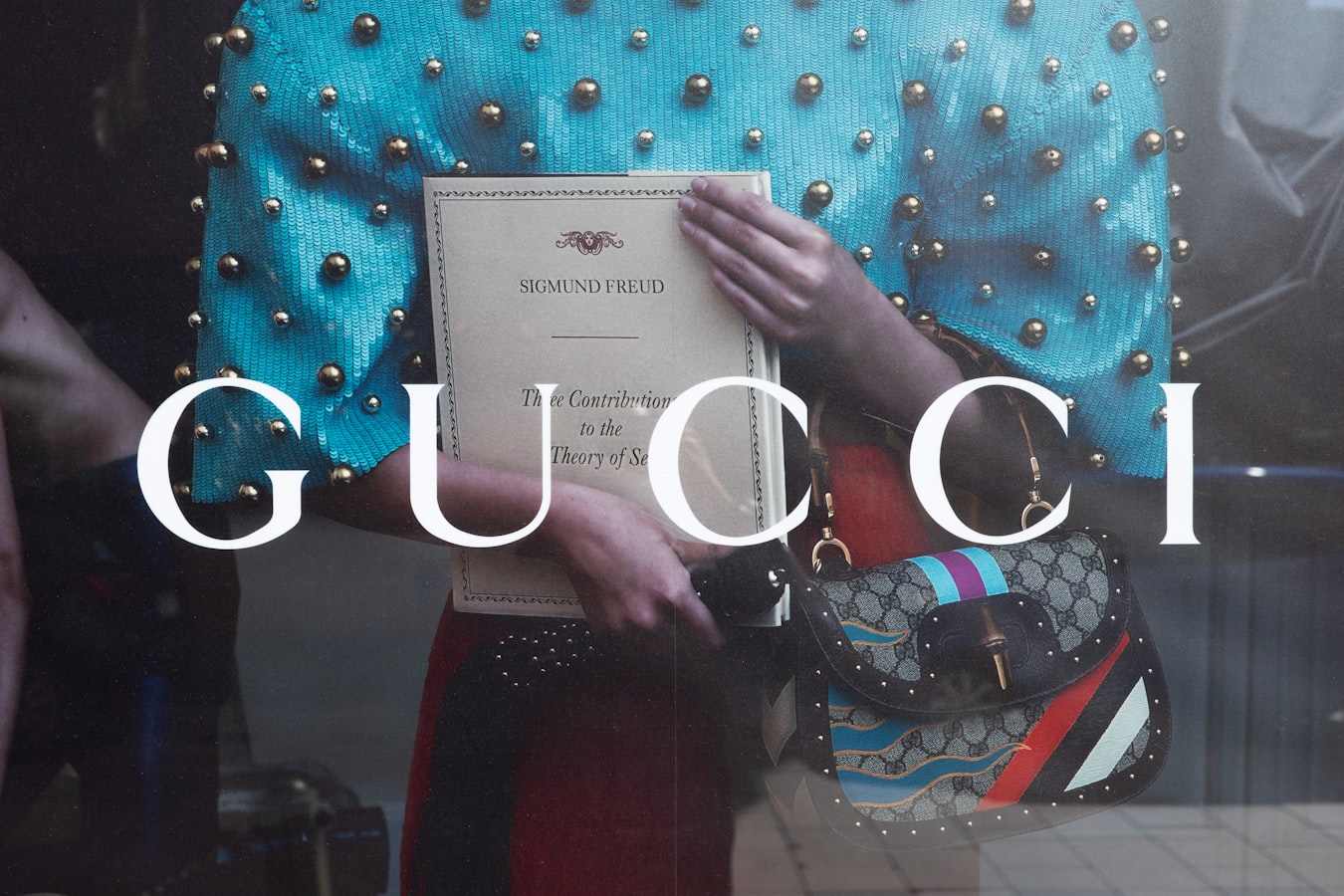
If you watched fashion Twitter melt down the morning of February 27, 2026, you already know: the Demna Gucci era is not a rumor, not a teaser, not a “reimagining.” It is officially the loudest creative director move of the decade, and every editor from London to Sydney has an opinion. When Kering announced in March 2025 that Demna Gvasalia would leave Balenciaga after ten years to replace Sabato De Sarno at Gucci, Kering’s stock dropped 12 percent in a single session. That is not a headline. That is the sound of the entire luxury industry recalculating its future in real time.
The stakes here are almost cartoonishly high. Gucci generates more than half of Kering’s revenue, and the house has now posted ten consecutive quarters of sales declines, including a 22 percent drop across 2025 and another 14.3 percent slide in Q1 2026. Analysts do not expect Gucci to return to growth until 2027 at the earliest. So when Demna walked his debut “Primavera” collection down the runway at Palazzo delle Scintille in Milan, he was not just showing clothes. He was being asked to save the single most important brand in the Kering portfolio. For Gen Z shoppers who grew up on Alessandro Michele’s maximalist, gender-fluid Gucci and then watched De Sarno’s quiet minimalism land with a thud, this is the first time the house has felt urgent in years.
From Balenciaga to Gucci: Why This Move Broke the Internet
Demna spent a decade at Balenciaga turning a sleepy couture house into the most-memed luxury brand on the planet. He gave us the Triple S sneaker, the Hourglass bag, the ironic oversized hoodie at couture, and the $1,790 IKEA tote. Love it or loathe it, he defined how millennials and Gen Z understood luxury in the 2010s and early 2020s. So when Kering moved him across the portfolio to Gucci in July 2025, it was not a lateral transfer. It was the group betting its biggest asset on its most polarizing designer. No other appointment in recent memory, not Hedi Slimane to Celine, not Matthieu Blazy to Chanel, not Pierpaolo Piccioli to Balenciaga, carried this much financial weight.

The optics were loaded from day one. Demna is not a heritage-house safe pick in the mold of a Sarah Burton or a Louise Trotter. He is the guy who put Kim Kardashian in full-body Balenciaga at the Met Gala and sent a model walking through simulated snowstorms in a puffer coat as political commentary. Gucci, meanwhile, is the 105-year-old Florentine house of Jackie bags, Horsebit loafers, and Tom Ford’s 1995 velvet suits. The cultural collision was the whole point. Kering wanted shock. They wanted conversation. And with the Demna Gucci pairing, they absolutely got it.
Inside the Primavera Debut: What Demna Actually Showed
Demna’s first full Gucci collection, titled “Primavera” after Botticelli’s painting at the Uffizi, dropped on February 27, 2026, during Milan Fashion Week. Eighty-three looks. A cast that included Kate Moss, Emily Ratajkowski and Karlie Kloss. A finale that saw Kate close the show in a glittering cutout maxidress with a whale-tail thong, which is the single most photographed fashion image of the year so far. The collection was described by WWD and W Magazine as “body-first,” hedonistic, and deeply referential to Tom Ford’s fall 1995, fall 1996 and spring 1997 Gucci, which is arguably the most iconic three-season run in the brand’s history.

What did that look like on the runway? Fluid tailored suits in liquid-weight fabrics. Low-cut blazers. Trousers with horizontal hip pockets. Slip dresses cut razor-thin. Then, next to all of that, the Demna signatures: leggings, tracksuits, oversized everyday basics twisted just enough to read “luxury” rather than “athleisure.” He was deliberately building a full wardrobe of archetypes rather than a mood board. Before Primavera, he had already tested the waters with “La Famiglia,” a surprise see-now-buy-now lookbook dropped in December 2025 at ten Gucci boutiques globally, giving VIC clients first access.
The Critics: Mixed, But Tilting Positive
Let us be honest, because luxury editorial that pretends everything is fabulous is boring. The Primavera reception was split. Bernstein’s luxury analyst Luca Solca publicly scored the collection 7.6 out of 10, calling it “clearly not a home run, but still an improvement” and explicitly ranking it above De Sarno’s own 6.8-scored debut in September 2023. The industry consensus: the tailoring worked, the suiting worked, and Demna’s range as a designer was undeniable across eighty-plus looks. Critics were less kind about the bags and shoes, which were flagged as underwhelming, and some forum voices found the leggings vulgar rather than sensual.

But here is the important part for any reader trying to understand what the Demna Gucci story actually means. In luxury, a 7.6 debut during a ten-quarter sales slump is not a failure. It is a foundation. Hedi Slimane’s first Celine show in 2018 was also savaged before it became the most commercially successful debut at the house in a decade. Demna has runway to grow, pun intended, and Kering CEO Luca de Meo has publicly framed the turnaround as “gradual,” not a quick fix.
What It Means for Shoppers: The Gucci You Can Actually Buy
For the Gen Z and millennial reader wondering whether any of this affects what shows up on Net-a-Porter, Mytheresa, or 24S: yes, almost immediately. Demna’s first drops are already shoppable. Expect the Gucci archive to get quietly reshuffled, with the Horsebit 1955 bag, the Jackie 1961, and the classic Princetown loafer staying firmly in the core lineup while the hardware, logos and leathers get modernized. The Ford-era slip dress is going to become the buzziest Gucci silhouette for resort and SS27, and resale sites like Vestiaire Collective and The RealReal are already seeing search spikes for “Gucci 1996” and “Tom Ford Gucci archive.”

If you are shopping on a real budget and want the Demna Gucci look without the Gucci price tag, the smart-shopping play is clear. Look at Khaite slip dresses around the $900 mark, Aritzia Babaton liquid trousers under $200, Reformation’s satin bias-cut columns in the $250-$350 range, and for the low-cut tailored blazer, COS and Mango Selection are both cutting shapes that read within spitting distance of Gucci Primavera. Pair any of them with a vintage Gucci Horsebit loafer from resale and you are, visually, on the brief.
The Kering Chess Game: Why This Is Bigger Than One Collection
Zoom out and the Demna Gucci move is really a referendum on the entire Kering group. The company has announced the closure of 175 underperforming stores globally, a distribution overhaul, and a full creative reshuffle across Balenciaga, Bottega Veneta and Saint Laurent. De Meo’s strategy is built on the assumption that a single designer can reset consumer perception of an entire house, and that Demna, specifically, is the only creative voice loud enough to cut through in a market where LVMH’s Louis Vuitton, Dior and Loewe are eating everyone’s lunch. If Demna lands Gucci, Kering gets its valuation back. If he does not, the group is genuinely in trouble. That is why editors across US Vogue, British Vogue, Dazed, Who What Wear and WWD are covering every Gucci drop like it is a live election result.

For a deeper dive on the broader luxury vs. accessible-price debate this raises, our guide on Luxury vs Budget Fashion: What Should Women Invest In breaks down which pieces are actually worth the Gucci-level spend.
Do’s and Don’ts
| Do | Don’t |
|---|---|
| Do watch the Gucci Primavera lookbook in full before forming an opinion | Don’t write off Demna Gucci based on one Instagram carousel |
| Do add the Horsebit 1955 or Jackie 1961 to your investment wishlist | Don’t panic-buy De Sarno-era leftovers at full price |
| Do look at Khaite, Reformation and Aritzia for the slip-dress silhouette | Don’t pay $2,000 for a legging because it has a Gucci tag |
| Do save on Vestiaire Collective alerts for vintage Tom Ford Gucci | Don’t assume all archive pieces are authentic, always check serials |
| Do study Tom Ford’s 1995-1997 Gucci as visual reference | Don’t confuse “body-first” with “skin-tight only” |
| Do follow Demna’s Balenciaga archive sales for styling cues | Don’t expect logomania, this era is stealthier |
| Do invest in a fluid tailored blazer as the season’s hero piece | Don’t sleep on shoes, Gucci loafers are still the safest buy |
| Do style slip dresses with flat Horsebits for editorial balance | Don’t over-accessorize, Demna’s look is deliberately stripped |
| Do bookmark Mytheresa and 24S for the first Demna retail drop | Don’t shop grey-market sites, returns are a nightmare |
| Do treat Primavera as a starting point, not a final statement | Don’t dismiss the house, Gucci turnarounds historically take 18 months |
FAQs
Who is Demna and why is his Gucci appointment a big deal? Demna Gvasalia is a Georgian-born designer best known for founding Vetements and then spending a decade as creative director of Balenciaga, where he turned the house into one of the most culturally dominant luxury brands of the 2010s. His move to Gucci in July 2025, replacing Sabato De Sarno, is considered the biggest creative director appointment of the decade because Gucci accounts for more than half of Kering’s revenue and has been in decline for ten straight quarters. No other recent hire has carried this much financial and cultural weight at once.


When did Demna’s first Gucci collection show? Demna’s first full ready-to-wear runway show for Gucci, titled Primavera, debuted at Palazzo delle Scintille during Milan Fashion Week on February 27, 2026. Before that, he released a surprise see-now-buy-now lookbook called La Famiglia in December 2025, available at ten Gucci boutiques worldwide, which functioned as a soft launch for his creative direction at the house.
How was the Demna Gucci debut received by critics? Reception was mixed but leaning positive. Bernstein luxury analyst Luca Solca publicly scored the Primavera collection 7.6 out of 10, noting it was “more good than bad” and a clear improvement over Sabato De Sarno’s 6.8-rated debut. Tailoring and suiting were praised, while handbags, shoes and some of the sportier looks were criticized. Editors at WWD, W Magazine, Dazed and Who What Wear all flagged the collection as a credible new direction.
Is Gucci still a good brand to invest in for 2026? For long-term buyers, yes, especially on archive bags like the Jackie 1961, Horsebit 1955 and vintage Tom Ford-era pieces, which tend to hold or grow in resale value. For trend pieces from the first Demna drops, the smarter approach is to wait for the second and third collections before committing to seasonal items, since early-era creative director pieces can fluctuate in perceived desirability once the house finds its new rhythm.
What should I wear if I love the Gucci Primavera look but cannot afford it? Build the silhouette with accessible-price alternatives that mirror the shapes. Khaite and Reformation slip dresses, Aritzia Babaton fluid trousers, Mango Selection and COS low-cut blazers, and Coach Tabby or secondhand Gucci loafers for the footwear anchor. The visual language of Primavera is bias cuts, liquid fabrics and stripped-back tailoring, all of which translate down-market more cleanly than, say, a logo-heavy Balenciaga look.
Why did Kering pick Demna over a more traditional Gucci fit? Kering CEO Luca de Meo needed a designer with enough cultural heat to reverse a ten-quarter sales slide. Traditional picks like Sarah Burton or Pierpaolo Piccioli would have signaled heritage-house continuity, but Gucci needed conversation, not calm. Demna is, arguably, the only active luxury designer whose name alone can generate global press coverage, which is exactly the shock therapy a struggling brand requires.
Will Demna’s Gucci look like Balenciaga? Not really, based on Primavera. Demna leaned into Gucci’s own archive, particularly the Tom Ford era, rather than importing his Balenciaga signatures wholesale. You will still see his DNA in the proportions and the styling attitude, but the silhouettes are softer, more Italian and noticeably more sensual than the architectural hourglass shapes he became known for at Balenciaga.
How long until Gucci returns to sales growth? Analyst consensus, including Bernstein and several Kering coverage desks, does not expect Gucci to return to positive growth before 2027. The turnaround plan involves closing around 175 underperforming stores, reducing wholesale exposure, and giving Demna at least four to six full collections before judging commercial impact. Patience is officially priced into the stock.
Conclusion
The Demna Gucci era is going to define luxury fashion for the next five years, whether you love the Primavera debut or find it confusing. If you care about where the industry is heading, this is the story to watch, and the smart move is to study the collection, shop the archive pieces that have always mattered, and build the silhouette at your own price point until Demna’s second act arrives in September. Keep your Mytheresa alerts on and your resale tabs open.